


Dental Lab Outsourcing to China: The Complete 2026 Guide
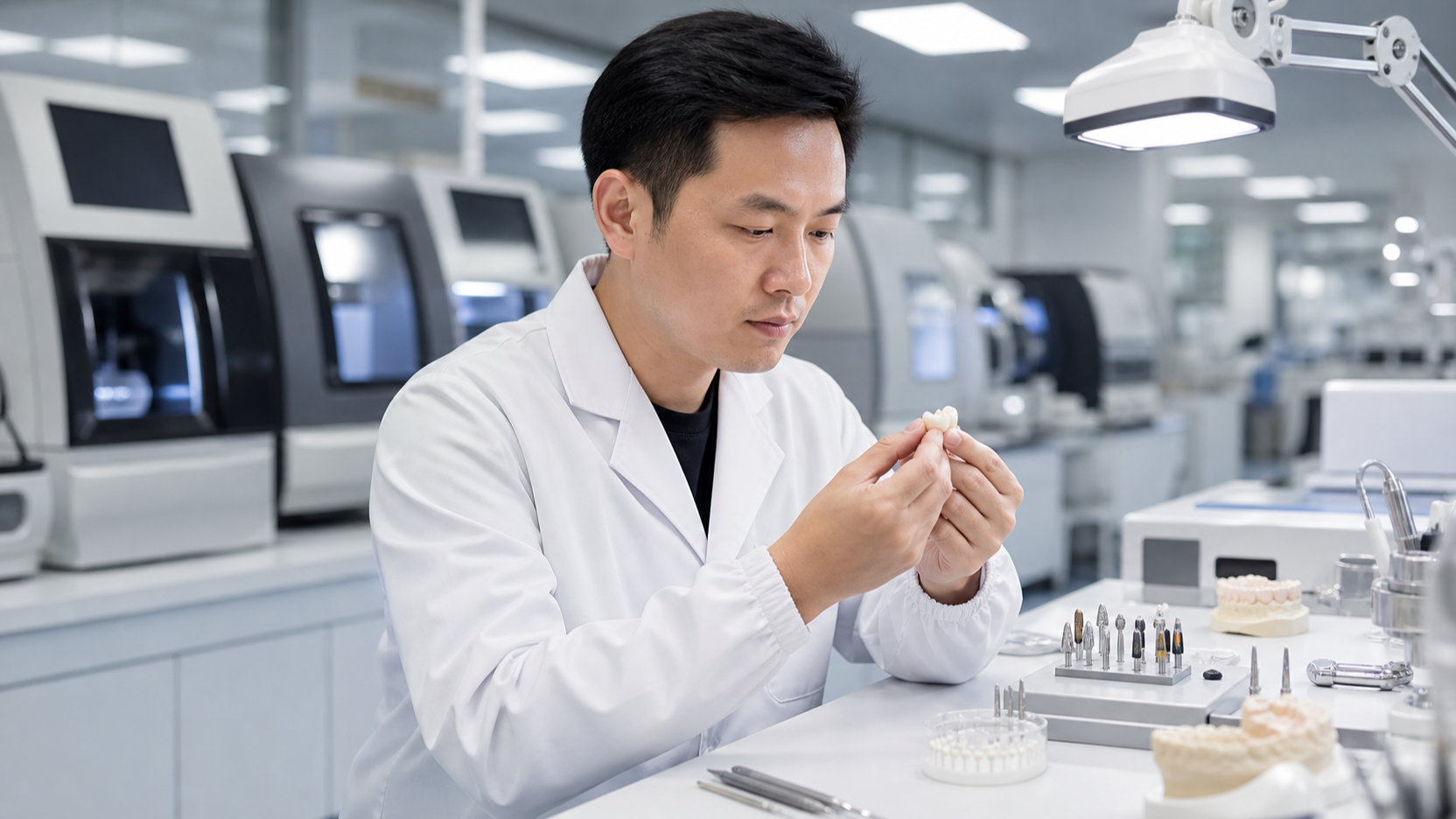
Outsourcing a dental case only works when the receiving laboratory can operate as an extension of your own clinical or production team. A lower laboratory fee means little if the prescription is misunderstood, the case is released without the right checks, or questions arrive after production has already started.
We are Topway Dental Lab, an outsourcing dental laboratory and contract manufacturer based in Shenzhen, China. We have worked with overseas dental laboratories and clinics since our founding in 2006. This guide explains what dental lab outsourcing means, which restorations can be outsourced, what credentials to verify, how a case moves through our lab, and what to ask before choosing a partner.
What Is Dental Lab Outsourcing?
Dental lab outsourcing is the transfer of some or all laboratory production to an external dental laboratory. The prescribing dentist or the originating laboratory retains control of the case requirements; the outsourcing laboratory manufactures the restoration according to the submitted prescription, records, and approved instructions.
There are two common working relationships. A dental clinic may send a case directly to an overseas lab and communicate with that lab about the prescription, case records, and delivery. Alternatively, a domestic dental laboratory may subcontract selected cases or overflow work. In this lab-to-lab model, the domestic laboratory remains the customer-facing partner while the outsourcing facility supplies production capacity.
We operate in both contexts as a China-based outsourcing dental lab and contract manufacturer for overseas dental clinics and laboratories. The practical distinction matters: a clinic usually wants concise communication about a single patient case, while a laboratory needs repeatable specifications, consistent file naming, consolidated shipments, and communication that fits an existing production system.
For a shorter overview of the case for outsourcing, see the benefits of outsourcing dental lab work to China.
Why Dentists and Labs Outsource to China
Cost control without buying more in-house capacity
Outsourcing can keep laboratory costs significantly lower than typical domestic lab fees. For a clinic, that creates more room in the restoration budget. For a laboratory owner, it is a way to take on additional work without adding the same level of internal production capacity. The useful comparison is not the unit fee alone; it is the complete case cost after shipping, communication, adjustments, and internal handling are considered.
Production capacity that can absorb changing case volume
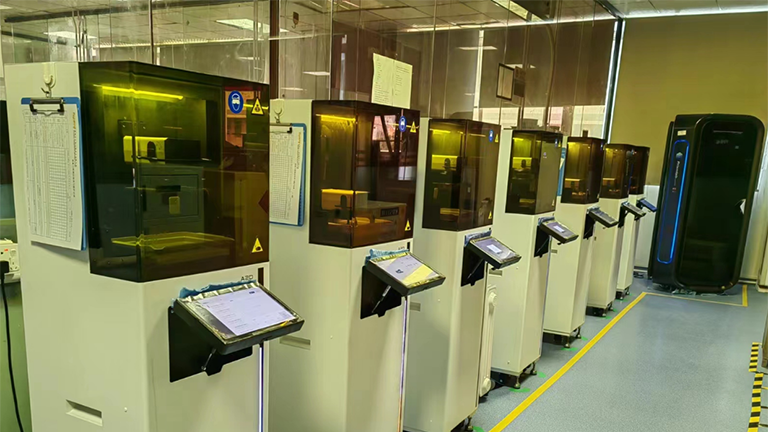
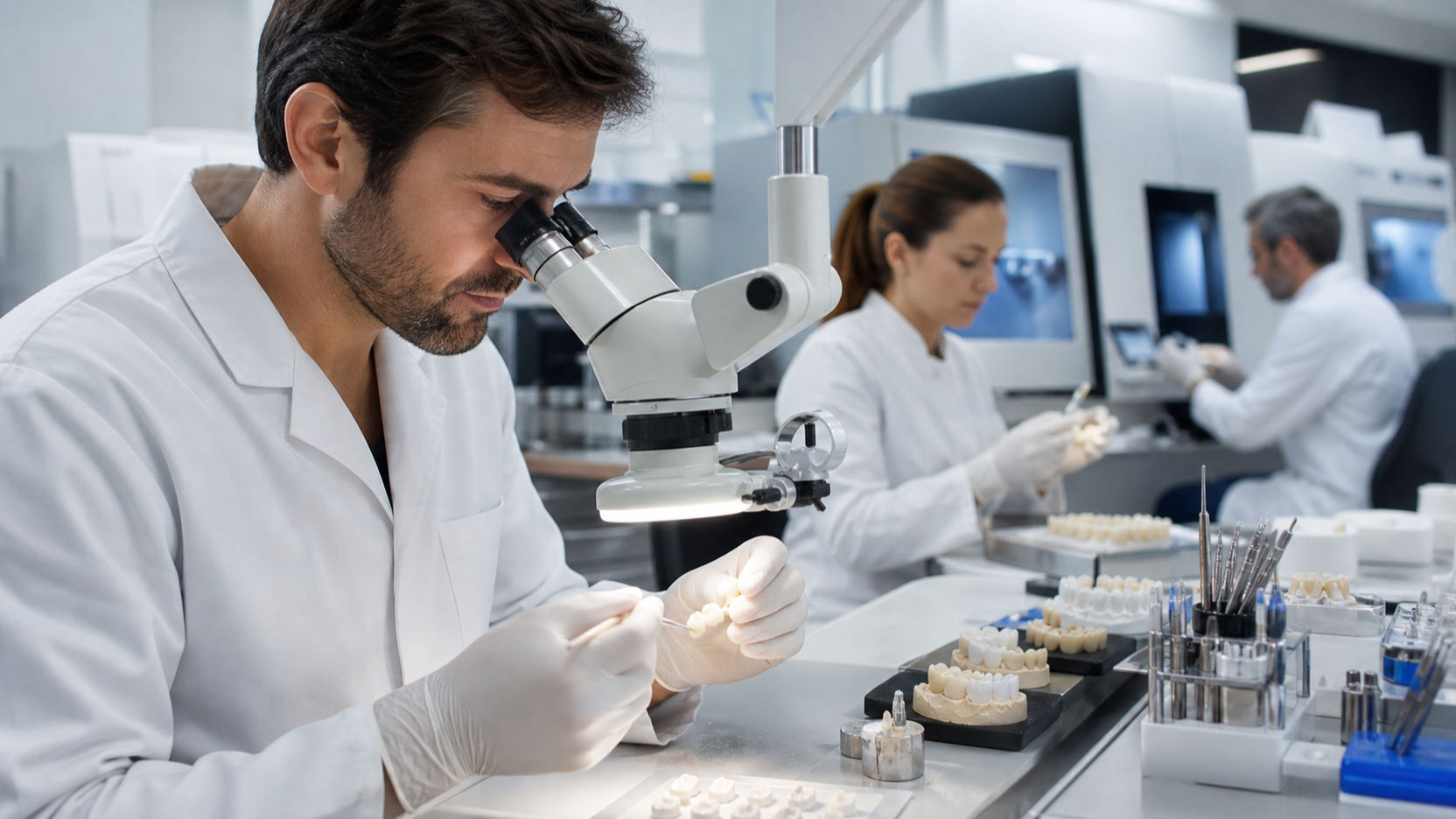
Capacity matters most for lab-to-lab clients. Our own operation has more than 300 employees in a 5,000-square-metre facility. That scale supports separate production stages, lets cases move through defined handoffs instead of depending on one technician for every step, and gives an originating lab another option when its internal workload changes.
Scale must still be controlled. More technicians do not remove the need for a complete prescription, clear responsibility at each stage, and a release check before dispatch. When evaluating any outsourcing partner, ask how it prevents a case from moving forward when information is missing.
Digital case transfer and repeatable instructions
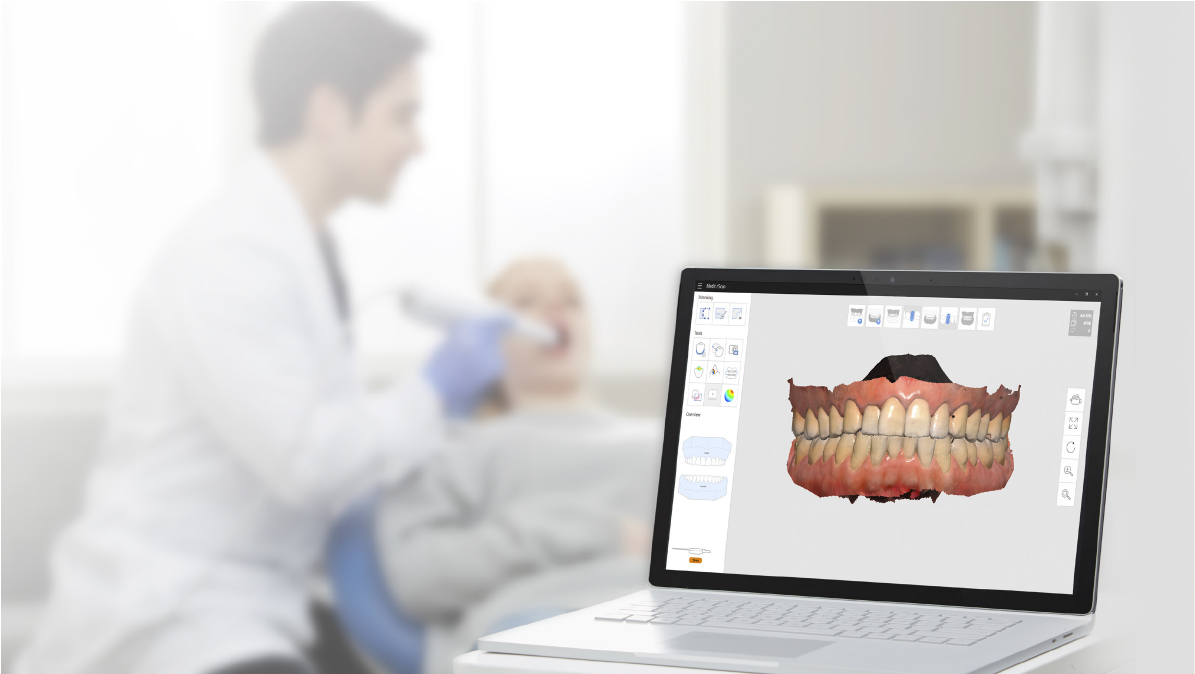
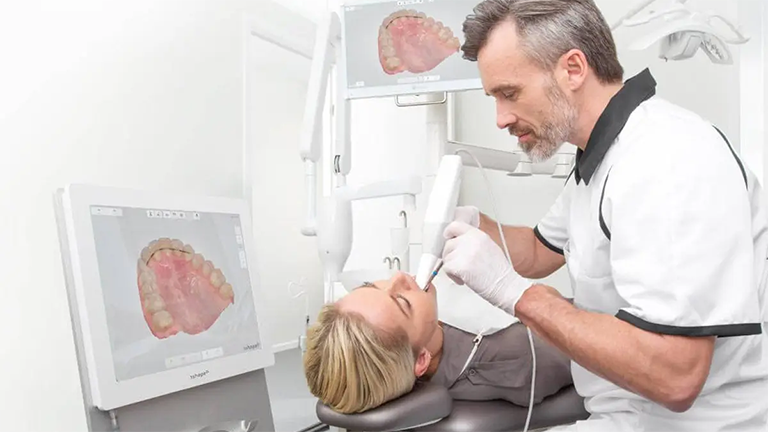
Digital records shorten the information-transfer portion of a case because files do not have to follow the same route as a physical model, and they make it easier to preserve the submitted records and discuss a specific area. Physical models remain part of some workflows, so the correct submission method depends on the restoration and the records available.
Consistency begins with inputs. A recurring account benefits from agreed prescription fields, naming conventions, contact points, and approval rules. Those details are less visible than manufacturing equipment, but they often determine whether outsourcing feels controlled or unpredictable.
What You Can Outsource: Restoration Types
An outsourcing relationship does not need to begin with every type of work. A controlled approach is to start with a defined category, establish the communication pattern, and expand once you are satisfied with the result. Our product range is organised into five lines.
Crown & Bridge
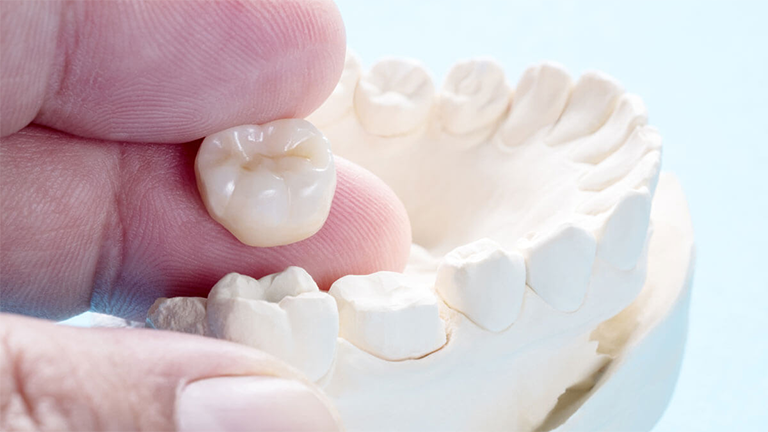
Crown and bridge outsourcing covers fixed restorative cases and is a common starting point for a new account. Identify the restoration requested and submit complete records with the prescription; for a laboratory account, an agreed specification format helps us distinguish standing preferences from case-specific instructions.
Dental Implant
Implant restorations require especially careful identification of the requested case configuration and the records supplied. We review each submission before production and raise questions when information is incomplete or inconsistent — an early query costs far less than an assumption corrected after manufacturing.
Removable Restoration
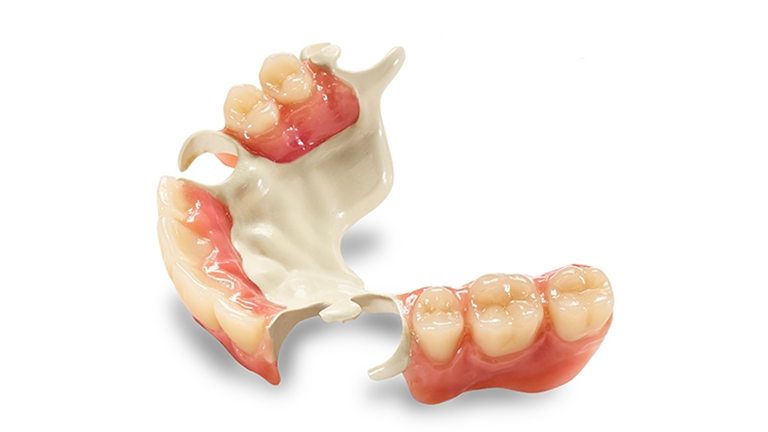
Removable restorations, including dentures and partials, move through stages that must stay aligned. Label clearly what is being sent and what you expect back at that stage, and if the case follows an existing laboratory protocol, include it at submission rather than after work has begun.
Precision Attachment
Precision attachments form a dedicated product line. These cases depend on a complete written prescription and unambiguous identification of the intended restoration; if a decision will be required mid-case, agree the approval route in advance.
Orthodontics
Orthodontic appliances are our fifth product category. The first checkpoint is whether the submitted information is sufficient for the appliance requested, with case identification clear enough that one patient's records are never confused with another's.
Quality, Certifications and Compliance
Before sending a first case overseas, verify the legal company identity and ask for current credential documents. Do not treat “registered” and “approved” as interchangeable words: Topway Dental Lab is an FDA-registered contract manufacturer for Class I/II medical devices — we do not describe our laboratory as “FDA approved.” We use only FDA-approved materials.
Our compliance and certification credentials are:
- FDA-registered contract manufacturer for Class I/II medical devices
- CE certificate
- ISO 13485
- ISO 9001
- Medical Device Production License of China
- Class II Medical Device Product Registration Certificate issued by China FDA/NMPA
- High-tech Enterprise Certification
Request the documents relevant to your work, compare the company name on them with the supplier actually receiving the case, and clarify any mismatch before starting. Ask which materials will be used, and keep the prescription and communication record. For recurring work, make credential review part of supplier maintenance rather than a one-time onboarding task.
Certificates are one half of due diligence; case controls are the other. Ask where incoming information is checked, when questions are raised, what is inspected before release, and how a nonconforming result is handled. You can review our 7-step quality control process to see how our lab approaches these checkpoints.
How the Outsourcing Workflow Works, Step by Step
A well-run overseas case should have visible decision points. The exact production route and turnaround depend on the restoration and the condition of the submitted records, so we confirm timelines by case type rather than publishing a single promise for every case.
Step 1: Submit the case and prescription
Send the prescription together with the applicable digital impression files or physical records. Case identification, the restoration requested, and contact details should travel together. Our send your first case page is the starting point for a new submission.
Step 2: Incoming case review
We check that the case received matches the prescription and that the information needed for the requested work is present. If a record is missing, unreadable, or inconsistent with the written instruction, the case pauses here. A quick, specific answer from the customer at this point keeps production moving with fewer assumptions.
Step 3: Clarification and approval
When a decision is needed, we contact the designated person through the agreed channel. A useful reply references the case identifier and answers the exact question. Laboratory customers should tell us which decisions we may handle under their standing instructions and which require individual approval.
Step 4: Design and production planning
Once the records and instructions are complete, the case enters the appropriate design and production route. Case-specific directions remain attached to the job; recurring preferences should be documented, but they never override a clear instruction written for the current case.
Step 5: Production and in-process checks
The restoration moves through the relevant production stages, with checks at the handoffs appropriate to that case. A problem found during production is easier to manage when the case can be stopped, traced to its instructions, and routed to the right person for a decision.
Step 6: Final review and release
Before dispatch, the completed work is reviewed against the case requirements. The purpose of this release point is simple: confirm that the returned case corresponds to what was prescribed and that the required items are together before shipment.
Step 7: Delivery and feedback
Cases are prepared for delivery using the agreed shipping arrangement — consolidation often suits a laboratory sending regular volume, while a clinic may prefer a case-specific decision. After receipt, precise feedback (case identifier, area concerned, requested action) gives our team something operational to resolve. You can see our full production process for a broader view of the route through our lab.
Holiday planning deserves its own discussion. Since 2022, we have made special capacity arrangements for the Chinese New Year period to protect quality and deadlines during the holiday. Share anticipated case volume and required dates early so that case-specific schedules can be confirmed.
How to Choose an Outsourcing Dental Lab Partner
Our perspective comes from two decades of working with overseas clients since 2006. The best supplier review is practical: test whether the laboratory can answer specific questions and follow a controlled process before it receives a large share of your workload.
| Area to review | What to ask | What to establish before the first case |
|---|---|---|
| Credentials | Can the lab provide the registrations and certificates relevant to your market and case category? | Legal company identity, document review, and material requirements |
| Case intake | Who checks incoming prescriptions and records, and what happens when information is missing? | Required submission fields and a clear hold-and-query process |
| Communication | Who is the day-to-day contact, and how are urgent case questions identified? | Channel, contact person, case identifier, and response responsibility |
| Quality control | Where are the in-process and final release checks? | Acceptance criteria and escalation path |
| Adjustments and remakes | What records are required to review a problem, and who authorises the next action? | Written review process, evidence needed, shipping responsibility, and expected resolution |
| Scheduling | How is a timeline confirmed for each restoration and shipping method? | Case-specific target dates and holiday planning |
Start with a trial case that represents the work you actually intend to outsource — a case chosen only because it is unusually simple will not test the communication or production route you will use later. Agree on the prescription format, approval points, shipping method, and feedback process first, then evaluate the complete experience: intake, questions, adherence to instructions, delivery, and the handling of your feedback.
If you are a laboratory owner, also test whether the partner can follow your account-level preferences without losing case-specific directions. If you are a dentist sending directly, confirm who will answer prescription questions and how you will identify the case in each message. In both models, clarity at intake is a stronger foundation than informal assumptions.
What Does Outsourcing Cost?
Outsourcing is generally priced around the restoration or unit requested, with shipping and case handling affecting the total. Complexity, the records supplied, the production route, and delivery requirements all influence the appropriate quotation; regular laboratory accounts may also consolidate shipments, while direct clinic cases follow a different shipping pattern.
The manufacturing cost can remain significantly lower than typical domestic lab fees, but compare like with like: include shipping, internal administration, the value of response time when clarification is needed, and the agreed approach to adjustments or remakes. A low unit quotation is not a complete cost model if the responsibilities around the case are unclear.
Quotations depend on the restoration categories and case pattern involved, so we prepare them per account rather than publishing a single list here. Please contact us for a current price list, telling us the restoration categories and expected case volume, and we will respond with the relevant quotation.
About Topway Dental Lab
Topway Dental Lab was founded in Xili, Shenzhen, in 2006 and began by taking outsourcing work from US dental laboratories. From 2010, our customer markets expanded to the US, UK, Germany, France, Canada, Australia, New Zealand, Israel, and Brazil, serving dental laboratories and clinics.
Today our lab has more than 300 employees and occupies a 5,000-square-metre facility at 4th Floor, Building 4, Fu'an First Industrial City, 99 Dayang Road, Fuhai Street, Bao'an District, Shenzhen, China. Our five product lines cover Crown & Bridge, Dental Implant, Removable Restoration, Precision Attachment, and Orthodontics.
You can read more about Topway Dental Lab. To discuss a trial case or request the current price list, email [email protected] or call +86 153 2504 5142.
Frequently Asked Questions
Is it safe to outsource dental lab work to China?
Safety and reliability depend on the laboratory you select and the controls used for each case, not simply its country. Verify the supplier's identity and relevant credentials, confirm the materials requirement, review its case intake and quality-control process, and begin with a representative trial case. Topway is an FDA-registered contract manufacturer for Class I/II medical devices, holds a CE certificate, ISO 13485, and ISO 9001, and uses only FDA-approved materials.
What certifications should an overseas dental lab have for the US and EU markets?
Ask for the credentials relevant to your market and intended work, then verify that the documents identify the company you will use. Our own credentials include FDA registration as a contract manufacturer for Class I/II medical devices, a CE certificate, ISO 13485, ISO 9001, the Medical Device Production License of China, a China FDA/NMPA Class II Medical Device Product Registration Certificate, and High-tech Enterprise Certification. Your review should distinguish the laboratory's registration from the approval status of materials.
Can I send digital impressions instead of shipping physical models?
Yes — digital impression files can be used for case submission, while some workflows still involve physical models or other physical records. The correct route depends on the restoration and the completeness of the available records. Contact us before the first case so we can confirm what to submit for that case type and how the files should be identified.
How do remakes and adjustments work with an overseas lab?
Agree on the review process before starting: what evidence is needed, how the case is identified, who evaluates the issue, who authorises the next action, and how shipping is handled. If a concern arises, send specific feedback tied to the case rather than a general description; we then review the submitted instruction and the reported issue through the agreed communication route.
How do I start with a trial case before committing my full caseload?
Select a case that reflects the category you expect to outsource, provide a complete prescription and records, and agree on contacts, approval points, delivery arrangements, and feedback before production. Confirm the case-specific timeline with us at submission. After receipt, review both the restoration and the communication process before deciding whether to expand the scope.
Top Posts
Recent Posts

How can we help you today?
We believe in providing the best possible care to all our existing patients and welcome new patients to sample.
