


Lab-to-Lab Dental Outsourcing: Scale with a China Partner
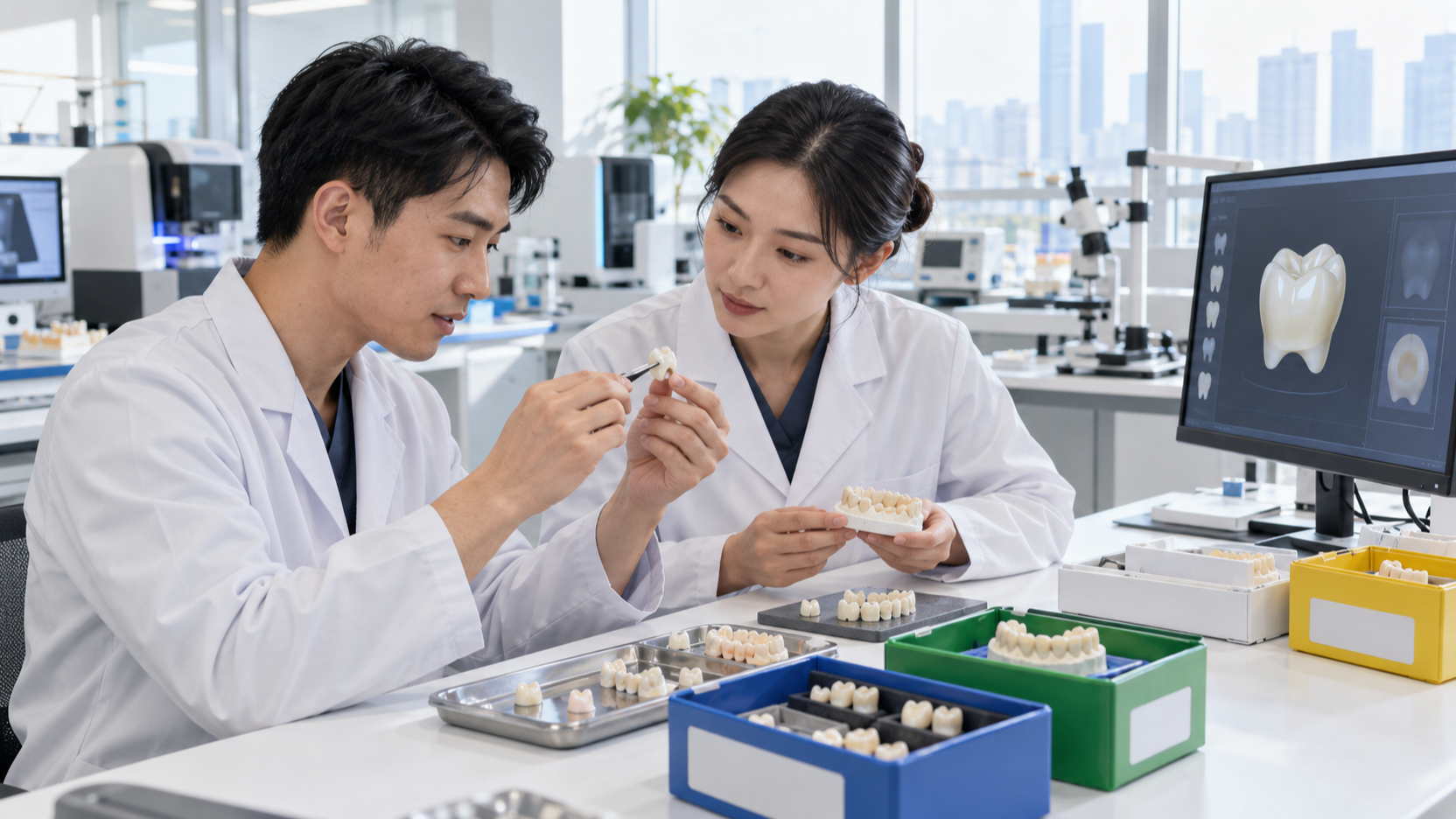
Outsourcing between laboratories succeeds or fails at the handoff. The restoration may be technically sound, but the partnership still breaks down if the receiving lab cannot identify the case, interpret the prescription, follow the requested shade convention, or package the work under the domestic lab’s brand. A useful lab-to-lab relationship therefore starts with an operating system, not a price list.
We are Topway Dental Lab, an outsourcing dental laboratory and contract manufacturer founded in Shenzhen in 2006, now operating from Bao’an District, Shenzhen. From our side of the bench, the strongest partnerships are the ones in which both laboratories agree on case information, technical limits, communication points, quality checks, and dispatch expectations before routine volume begins.
What Is Lab-to-Lab Dental Outsourcing?
In lab-to-lab dental outsourcing, a domestic laboratory subcontracts selected production work to a partner laboratory overseas. The domestic lab remains the commercial point of contact for its dentist customers and supplies the finished case under its own brand. The overseas partner works as an extension of the domestic production team rather than as a competing chairside supplier.
That distinction matters. In a direct dentist-to-overseas-lab arrangement, the dentist and overseas lab manage the prescription, technical questions, logistics, and account relationship together. In a lab-to-lab model, the domestic laboratory controls those interfaces. It decides which work to send, translates local preferences into production instructions, performs its own final acceptance check, and manages delivery to the dentist.
This structure can help a laboratory respond to several familiar pressures: a backlog that exceeds available bench capacity, difficulty staffing a specialist department, the cost of adding equipment for a new indication, or customer requests for a broader menu. It does not require every case to be outsourced. Many partners begin with a defined restoration family or use outsourcing only when their internal queue passes an agreed threshold. For a wider introduction to the business model, see the complete guide to dental lab outsourcing.
Outsourcing is a capacity decision, not just a purchasing decision
The first question is not, “Which unit is cheapest?” It is, “Where is our constraint?” A crown-and-bridge department may need relief while removables remain comfortably in-house. A laboratory may have scanning and design capacity but not enough production capacity, or it may prefer to submit a complete case and receive a restoration ready for final inspection. Defining that boundary prevents duplicated work and makes quotes comparable.
We recommend documenting three ownership points for every outsourced category: who confirms that the incoming records are complete, who approves technical changes, and who releases the finished work. Without those owners, small ambiguities wait in an inbox and consume the time outsourcing was intended to save.
When Lab-to-Lab Outsourcing Makes Business Sense
Overflow without permanent expansion
When incoming work temporarily exceeds internal capacity, a partner lab can act as a controlled overflow route. The domestic team keeps the processes that must remain close to the customer and allocates suitable cases to the partner. This preserves internal attention for urgent, unusual, or adjustment-sensitive work without making a permanent hiring or equipment decision for a temporary queue.
The key is to define the release rule before the backlog arrives. Eligible products, file requirements, maximum complexity, dispatch cutoff, and approval contacts should already be known. If the first discussion starts only after cases are late, neither laboratory has enough room to clarify incomplete prescriptions.
Adding a product line
A laboratory can also use a partner to offer work outside its current technical scope. Implants, removable restorations, precision attachments, and orthodontic appliances require different skills and production paths. A lab-to-lab arrangement lets the domestic business test demand and build a customer base before deciding whether to establish a dedicated department.
This is most effective when the offer is deliberately narrow at first. Select the indications, accepted input formats, material choices, and exclusions, then create an internal quoting and prescription checklist. The customer sees a coherent service; behind the scenes, both laboratories know exactly where responsibility changes hands.
Using the time-zone handoff
A China partner can receive digital case information while a Western laboratory is outside its normal working hours. That offset can reduce idle time between file submission and the next production action. It is not an automatic turnaround guarantee: questions, approvals, fabrication requirements, shipping, weekends, and holidays still affect the schedule. The practical benefit comes from agreeing on cutoffs and response windows so that a technical question does not wait through another working day.
Protecting margin without weakening the specification
Outsourcing can support competitive margins because it may avoid new fixed overhead and can be significantly lower than typical domestic lab fees. The comparison should include more than the partner’s quoted fee. Internal case preparation, communication, freight, incoming inspection, adjustments, remakes, and working capital all belong in the decision.
We do not recommend relaxing the prescription or material requirement to reach a target cost. Standardize the specification first, then compare like with like. Because prices depend on the restoration and current requirements, contact us for a current price list.
What to Look for in a China Partner Lab
Begin with evidence that can be checked, then assess operational fit. A polished sample is useful, but a scalable partnership also requires the right manufacturing status, material policy, capacity, communication habits, and export experience.
| Area to verify | What to request | Why it matters in lab-to-lab work |
|---|---|---|
| Registration and certification | Current documents that match the legal manufacturer and relevant scope | Your vendor file should identify who is manufacturing the work, not merely who is selling it. |
| Materials | Named material, lot or batch information where applicable, and supporting conformity records | A generic description is not enough when a dentist asks what was used in a patient case. |
| Capacity | Facility and workforce information, plus a discussion of your expected product mix | Headcount alone does not show whether the relevant department can absorb your work. |
| Quality control | Documented inspection points, nonconformance handling, and release responsibility | Both labs need a shared definition of “ready to ship.” |
| Communication | Named technical contacts, escalation path, and approval method | A fast answer is useful only when the person answering can make the technical decision. |
Topway is an FDA-registered contract manufacturer for Class I/II medical devices. We hold a CE certificate, ISO 13485, ISO 9001, a Medical Device Production License of China, and a Class II Medical Device Product Registration Certificate issued by China’s medical-products regulator. Our policy is to use FDA-approved materials only. Laboratories evaluating an overseas vendor can read more about FDA and CE compliance for outsourced restorations.
Operational scale must also match the intended relationship. Our lab has more than 300 employees in a 5,000-square-meter facility. We began handling outsourced work for US dental laboratories during our 2006–2010 founding period and expanded from 2010 onward to serve laboratories and clinics in the US, UK, Germany, France, Canada, Australia, New Zealand, Israel, and Brazil.
Those credentials do not replace a technical trial. They establish a basis for due diligence; the trial shows whether our interpretation of your prescriptions, contacts, and acceptance criteria aligns with your team.
How a Lab-to-Lab Partnership Works: Step by Step
Step 1: Build the onboarding specification
Before the first production case, we align terminology and preferences. The onboarding record should cover the product range, accepted materials, preparation and clearance preferences, contact and pontic conventions, margin-marking expectations, shade information, implant-component instructions where relevant, and conditions that require approval before work continues.
White-label requirements belong in the same record. Confirm the sender name, packing slip format, labels, barcodes or internal case identifiers, and whether any lab-facing documentation must be separated from dentist-facing paperwork. A technically correct case in the wrong packaging still creates rework for the domestic laboratory.
Shade calibration deserves its own check. Both teams should compare how shade information, photographs, stump shade, surface texture, translucency, and characterization notes are supplied. The purpose is not to turn subjective information into a false guarantee; it is to make sure the production team receives the same visual and written reference that the domestic technician reviewed.
Step 2: Submit a complete case package
Digital cases should arrive as a matched set: prescription, STL files, patient or case identifier, restoration and material selection, shade information, requested return date, and any relevant photographs or component details. File names should connect every item to the same case. If revised files are sent, the message should state which version is current and which file is superseded.
The transfer route should be a secure upload method agreed by both laboratories. The domestic lab should also decide who may approve a design question and where that approval is recorded. Our practical guide to how to send digital impressions overseas covers the handoff in more detail.
Step 3: Review before production
The receiving team checks whether the submitted information supports the requested restoration. Common pause points include conflicting Rx fields, missing shade references, unclear margins, incomplete implant-component information, or files that do not match the named case. The important process detail is simple: do not silently choose an interpretation when the choice could change the restoration.
We recommend a concise query format: case identifier, issue observed, production impact, available options, and the approval needed. The domestic lab can then answer without reconstructing the whole case from an email thread.
Step 4: Produce, inspect, and release
Once the case is cleared, it moves through the production path for the prescribed product and material. Inspection should occur at defined handoffs rather than only when the work is packed. Our published overview explains our 7-step quality control process. For a lab partner, the useful onboarding discussion is how those checkpoints map to its own incoming-inspection criteria.
A nonconforming item should be separated from releasable work and communicated with the same case identifier used at submission. If an issue needs the domestic lab’s decision, production status and dispatch impact should be stated together. That keeps the commercial team from promising a return date based on an outdated status.
Step 5: Dispatch for white-label final acceptance
Cases are packed and identified according to the agreed white-label specification, then returned to the domestic laboratory for its final check and handoff. The outer shipment, individual case packaging, prescription copy, and tracking record should all reconcile. The domestic lab should check received work against its own acceptance criteria before releasing it to the dentist.
Turnaround should be planned by product and case complexity, with production time distinguished from transportation time. Avoid using one headline promise for every indication. Approval delays and incomplete records must also be visible in the schedule. See our discussion of overseas lab turnaround times when setting customer-facing dates.
Product Lines You Can Outsource Lab-to-Lab
Crown and bridge
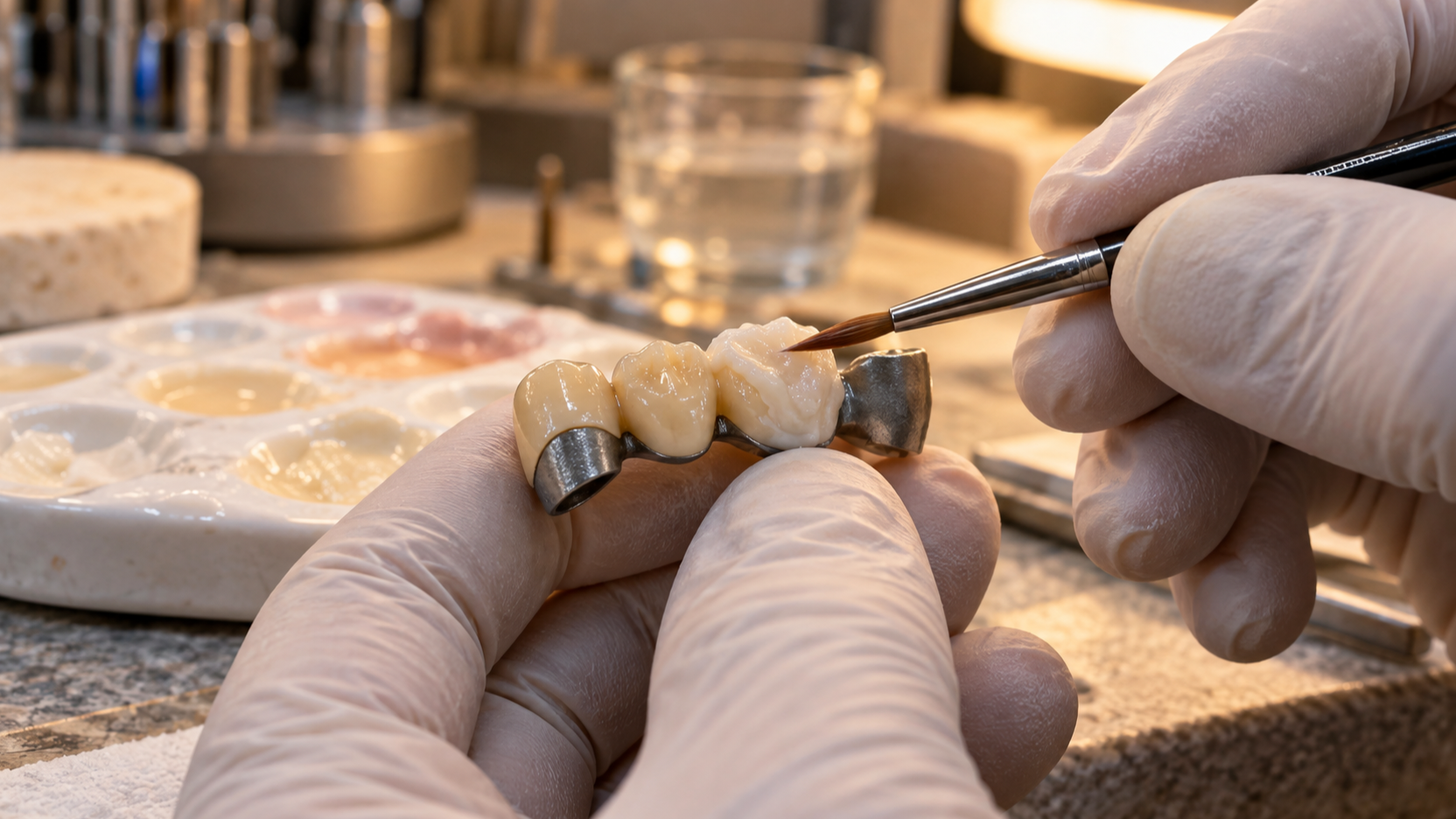
Our crown and bridge restorations category covers zirconia, PFM, and e.max work. A domestic lab can outsource a selected material family or use the category for overflow. The prescription should identify the material and restoration type without relying on an internal nickname that the partner may interpret differently. Labs specifically evaluating zirconia can also review our guide to zirconia crowns from China.
Dental implants
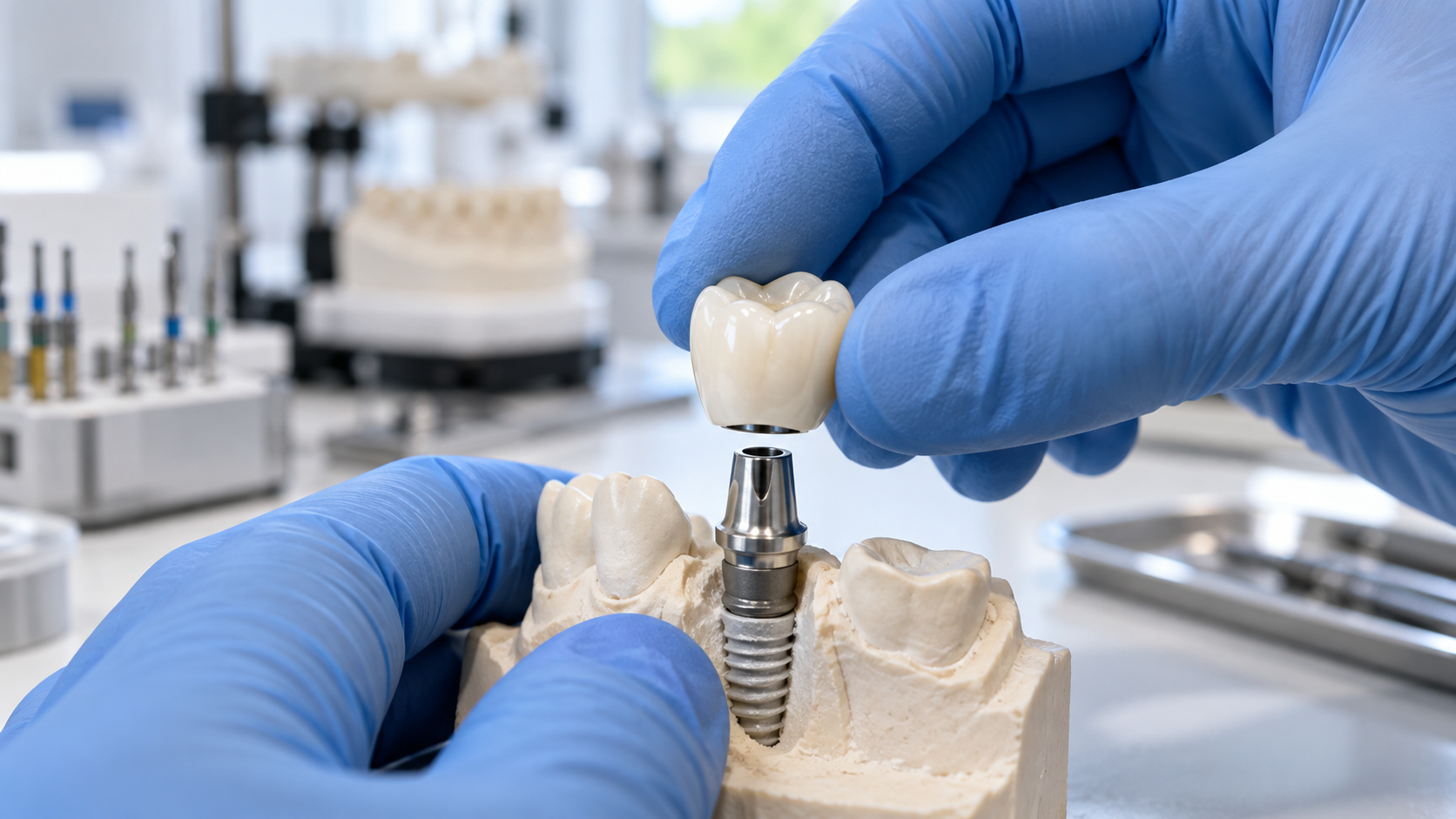
Our implant restorations include Ti-base crowns, custom abutments, and full-arch work. Implant case submission needs unambiguous component and restorative instructions. If a requested component or case detail is unclear, it should become an approval question before fabrication rather than an assumption at the bench.
Removable restorations
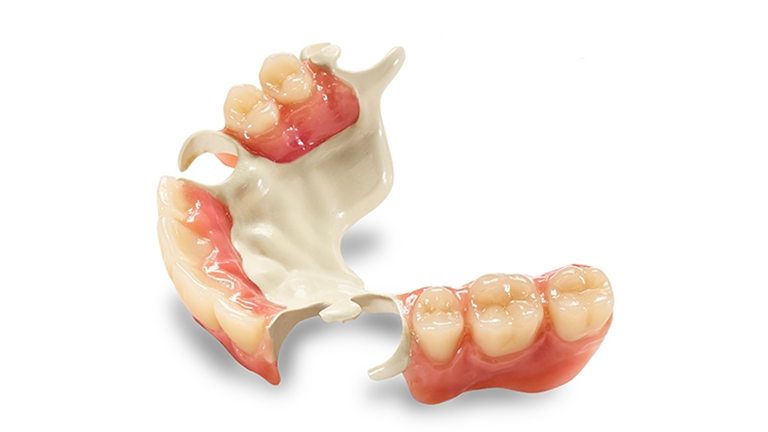
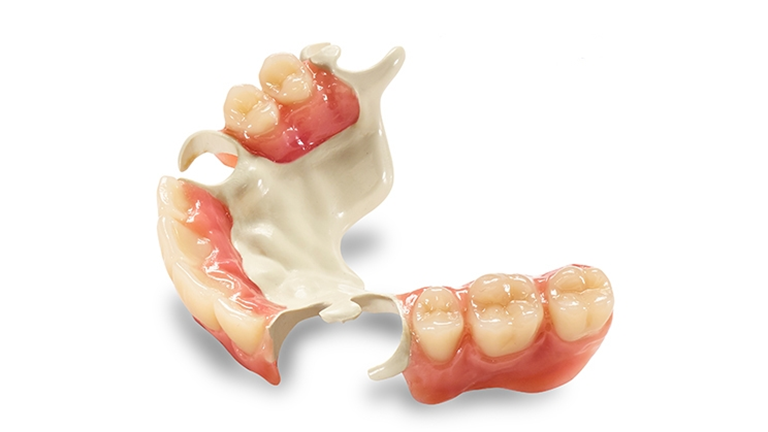
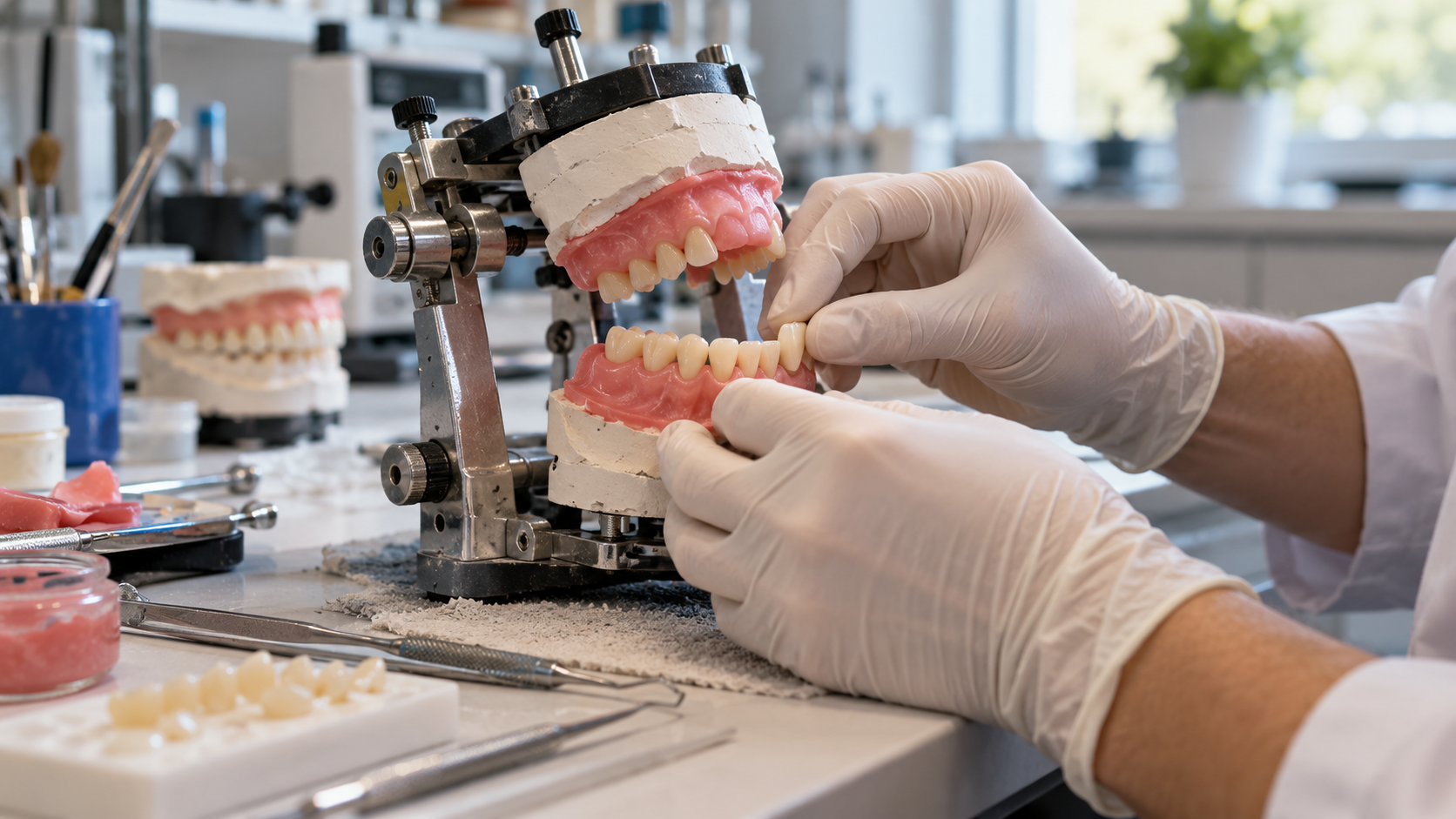
Our removable restorations category includes full dentures, partials, and flexible partials. For lab-to-lab work, both sides should define the exact stage being transferred and the records supplied at that stage. “Denture case” is not a sufficiently precise production instruction.
Precision attachments
Precision attachments can extend a domestic lab’s offering without establishing a separate internal production path. These cases benefit from a single, complete instruction set that connects the attachment requirement with the associated restoration and identifies all approvals before manufacture begins.
Orthodontic appliances
Our orthodontic appliances category gives partner labs another way to broaden their service menu. The onboarding specification should define eligible appliance types and the records required for each. Starting with a controlled scope makes quoting, intake, and quality review easier for both teams.
Addressing Quality and Compliance Concerns
An overseas manufacturing relationship does not make the domestic laboratory’s own compliance work disappear. Each lab should determine the obligations that apply to its role and market, maintain an appropriate vendor file, and obtain qualified regulatory advice where needed. Working with a registered and certified contract manufacturer can make supplier verification more orderly because relevant manufacturing documents can be identified at onboarding.
Keep material records connected to the case
Material traceability should be designed into the case record. Agree on how the requested material is written on the Rx, what supporting material or conformity documentation is returned, and how the domestic lab stores that information. Topway uses FDA-approved materials only, but the partner lab should still specify what evidence it needs rather than assume that one document format fits every market or customer.
Write the remake and adjustment rules before the first dispute
A workable policy distinguishes among a production nonconformance, an incomplete or inaccurate submission, a prescription change, and a chairside change. It should state what records are needed for review, whether the physical restoration must be returned, who authorizes the remake, how shipping is handled, and how the corrected case is prioritized. The objective is not to assign blame by email; it is to establish cause, corrective action, and a clear next step.
For recurring adjustments, review the pattern rather than treating every case as isolated. A repeated contact, margin, shade, or packaging issue may point to a calibration problem in the shared specification. Common objections to overseas work often collapse several different risks into one assumption; our article on common myths about Chinese dental labs separates those concerns so they can be assessed individually. The operational response is documented materials, defined checkpoints, traceable communication, and a measured trial.
Getting Started: Your First Lab-to-Lab Case
Start with a trial batch of 3–5 units that represents the work you actually expect to outsource. Choose cases that can test fit, shade interpretation, prescription handling, packaging, communication, and elapsed turnaround without beginning with the most unusual item in your queue. A trial that is too simple may prove little; a trial made entirely of exceptions will not show how routine production performs.
- Send your written prescription conventions and preferred materials before case submission.
- Identify one technical contact and one backup on each side.
- Confirm the secure file-transfer route and file-naming convention.
- Agree on approval points, packaging, labels, and the domestic lab’s incoming checks.
- Review every trial result against the same acceptance checklist.
After the trial, compare what was prescribed, what was understood, what was delivered, and where communication paused. Update the shared specification before increasing the scope or volume. This turns trial feedback into a repeatable production standard rather than a collection of informal preferences.
To discuss a white-label lab-to-lab partnership with Topway Dental Lab, email [email protected]. Tell us which product lines you want to outsource, the input format you use, and the type of capacity problem you want to solve. For costs, contact us for a current price list.
Frequently Asked Questions
Can my patients tell the difference between cases made domestically and those outsourced lab-to-lab?
The manufacturing location alone does not determine how a case fits, looks, or is received. What matters operationally is whether the prescription, case records, material requirement, shade information, production controls, and final acceptance criteria are aligned. In a white-label arrangement, the domestic lab performs its final check and remains the customer-facing laboratory.
How do I handle FDA compliance when outsourcing to a China partner lab?
First determine the requirements that apply to your business and role, and obtain qualified regulatory advice where necessary. Verify the manufacturer rather than relying on a marketing description, retain the relevant records, and connect material information to the case. Topway is an FDA-registered contract manufacturer for Class I/II medical devices and uses FDA-approved materials only.
What is the typical turnaround time for lab-to-lab outsourced cases?
There should not be one assumed timeline for every product. Turnaround depends on the prescribed restoration, complexity, completeness of the submission, required approvals, production path, and transportation. Ask for a case-specific schedule that separates production from shipping, then build an appropriate receiving and final-inspection window into the date given to your customer.
Do I need to disclose to dentists that I outsource some cases overseas?
Disclosure and documentation requirements can depend on the market, the parties’ roles, and the applicable rules or contracts. We do not suggest treating one general answer as legal guidance for every laboratory. Confirm your obligations with a qualified adviser and reflect the decision consistently in your customer terms and internal procedures.
What happens if an outsourced case needs a remake or adjustment?
Use the written policy agreed during onboarding. Record the case identifier, issue, supporting photographs or scans where relevant, original prescription, requested resolution, and required date. The laboratories can then determine whether the cause was production, source information, a prescription change, or a later clinical change and authorize the appropriate corrective action.
Top Posts

Recent Posts

How can we help you today?
We believe in providing the best possible care to all our existing patients and welcome new patients to sample.
