


Zirconia Crowns from China: Grades & What to Ask Your Lab
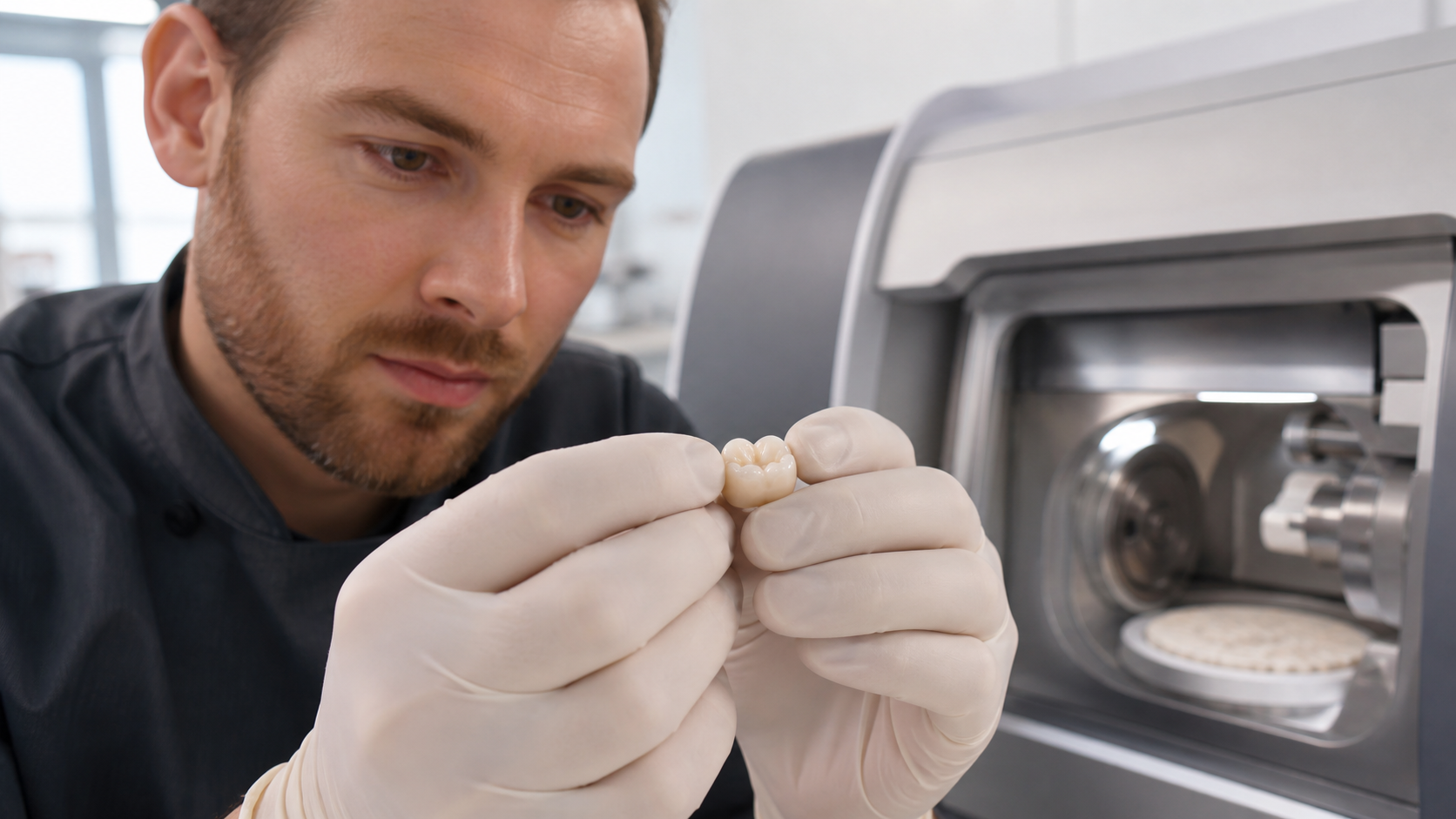
When a zirconia case is outsourced, the useful question is not simply whether the restoration is “zirconia.” The useful questions are which grade will be milled, whether the strength and translucency suit the indication, how the material lot will be controlled, and what the laboratory will check before the case leaves production. Those decisions affect the result more than a broad country-of-origin label.
We are Topway Dental Lab, an outsourcing dental lab founded in 2006 in Shenzhen. Our current facility is in Bao'an District, Shenzhen, China. From that production perspective, this guide explains how we discuss zirconia with overseas dentists and laboratory owners: indication first, material properties second, then design, shade instructions, quality control, and documentation. It is a practical framework for evaluating zirconia crowns from China without relying on brand names or vague claims.
Why Zirconia Dominates Overseas Lab Orders
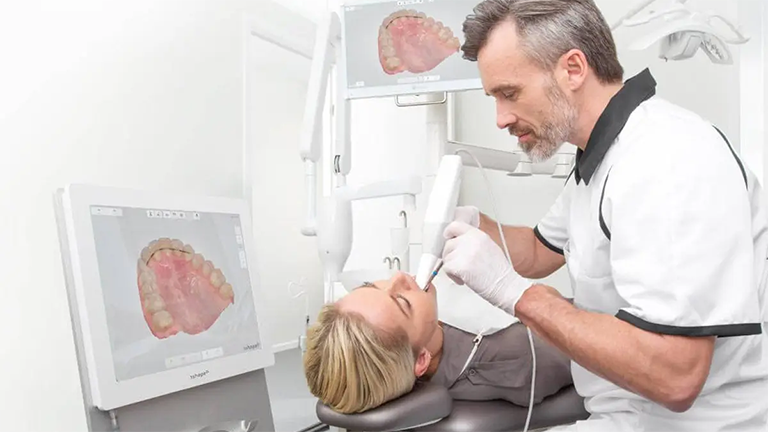
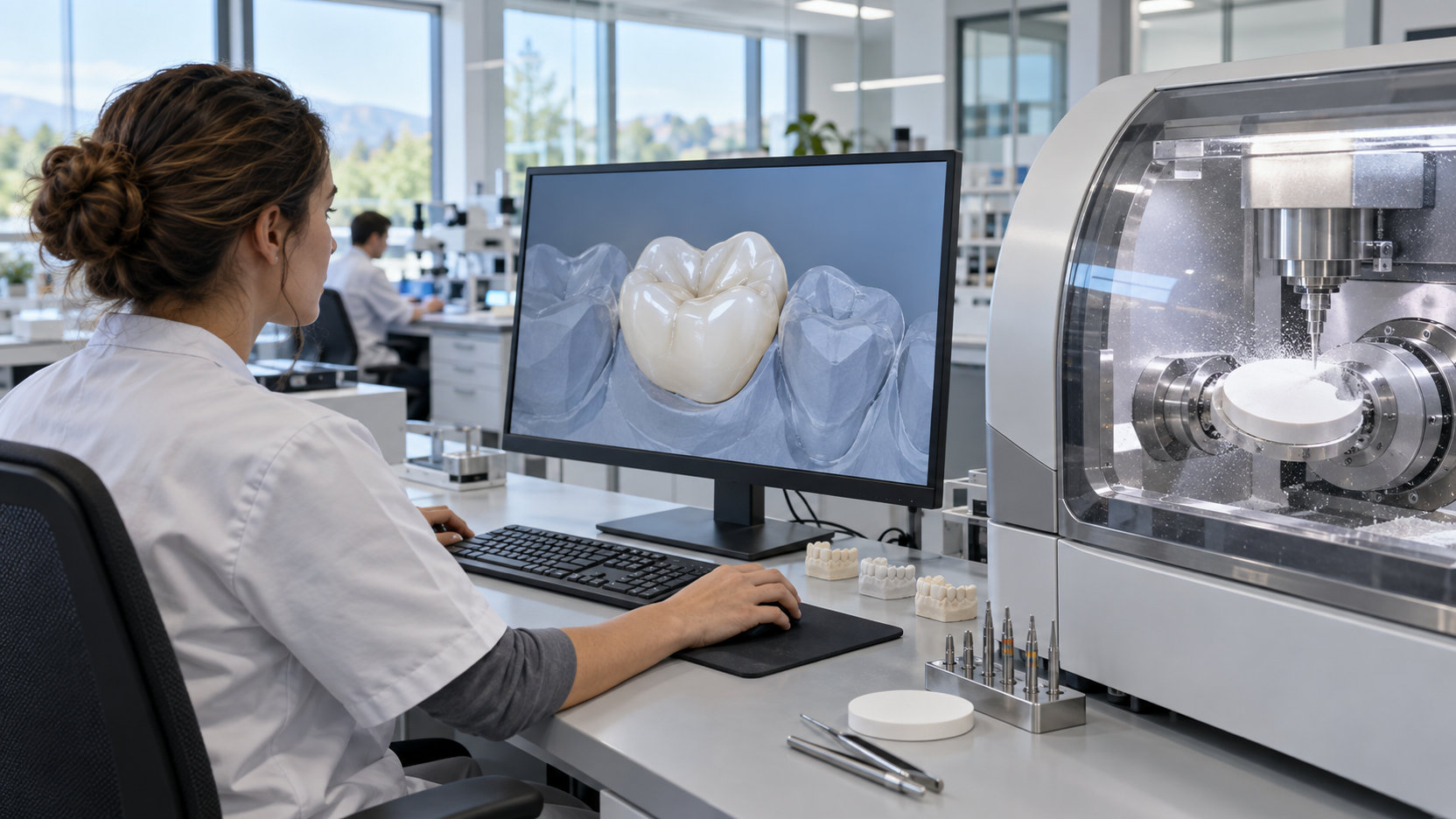
Zirconia fits a digital outsourcing workflow particularly well. A scan or digital model can support CAD design, the approved design can move into milling, and the restoration can then proceed through the appropriate finishing and inspection stages. This creates clear checkpoints. The prescribing dentist or partner lab can define the indication and desired appearance; our team can review the design inputs before production; and both sides can resolve an unclear margin, contact, occlusion, or shade instruction before the finished case is shipped.
The material family also gives the prescriber room to balance appearance and mechanical demands. An anterior single unit, a posterior bridge, and an implant-supported restoration do not present the same priorities. A more translucent zirconia may be considered when optical integration is central, while a higher-strength option may be preferred where load and connector design carry more weight. “Use zirconia” is therefore an incomplete prescription. The grade, construction, indication, shade strategy, and surface finish should align.
In our lab, the case begins with the prescription and the supplied records rather than at the milling machine. We first establish what is being restored and whether the information supports a predictable design. CAD review follows, then material selection and milling, followed by the specified finishing route and quality checks. Our broader crown and bridge restorations page shows where zirconia sits within the fixed-restoration range.
Zirconia Grades Explained: Which One Fits Your Case?
Terms such as high-translucency, ultra-high-translucency, high-strength, and multilayer are useful only when they lead to an indication-based decision. They are not interchangeable quality labels. Greater translucency can help a restoration look less opaque, but the most translucent choice is not automatically the best choice for every posterior or multi-unit case. Conversely, choosing solely for strength can create an avoidable aesthetic compromise in a visible area.
High-Translucency and Ultra-High-Translucency Zirconia
For an anterior single unit, optical behavior often has greater weight in the discussion. We ask what the dentist is trying to match, how much characterization is expected, whether the stump or abutment presents a masking challenge, and whether the requested construction is monolithic or includes an aesthetic layering approach. High-translucency and ultra-high-translucency grades may help with light transmission, but the selection still has to account for the preparation, restoration thickness, opposing dentition, and functional situation.
The word “ultra” should never replace a case assessment. If an outsourcing lab recommends the same UHT disc for every anterior and posterior indication, ask how it is matching material properties to the design. A responsible answer should connect the proposed grade to the restoration rather than treating translucency as a universal upgrade.
High-Strength Monolithic Zirconia
High-strength monolithic zirconia is generally discussed when durability and structural design are the leading priorities. Posterior units and bridges require particular attention to available space, connector dimensions, occlusal scheme, and the limits of the selected material. The lab should not compensate for incomplete clinical information by making a silent material decision. If the requested grade and the proposed design appear poorly matched, that should trigger a question before milling.
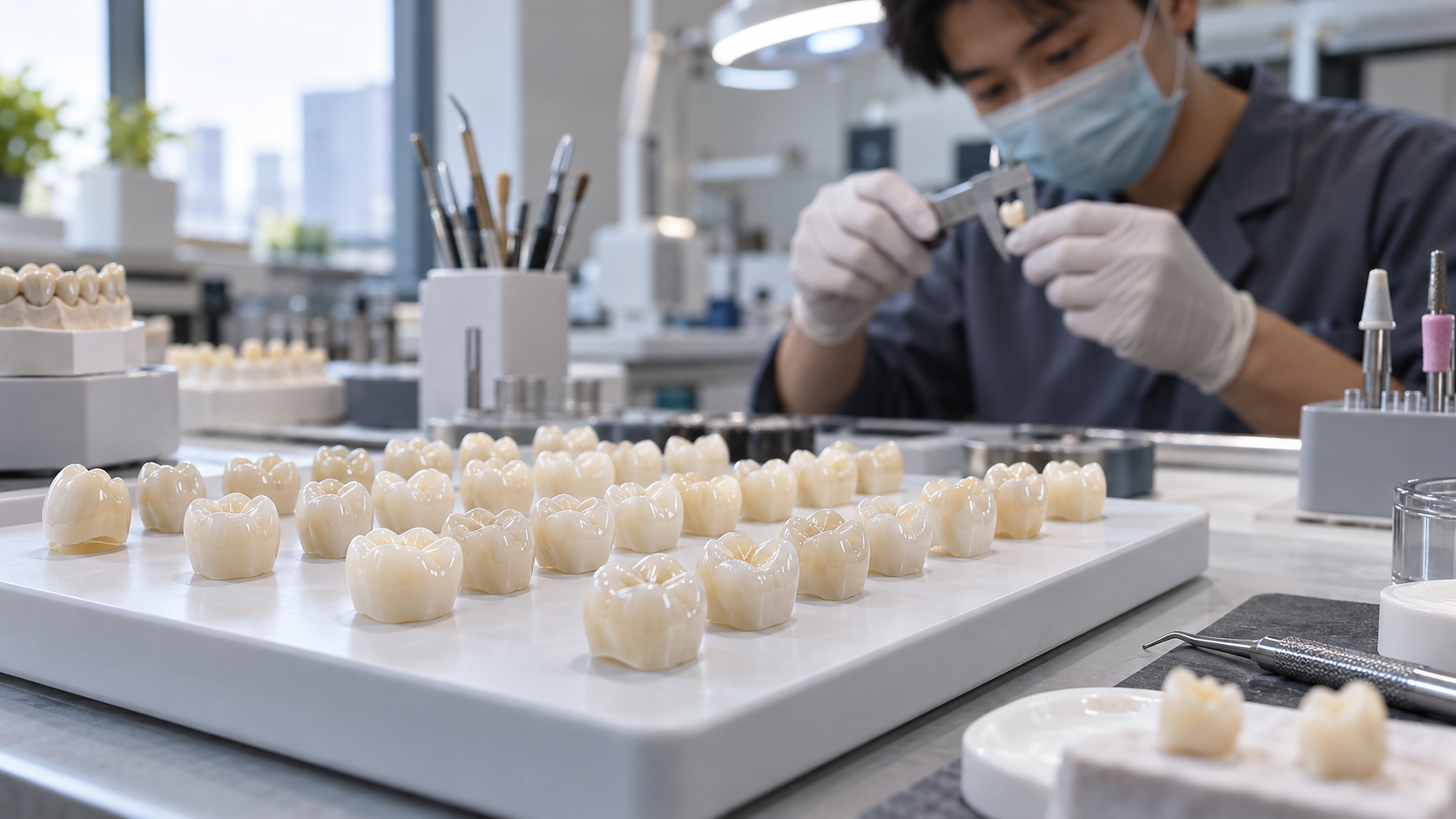
Monolithic does not mean “finish-free.” Contour, emergence, proximal contacts, occlusal contacts, surface texture, shade treatment, and final surface condition still require deliberate control. These are technician decisions and inspection points, not automatic consequences of the CAD/CAM process.
Multilayer and Gradient Zirconia
Multilayer zirconia is intended to create a transition through the restoration rather than a uniform appearance from cervical area to incisal or occlusal area. That can be valuable when natural shade blending is important. It also makes positioning within the disc meaningful: the design must be nested with the intended transition in mind. The prescription should state the target shade and any case-specific characterization instead of assuming that a multilayer blank will solve every shade problem by itself.
For a mixed anterior case, photographs and clear shade information can be as consequential as the material label. For a bridge, the laboratory must also keep the structural design in view. The choice is not “multilayer versus quality”; it is whether a gradient material and the planned construction serve that specific case.
A Practical Indication Matrix
| Case type | Primary discussion | Questions to settle before production |
|---|---|---|
| Anterior single crown | Translucency, masking, shade integration, surface character | What is the substrate? Is a monolithic or layered effect requested? Are photographs supplied? |
| Posterior single crown | Functional design, available space, antagonist, finish | Is clearance adequate? Are the margins and bite records readable? What material priority has the prescriber set? |
| Posterior bridge | Material strength, connector design, span, occlusion | Does the selected grade suit the proposed construction? Is there enough design space? |
| Implant crown | Interface, emergence, restorative space, access and contour | Is the implant information complete? Is the restoration cement-retained or screw-retained? Has tissue contour been communicated? |
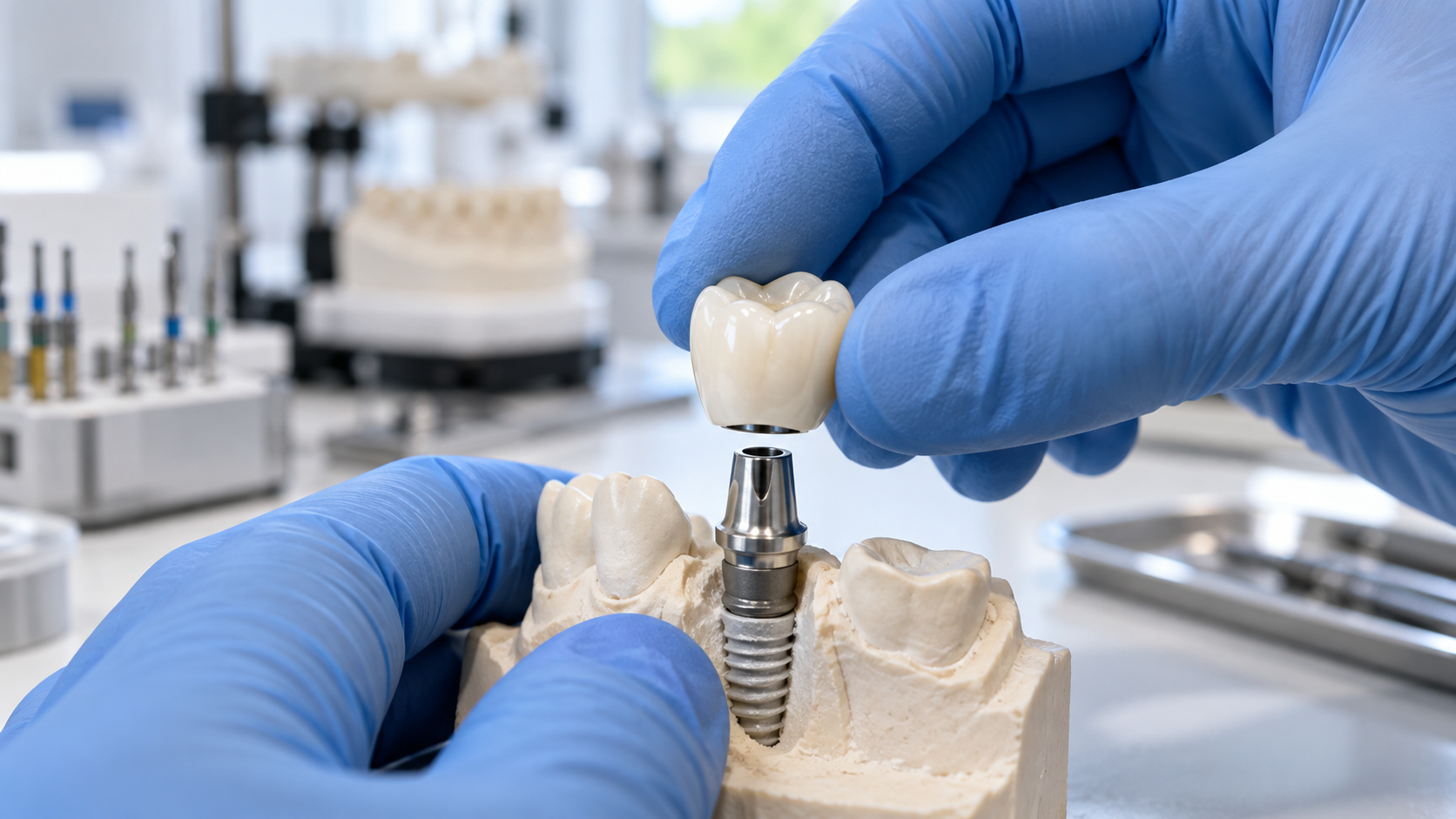
For implant work, material choice is only one part of the prescription. Interface data, restorative space, emergence, access position, and retention approach all affect the design conversation. Our page on implant-supported crowns provides the relevant product context.
Material Sourcing & Quality Assurance at Scale
Topway uses only FDA-approved materials. We are certified to ISO 13485 and ISO 9001. These facts matter, but a certificate alone does not tell a customer how an individual case is controlled. When evaluating any zirconia dental lab, ask how the laboratory connects incoming material identification, the work order, the selected zirconia grade, production status, and final inspection.
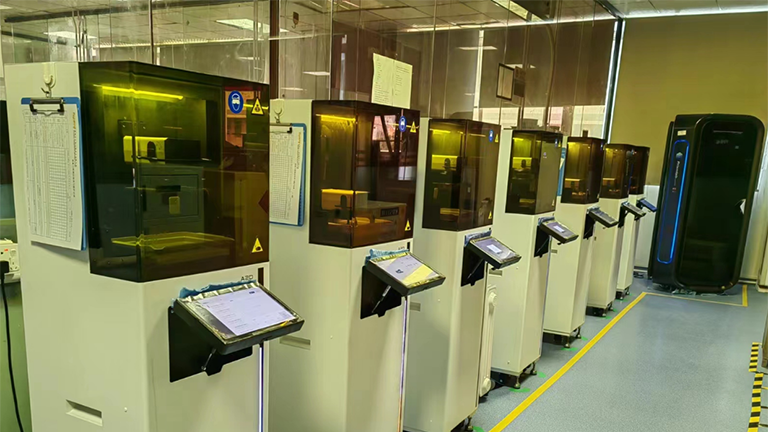
Our production facility covers 5,000 square meters and has over 300 employees. At that scale, traceability cannot depend on one technician remembering a case. The working record needs to preserve the case identity and the prescribed material choice as the restoration moves between review, design, milling, finishing, and inspection. If a customer raises a material question, the lab should be able to trace it through the case record instead of answering from assumption.
For a new account, we recommend making material documentation part of the onboarding conversation. Ask what information can be supplied about the material used for a case, how substitutions are handled, and who contacts the customer when the prescribed option conflicts with the design or indication. A substitution made without approval is a red flag. A documented query before production is a green flag.
Material control is only one layer of assurance. The restoration must also pass checks relevant to the prescription and design. We describe the broader sequence in our 7-step quality control process. For zirconia, the practical point is that inspection should not be deferred to a final glance after every production decision has already been locked in.
Pricing Considerations for Outsourced Zirconia Work
Outsourced zirconia work from our China dental lab can be significantly lower than typical domestic lab fees, but “zirconia crown” is not a complete basis for comparing quotations. A low headline figure may omit the differences that matter: zirconia grade, monolithic versus layered construction, anterior characterization, implant components, design complexity, and the records or services included in the quotation.
Compare like with like. Give each prospective laboratory the same case description and ask it to identify what is included. For a tooth-borne unit, state the restoration type, position, grade priority, shade, and finish. For implant work, include the restoration and retention approach plus the required component context. If the scope is unclear, two prices may describe two different products.
- Material grade: Higher translucency, higher-strength, and multilayer options should be identified rather than grouped under a generic zirconia label.
- Construction: Monolithic finishing and additional aesthetic layering involve different production requirements.
- Case type: An implant restoration introduces interface and component considerations that a tooth-borne crown does not.
- Complexity: Shade communication, characterization, bridge design, and incomplete records can change the work required.
- Service scope: Confirm what the quotation includes and how remakes, changes, and shipping are handled before comparing laboratories.
Because a current quotation depends on the case and requested service, contact us for a current price list. Our China dental lab pricing overview explains how to structure a more useful comparison without reducing the decision to a single unit label.
Digital Workflow: From Scan File to Finished Crown
A clean digital handoff begins before upload. Confirm that the receiving laboratory accepts the export available from your scanning or design system. We recommend confirming file compatibility and the transfer route with us before the first live case rather than building a workflow around an assumption.
File transfer is only the carrier; the prescription remains the control document. The submitted case should clearly identify the patient or case reference, restoration site, restoration type, requested zirconia grade or performance priority, shade, special characterization, and relevant implant information. Include the opposing arch and bite relationship when they are needed to design the restoration. If photographs are important to an aesthetic decision, label them so the technician knows what each image is intended to communicate.
Our Production Checkpoints
Intake and case review: We match the received records to the prescription and look for information that could prevent a sound design decision. An unreadable margin, uncertain bite, missing implant detail, or contradictory shade instruction should become a query rather than an assumption.
CAD design review: Before milling, our technicians review the proposed restoration in relation to the supplied records and requested material. The review focuses on whether the design and prescription agree. Where a material or design concern needs the customer’s decision, communication should happen at this checkpoint.
Milling and finishing: After the design direction is settled, the restoration proceeds through the selected zirconia production route and the specified aesthetic finish. Monolithic, characterized, and layered outcomes should not be treated as the same instruction.
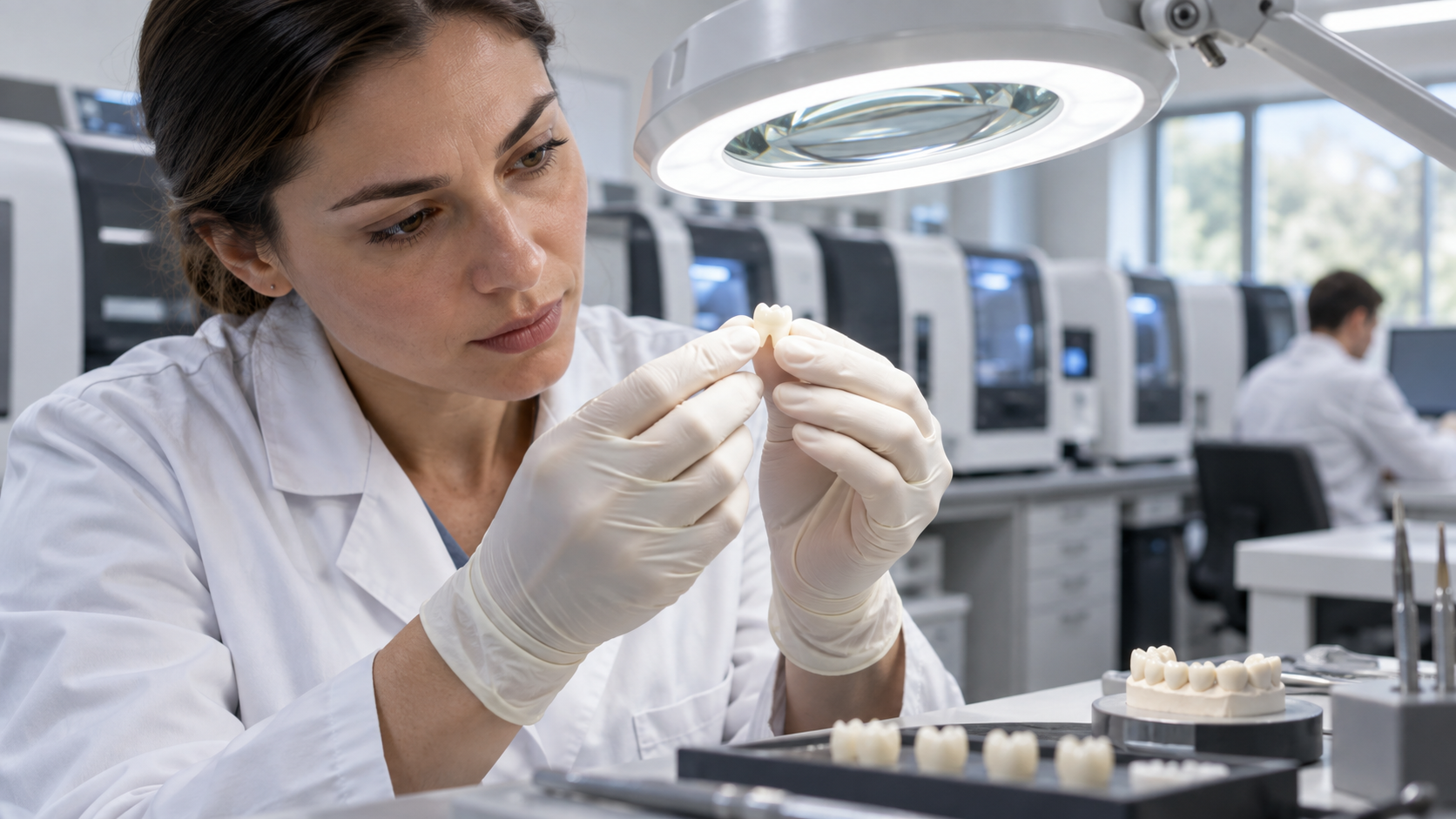
Inspection and release: The completed case is checked against the work order and the applicable quality-control stages before release. The goal is continuity: the indication discussed at intake must remain connected to the material, design, shade direction, and finished restoration.
Our digital dental lab capabilities page introduces the service, while our guide on how to send digital impressions overseas covers the handoff in more detail. Turnaround varies with the case, construction, completeness of records, communication required, production scheduling, and shipment. We therefore confirm expectations for the actual case rather than publishing an unsupported universal number.
Compliance & Certifications You Should Verify
Topway Dental Lab is an FDA-registered contract manufacturer for Class I/II medical devices. Note the precise wording: FDA registration is not the same as FDA clearance, and a lab that blurs that distinction in its marketing deserves a follow-up question. We also hold a CE certificate, ISO 13485 and ISO 9001 certifications, the Medical Device Production License of China, and a Class II Medical Device Product Registration Certificate issued by China FDA/NMPA.
For a buyer, verification should be specific. Ask the laboratory to identify the legal manufacturing entity shown on a certificate or registration, the scope relevant to the work, and the material documentation available for the proposed restoration. Check that the names and addresses in the documents can be reconciled with the company quoting and producing the case. A logo placed on a website is not a substitute for a readable document and a clear explanation of what it covers.
Requirements also differ by destination and customer role, so the purchasing clinic or laboratory should determine what documentation it needs for its own market. Our FDA and CE compliance guide provides a deeper walkthrough of the compliance questions to raise with an overseas partner.
How to Evaluate a China Lab for Zirconia Cases
Start with a small, representative trial rather than sending only the easiest unit or immediately committing regular volume. A useful trial reflects the type of case you expect the laboratory to handle: for example, an aesthetic single unit, a posterior case with clear functional requirements, or an implant case with complete records. The purpose is to test both the restoration and the working relationship.
What to Ask Before the Trial
- Can the lab provide the certifications and registrations it claims, using the exact legal descriptions?
- Can it explain the proposed zirconia grade in terms of the indication, translucency, strength priority, and construction?
- How does it record the selected material and handle a requested substitution?
- What shade information and photographs does it want for a demanding anterior case?
- At what stage will it query an unclear margin, bite, connector, implant detail, or prescription?
- How are design changes, case status, and release decisions communicated?
- What is included in the quotation, and what information is required to confirm turnaround?
Red Flags and Green Flags
| Red flag | Green flag |
|---|---|
| “Premium zirconia” with no grade or indication discussion | A recommendation tied to the case, design, and aesthetic priority |
| Material substitution without customer approval | A documented query before the case proceeds |
| Certification language that changes when questioned | Exact, consistent descriptions and supporting documents |
| A fixed promise before records and case complexity are reviewed | An expectation confirmed after case review |
| Silence when clinical records conflict | Concise questions with images or design context where useful |
After the trial, review fit-related feedback, contacts, occlusion, contour, shade execution, documentation, packaging, and communication as separate categories. One attractive crown does not prove that a lab can manage repeat volume; one adjustment does not by itself identify the cause. Record the feedback in language the production team can act on, then assess whether the next case shows controlled improvement.
That is how we prefer a new relationship to develop: clear prescriptions, traceable material decisions, questions raised before irreversible production steps, and feedback connected to the case record. To discuss a trial or request a current price list, contact Topway Dental Lab at [email protected] or call +86 153 2504 5142.
Frequently Asked Questions
Is zirconia from a Chinese dental lab the same quality as domestic labs?
Country alone does not establish the quality of an individual restoration. Evaluate the material specified, the design review, the technician’s execution, traceability, inspection, and communication. Ask a prospective China lab for its documents and run a representative trial. Topway uses only FDA-approved materials and operates with ISO 13485 and ISO 9001 certifications, but we still encourage customers to assess actual case control rather than rely on labels.
What zirconia grade should I specify when ordering from an overseas lab?
Specify the indication and your priorities, not just “zirconia.” For an anterior single unit, discuss translucency, substrate, shade integration, and construction. For posterior or bridge work, discuss strength priority, available space, connector design, and occlusion. For an implant crown, include interface and emergence information as well. If you do not name a grade, ask the lab to recommend one and explain why it fits the case before milling.
How do I verify that a China lab uses FDA-approved zirconia materials?
Request material documentation for the proposed case and ask how the material identity is recorded on the work order or production record. Confirm how the lab handles substitutions and whether it will obtain approval before changing the prescribed material. Do not treat an FDA logo or an imprecise “FDA certified” phrase as sufficient evidence. Topway’s stated policy is that we use only FDA-approved materials.
What is the typical turnaround for zirconia crowns from China?
There is no single responsible answer without reviewing the case. Construction, case complexity, record completeness, questions requiring approval, production scheduling, and shipment all affect the expectation. Send the prescription and records first, then ask for a case-specific timeline. We do not substitute an unsupported universal turnaround number for that review.
Can I send digital impressions directly for zirconia crown fabrication?
A digital case can support zirconia crown production, but confirm file compatibility and the transfer method with us before the first live submission. The scan should be accompanied by a complete prescription and the records needed for design, including the relevant opposing and bite information where applicable. If the case is implant-supported or aesthetically demanding, add the corresponding implant, shade, and photographic information.
Top Posts

Recent Posts




How can we help you today?
We believe in providing the best possible care to all our existing patients and welcome new patients to sample.
