


How to Choose a Crown and Bridge Dental Lab: Quality Guide
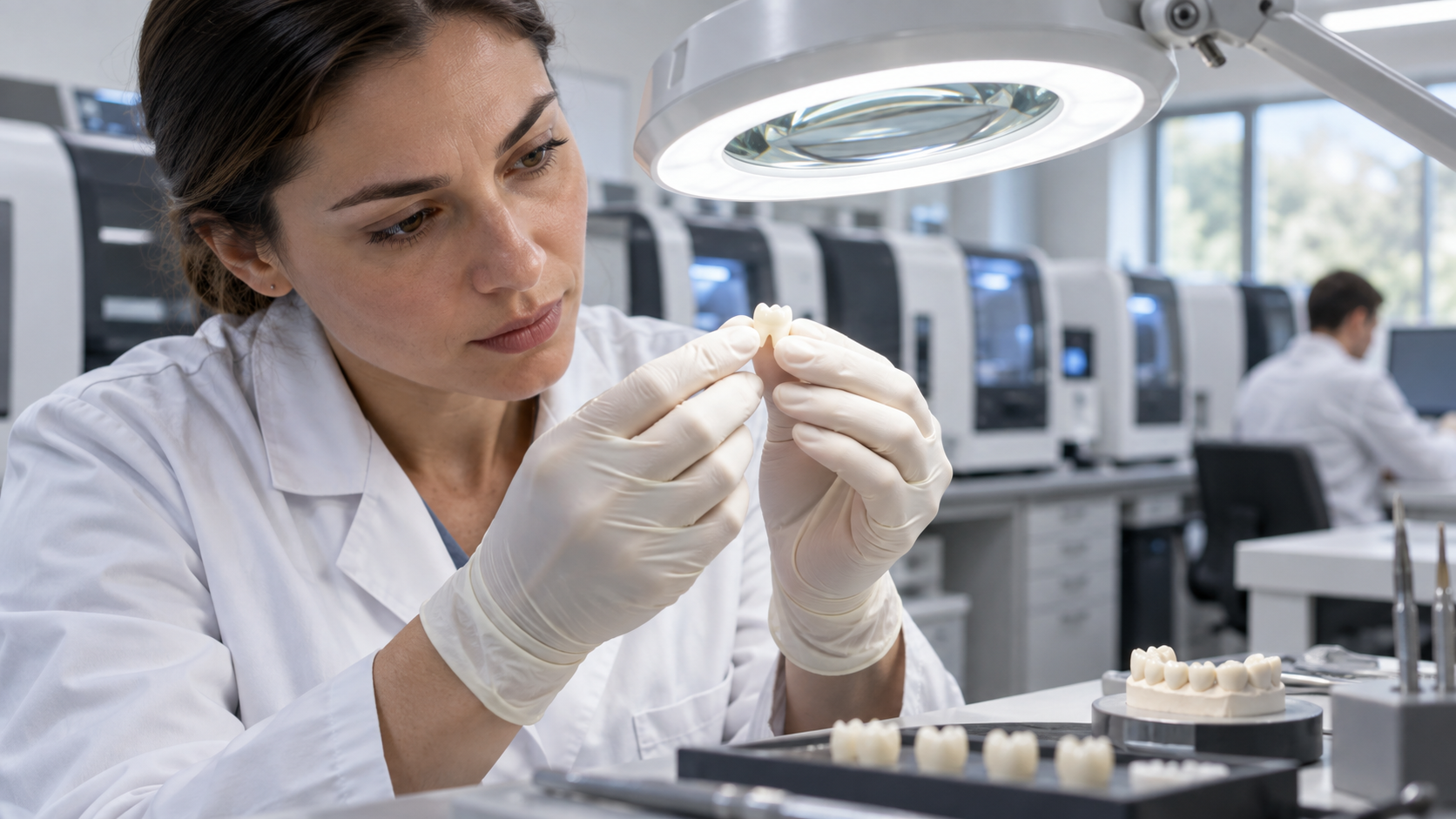
Before sending a crown case overseas, decide what would make you comfortable fitting the restoration: an agreed prescription, identifiable materials, clear inspection records, and a usable answer when something needs changing. A polished sample is a starting point. Your evaluation should also cover what happens when a margin is unclear, the shade request needs clarification, or the requested delivery date leaves little room for questions.
We are Topway Dental Lab, an outsourcing dental lab and contract manufacturer founded in Shenzhen in 2006, now based in Bao'an District. Our early work included outsourcing for US dental laboratories. In this guide, we set out the questions we recommend asking any prospective crown and bridge dental lab — including us — before committing patient cases or regular production volume.
Why Crown and Bridge Quality Varies Between Labs
Evaluate the decisions behind the finished restoration
When assessing crown and bridge lab quality, look beyond the surface finish. Ask a prospective partner to walk through a case from prescription review to dispatch. Who interprets the requested material and design? Who flags incomplete preparation information? Where does the technician record a decision that changes the original instruction? Include fit, function, appearance, and long-term service expectations in that conversation, without accepting unsupported longevity promises.
For material selection, ask why the proposed option suits the prescription. For technician judgment, ask how an ambiguous instruction would be resolved. For workflow design, ask who must approve a correction before production continues. These questions give your evaluation a practical structure: material, interpretation, execution, and verification.
Ask how individual cases receive attention
Avoid deciding from labels such as “high-volume production” or “bespoke artistry” alone. Instead, give the lab a realistic example: a crown with a specific contour request, an adjacent restoration to match, and a photograph that needs explanation. Ask where those details appear in the work instructions and who checks them against the finished case.
For a laboratory owner, extend that exercise to several clinicians with different preferences. Ask how the partner would distinguish a standing account preference from an instruction that applies only to the current case. For a dentist, ask how your clinical priorities would reach the person making the restoration.
Assess the work around the unit fee
When comparing quotations, include your own review time, clarification work, delivery planning, and handling of adjustments. Define what each quotation includes before comparing it. For our crown and bridge restorations, contact us for a current price list. Then evaluate the proposed service against the same written requirements you use for other suppliers.
Quality Standards Every Crown and Bridge Lab Should Meet
Start with quality management documentation
Put ISO 13485 and ISO 9001 on your dental lab quality standards checklist. Our listed certifications include both. When evaluating a supplier, request the relevant documentation and review the named organization, scope, and validity information. Ask the lab to explain how its quality system applies to your proposed work.
Follow that document review with a case-level question: “If we change an instruction after design review, how would the change be recorded and checked?” Request a walkthrough of the proposed record. Make certification review and restoration review separate acceptance tasks, so that neither substitutes for the other.
Be precise about FDA and CE claims
We are an FDA-registered contract manufacturer for Class I/II medical devices and hold a CE certificate. Use those exact descriptions when assessing our credentials. Ask any supplier using broader phrases such as “fully approved” to identify the specific document behind the wording and explain the scope of its claim.
When asking what FDA registration or a CE certificate guarantees, keep the discussion tied to the documentation. Do not use a credential as your acceptance test for an individual crown's fit, shade, or delivery. Request evidence for those matters separately. Our page on FDA and CE compliance for outsourced restorations is a starting point for that discussion; request the relevant certificates as part of your supplier review.
Request material identification and traceability
We use only FDA-approved materials. For your own purchasing specification, ask for the proposed material identification, supporting documentation, and an explanation of how a production batch would be connected to a case. Confirm which records you can request and how a material substitution would be handled before work begins.
Keep material documentation distinct from the laboratory's company credentials. A useful evaluation question is: “If I query this restoration after delivery, what record will identify the material used?” Require a concrete answer and agree the evidence you need, rather than assuming that a general material statement supplies every detail.
What to Check Before Sending Your First Case
Design a trial with written acceptance criteria
Request sample work or discuss a limited trial before transferring regular volume. Choose work that represents your intended service, and state what you will assess before submitting it. We recommend a shared review sheet covering prescription interpretation, fit, contacts, occlusion, shade, finish, communication, and delivery against the agreed schedule.
Use the trial to examine the exchange of information as well as the restoration. Record the original instructions, any questions, the agreed response, and your findings at review. If something needs changing, describe the location and requested correction precisely. Give the lab an opportunity to explain the discrepancy and propose the next action.
Clarify shade communication before production
Ask what shade information and photographs the lab wants for the proposed case. Agree how to label the images, identify the reference shade, describe the area of concern, and distinguish an overall shade request from a localized characterization request. Ask how an unclear or inconsistent image set would be queried.
A useful instruction might identify which adjacent tooth to reference, where the requested appearance differs, and which feature matters most to the clinician. Ask the supplier to restate that request in its case review. Keep the exchange focused on a decision the technician can act on.
Test the actual file exchange
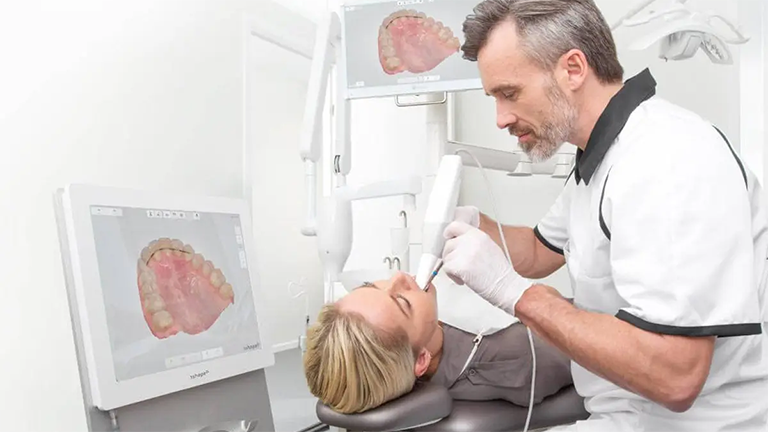
Before submitting clinical work, ask whether the lab can accept your intended STL export or other proposed file package. Identify your scanner or design system and confirm the receiving route, especially where access depends on a proprietary platform. Request confirmation that a test package opens and contains the information needed for review.
Our digital workflow for sending cases overseas offers a place to begin the handoff discussion. Confirm compatibility for your own setup directly; do not treat a general description of digital services as confirmation for every system.
Agree who answers and when
Ask whether a dedicated account manager or another named contact would handle your work. Establish working-hour overlap, the preferred communication channel, and an escalation route for unresolved questions. Request milestones for receipt, review, any required approval, production completion, and dispatch. Agree case-specific dates instead of assuming a fixed number of days for every restoration.
Material and Process Red Flags to Watch For
Unidentified materials or unexplained substitutions
Treat an inability to identify the proposed zirconia, ceramic, or other restorative material as a reason to pause the evaluation. Ask for a written identification and the supporting material documentation. If the response remains vague, keep that item unresolved on your review sheet rather than filling the gap with an assumption.
Apply the same discipline to substitutions. Ask whether a change would require your approval and where that approval would be recorded. Our guide to zirconia crown materials and options can help frame a material discussion. For supplier selection, keep the central question broader: will you know what was specified, what was used, and what changed?
No clear inspection points between stages
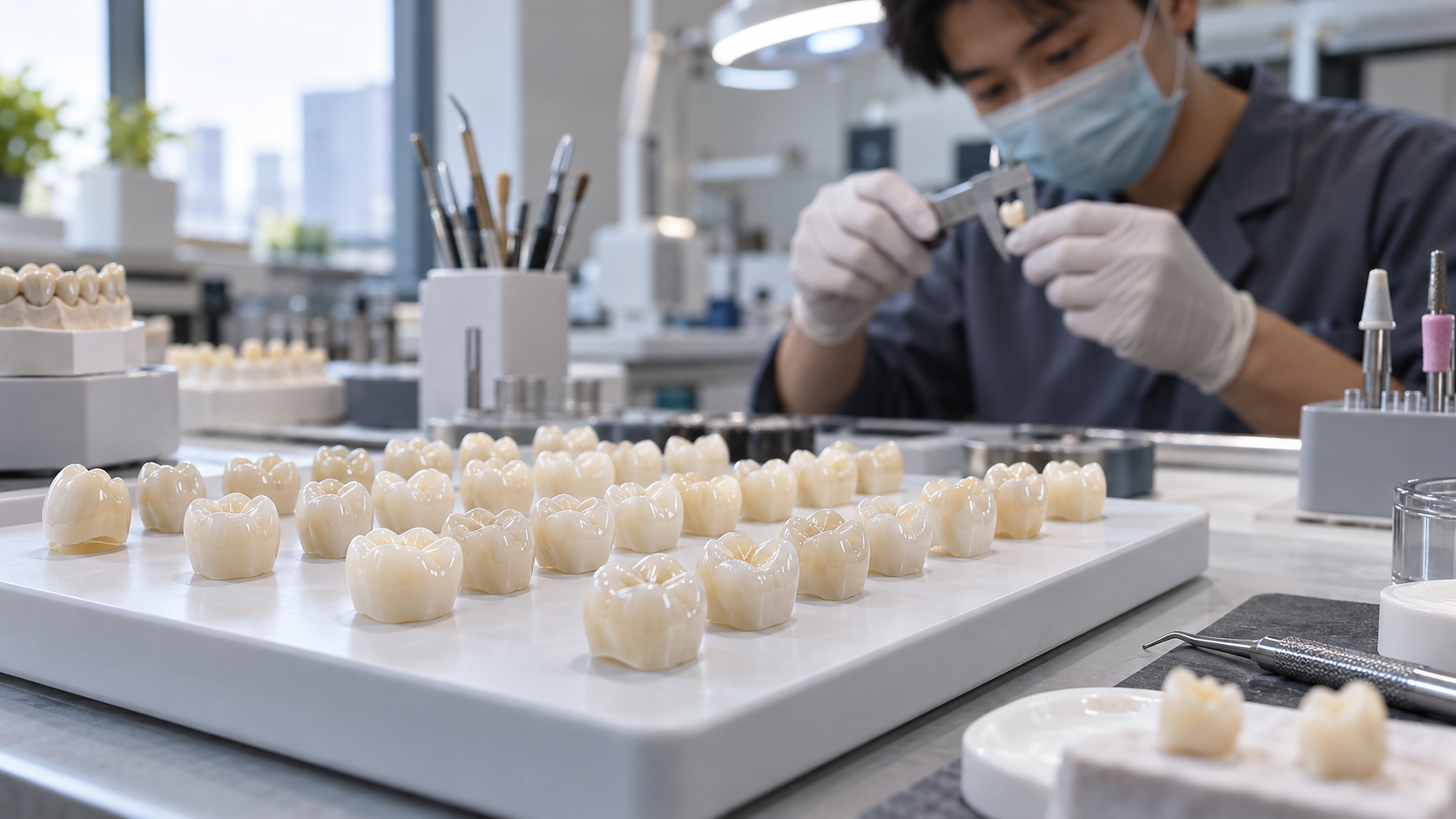
Ask the supplier to identify its inspection points around design, milling, any specified layering, glazing, and final release, as applicable to your case. For each point, request the reviewer, the acceptance criteria, and the action taken when work needs correction. “We inspect everything” should prompt a request for that detail.
Use our 7-step quality control process as a starting point for questions about our workflow. For any lab, ask how its published process would apply to your proposed restoration. Keep your supplier evaluation focused on the evidence and responsibilities relevant to the case.
Documents that do not answer your question
If you request material documentation and receive only a company certificate, ask again for the material record. If you request inspection evidence and receive only a promotional photograph, specify what you need to evaluate. Give the supplier a clear opportunity to supply the missing information.
We recommend keeping unresolved items visible in a simple review log: requested evidence, response received, remaining question, and person responsible for closing it. Before increasing volume, decide which gaps must be resolved and which proposed arrangements still need testing.
How a Structured QC Process Protects Your Patients
Define the evidence required at each checkpoint
Build your dental crown outsourcing quality review around explicit acceptance decisions. The following is a suggested evaluation framework, rather than a statement that every supplier uses the same sequence. Ask your prospective partner to explain its actual process and agree which records will be available to you.
| Review point | Question to ask | Evidence to request |
|---|---|---|
| Design review | Does the proposed design follow the prescription and approved changes? | Case instructions and the record of any design clarification. |
| Marginal fit check | How is the margin assessed, and what requires further review? | The inspection method and a record of any unresolved concern. |
| Shade verification | What reference is used to assess the requested appearance? | The agreed shade instructions and relevant review images. |
| Final inspection | Who decides that the case is ready for dispatch? | The release check and confirmation that open questions are closed. |
Ask what digital validation actually includes
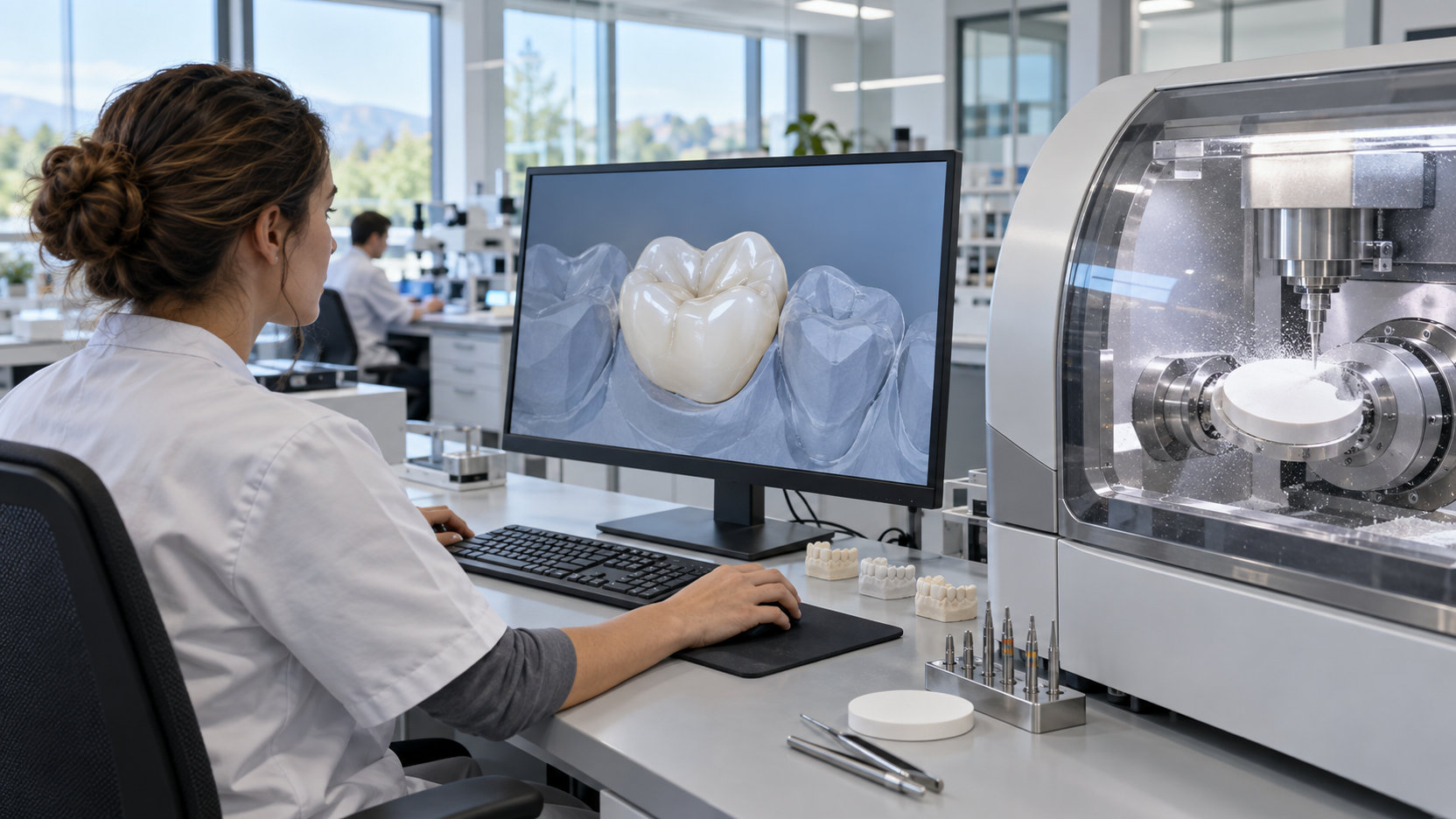
If a lab describes CAD/CAM validation or scanner-based fit confirmation, ask it to demonstrate what it checks and what information it records. Ask which findings require technician review and which questions need to return to the clinician. Keep the discussion specific to the proposed workflow instead of accepting “digital precision” as a complete explanation.
For example, request a walkthrough showing how an approved design instruction would be compared with the case at a later checkpoint. Ask how the reviewer would handle a discrepancy and who could authorize the next step. This gives you a defined process to evaluate during the trial.
Agree documentation and photography requirements
Ask whether pre-shipment photographs and inspection records are available for every case, selected cases, or by request. Define the views and information you want to receive, when you would receive them, and whether a response from you is required before dispatch. Do not assume universal photography or pre-shipment approval without an agreement.
Use these records to prepare for your clinical review and to investigate discrepancies. Retain responsibility for your own acceptance decision, and document any question that remains open. The aim of the supplier framework is to make checks and unresolved issues explicit before the next person takes responsibility for the case.
Evaluating a Crown and Bridge Lab as a Long-Term Partner
Agree adjustment and remake responsibilities
Request the proposed adjustment and remake policy in writing before committing volume. Ask how to report a concern, what supporting information is needed, who reviews the case, and how the decision is communicated. Clarify responsibility for shipping, any proposed charges, and scheduling before a problem arises.
A policy we recommend looking for distinguishes an agreed instruction that was not followed from a prescription that has subsequently changed. Ask how disagreements would be reviewed and how a proposed correction would be approved. Define these terms with your chosen supplier; do not infer an unlimited guarantee from general reassurance.
Evaluate repeat performance against agreed dates
Continue the same review after the trial. Record promised and actual milestones, clarification requests, adjustments, and how concerns were resolved. Compare work over successive orders and across the case types you intend to outsource. Ask about recurring discrepancies with the relevant case records in front of you.
Include seasonal scheduling in the discussion. We have made special production scheduling arrangements for Chinese New Year since 2022. Request the arrangements relevant to your planned orders and agree submission and dispatch dates directly. Avoid carrying a previous case's schedule into a new order without confirmation.
Discuss capacity with the same care as quality
Our lab has over 300 employees and a facility covering 5,000 square meters. Use that context to open a capacity discussion, then ask about your actual case mix and expected workload. Request an approach for increasing volume, maintaining communication, and reviewing the results at each agreed step.
For a laboratory owner, include how clinician preferences would be maintained across accounts. For a dental practice, include who handles questions when the usual contact is unavailable. Choose a partner after examining both the restorations and the working relationship. To discuss a trial with our lab, email [email protected] with your intended case types, submission method, and questions.
Frequently Asked Questions
What certifications should a crown and bridge dental lab have?
Include ISO 13485, ISO 9001, and the supplier's relevant regulatory documentation in your review. Our credentials include ISO 13485, ISO 9001, FDA registration as a contract manufacturer for Class I/II medical devices, and a CE certificate. Request the documents and review their scope alongside your supplier requirements. Evaluate individual restorations separately.
How do I evaluate crown and bridge quality from an overseas lab?
Arrange a limited trial with written acceptance criteria. Assess prescription interpretation, fit, contacts, occlusion, shade, finish, and the handling of questions. Compare agreed milestones with what actually happens. Keep a case review record and ask the lab to respond to specific findings before deciding whether to increase volume.
What materials should a quality dental lab use for crowns and bridges?
Ask the lab to identify the proposed material, explain the choice for your prescription, and provide supporting documentation. Agree how substitutions and batch inquiries would be handled. At Topway, we use only FDA-approved materials. Confirm the material proposed for your own case rather than relying solely on a general product description.
How many trial cases should I send before committing to a lab?
Choose a manageable trial that represents the work you intend to outsource. We recommend deciding the scope around your evaluation questions rather than an arbitrary case count. Review the results and unresolved issues before expanding. Add further trial work where you still need evidence about a different case type or communication requirement.
What is a reasonable remake policy for outsourced crown and bridge work?
Look for written terms covering reporting, evidence, review responsibility, corrections, shipping, and scheduling. Ask how the supplier distinguishes a production discrepancy from a changed prescription and how disagreements are resolved. Confirm the proposed terms directly before ordering; do not assume that every adjustment or remake will receive identical treatment.
Top Posts


Recent Posts





How can we help you today?
We believe in providing the best possible care to all our existing patients and welcome new patients to sample.
