


5 Myths About Chinese Dental Labs (And How to Vet One)
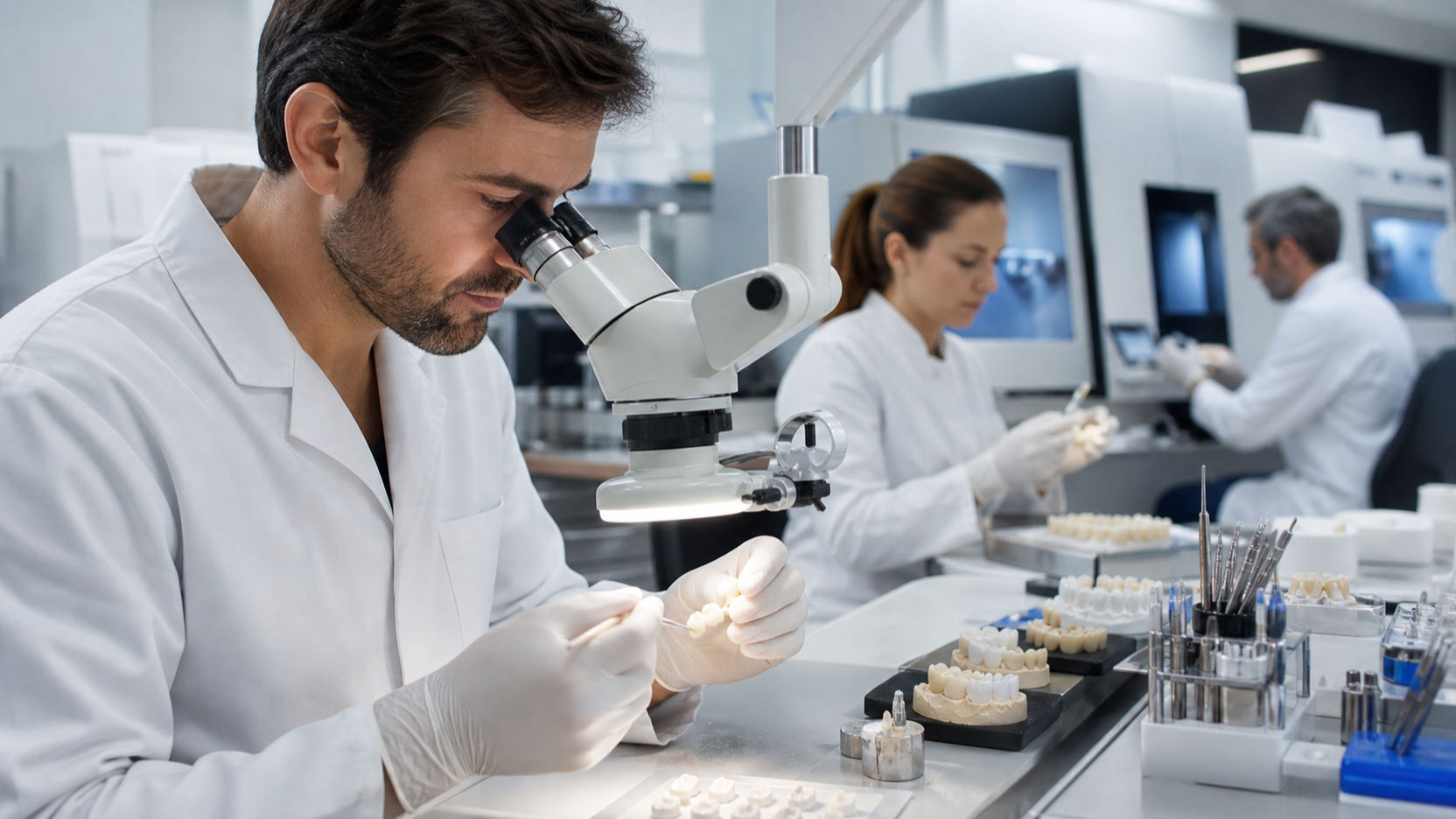
“Made in China” is not a sufficient quality assessment for a dental restoration. Neither is a polished website, a low quotation, or a list of equipment. A dentist or laboratory owner needs to know who made the device, which quality system governs the work, whether the stated materials can be traced, and what happens when a prescription is incomplete.
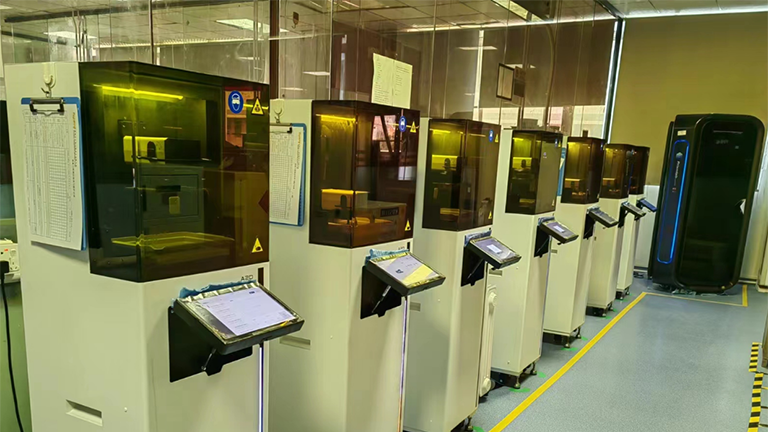
We understand the caution because we are the overseas laboratory being assessed. Topway Dental Lab was founded in Xili, Shenzhen, in 2006 and began by taking outsourced work from US dental laboratories. Since 2010, our client markets have expanded to include the US, UK, Germany, France, Canada, Australia, New Zealand, Israel, and Brazil. Today, our lab is located in Bao'an, Shenzhen, with more than 300 employees in a 5,000-square-metre facility.
That history does not prove that every Chinese dental lab is reliable, and it should not exempt us from scrutiny. It does give us a practical view of the questions buyers should ask. The five myths below contain genuine risks, but the country label does not answer them. Documents, material controls, case records, communication, and a controlled trial do.
Why Myths About Chinese Dental Labs Persist
Dental outsourcing combines two kinds of uncertainty. The clinical team cannot walk into the production area, while the manufacturing team does not see the patient. Distance makes weak prescriptions, unclear scans, unreported changes, and undocumented materials harder to resolve. A bad experience with one remote supplier can therefore become a general belief about every supplier in the same country.
Some concerns are entirely reasonable. Is the legal manufacturer identifiable? Can the laboratory provide current certificates? Can it connect the finished restoration to the material used? Will it stop a case when the records conflict, or simply make an assumption? These are better questions than “Are Chinese labs good?” because they can be tested.
Our own evidence starts with our operating record: founded in 2006, serving overseas laboratories and clinics across the listed markets since 2010, and working today as an FDA-registered contract manufacturer for Class I/II medical devices with a CE certificate. For the broader decision framework, our dental lab outsourcing guide explains what a customer should clarify before transferring regular case volume.
Myth 1: Chinese Dental Labs Use Unsafe or Uncertified Materials
This fear persists because a finished crown does not reveal its documentation. A restoration can look acceptable in a photograph while leaving the buyer unable to identify its source material or the quality system under which it was produced. The sensible response is not to accept a verbal assurance. It is to request evidence that is specific to the manufacturer and the case.
At Topway, the relevant facts are concrete. We are an FDA-registered contract manufacturer for Class I/II medical devices, hold a CE certificate, and maintain ISO 13485 and ISO 9001 certification. We also hold China’s Medical Device Production License and a Class II Medical Device Product Registration Certificate issued by the Chinese regulator, and we use only FDA-approved materials. Our FDA and CE compliance guide provides additional context for buyers reviewing these documents.
Registration, certification, and material evidence are different
These terms should not be collapsed into one marketing claim. FDA registration identifies our status as a registered contract manufacturer for Class I/II devices; we do not describe that registration as FDA 510(k) clearance. A CE certificate, ISO certificates, Chinese manufacturing licence, and Chinese Class II product registration are separate records. Material approval is another separate matter. A buyer should ask for each relevant document rather than treating one logo as proof of everything.
For an actual case, the practical check goes one level deeper: request the material manufacturer and product identification, the applicable specification sheet, and lot traceability. Confirm that the description on the case documentation agrees with the prescription. If a supplier cannot connect its general compliance claims to the material placed in the restoration, the concern has not been resolved.
Myth 2: Quality Control Is Lax in Overseas Labs
Distance can hide an informal workshop, but it can also hide an organised facility. Photographs of benches and machines do not distinguish the two. The useful distinction is whether the laboratory works within a documented quality management system and can show how a case moves through defined checks.
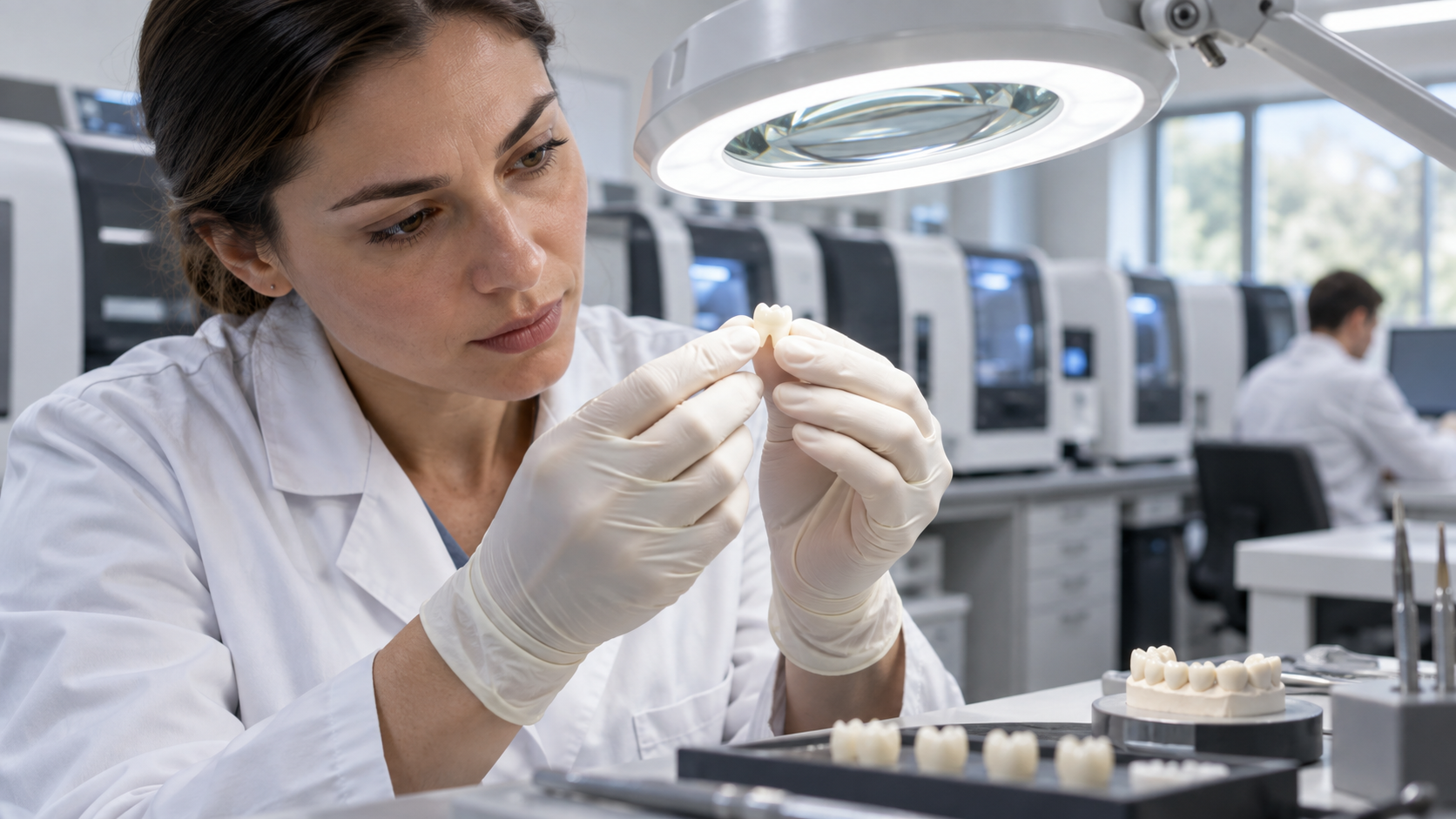
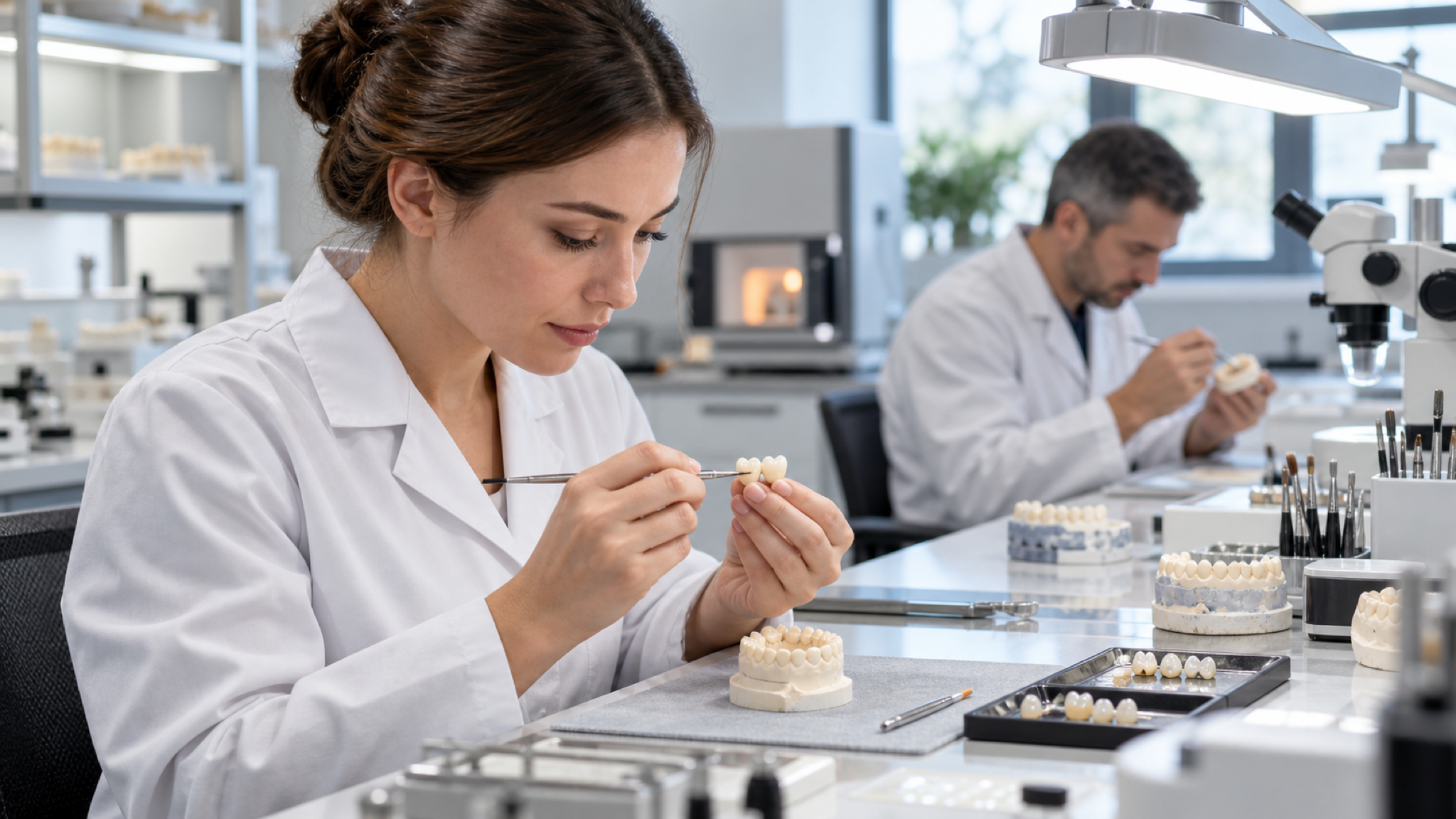
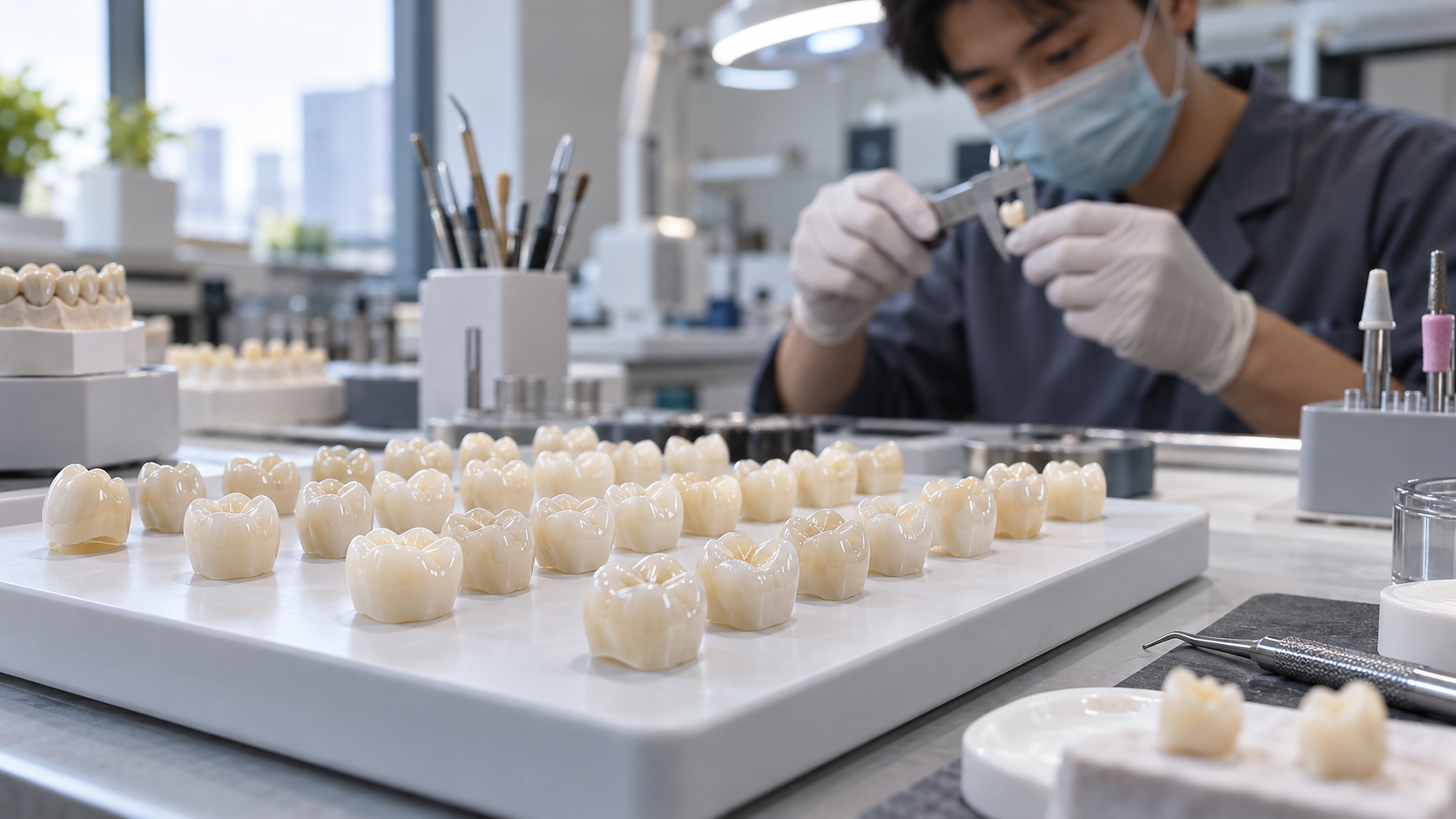
Our facility covers 5,000 square metres and our team includes more than 300 employees. Those numbers describe our operating scale; they are not, by themselves, proof that an individual crown fits. The stronger evidence is the combination of ISO 13485 and ISO 9001 certification, regulatory credentials, documented production control, and case-level inspection. We publish our 7-step quality control process so a prospective customer can examine the checkpoints rather than rely on the word “quality.” Buyers can also review our production process when mapping responsibilities between their clinic, local laboratory, and our team.
What case-level control should look like
Before production, the laboratory should compare the prescription with the supplied records and identify missing or contradictory information. During production, the restoration should remain connected to its case identifier, prescribed design, and material record. Before dispatch, the output should be checked against the prescription and the case documentation should be complete.
A useful evaluation does not stop at “Do you have QC?” Ask where a case can be held, who records an exception, how an approved change is captured, and what accompanies a remake investigation. A clear answer should describe records and decisions, not only final inspection. Final inspection cannot recover information that was guessed at the beginning of the case.
Myth 3: Communication Barriers Make Overseas Cases Unworkable
Communication failures are real, but fluency alone does not prevent them. A technically fluent conversation can still leave the laboratory without the scan body information, restoration type, shade instruction, or approved design change it needs. Conversely, a structured case record can reduce ambiguity even when the clinical and production teams work in different time zones.
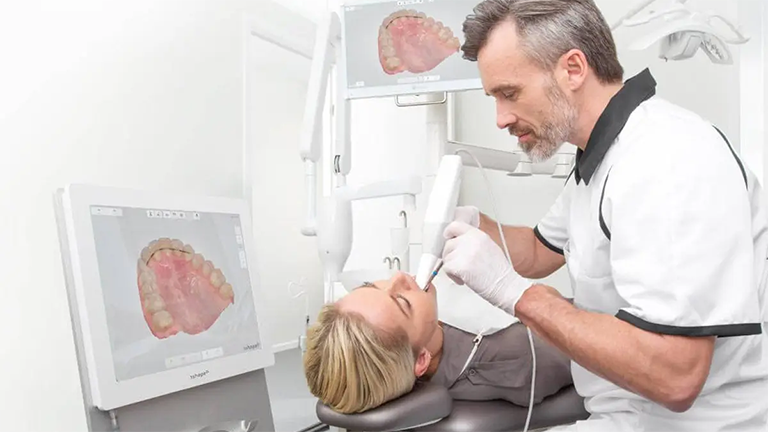
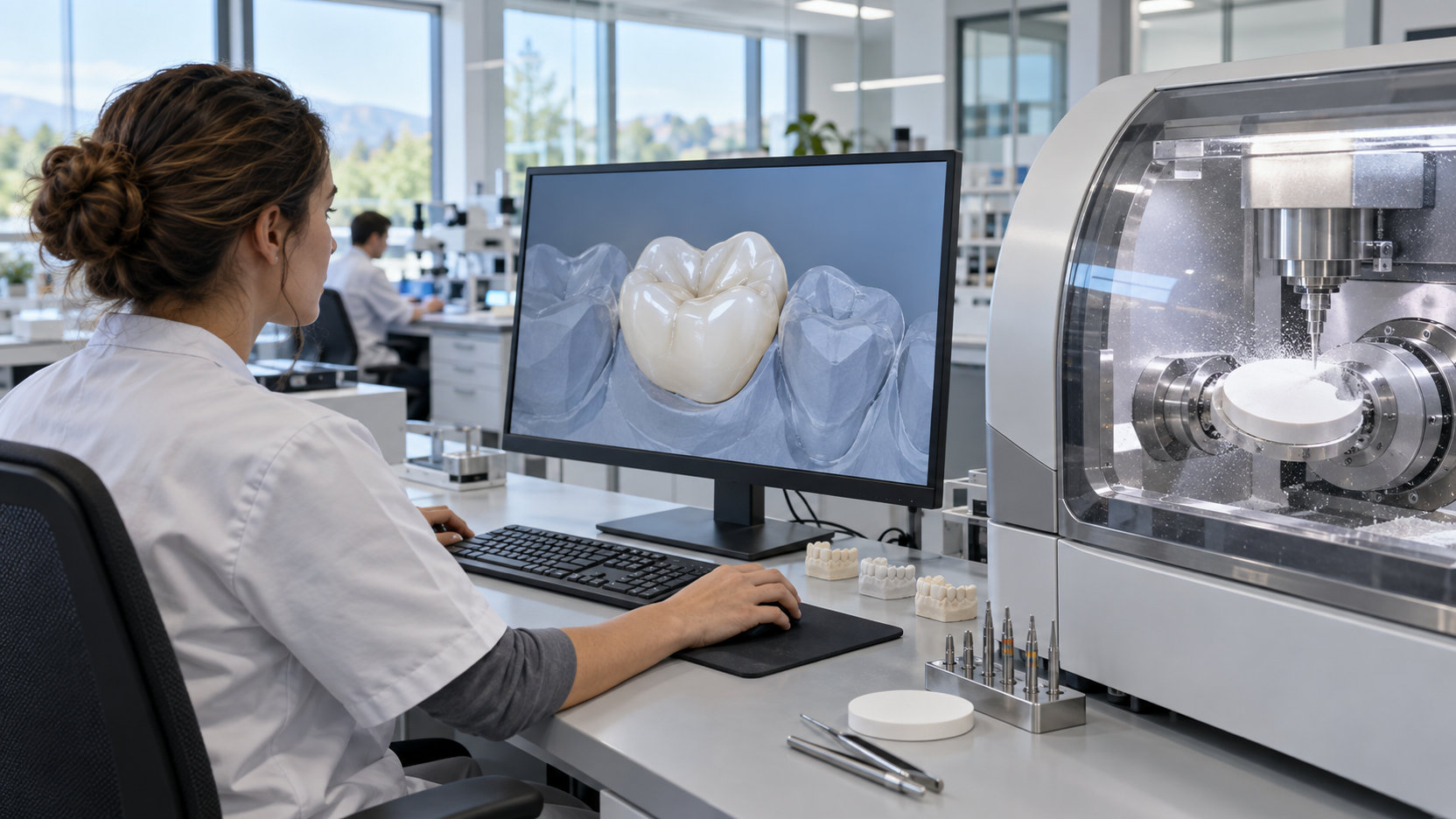
Digital submissions help when the files and prescription tell the same story. STL or PLY files can transfer geometry, but the file format does not supply a missing clinical decision. The submission still needs a case identifier, restoration request, material selection, shade information, and any relevant implant or removable-case details. Our guide to how to send digital impressions overseas is designed to help customers organise that handoff.
Use a closed-loop case conversation
A dependable communication pattern is simple: submit, review, query, confirm, produce, and record. At submission, give every file an unambiguous patient or case identifier and include one controlling prescription. During review, the laboratory should compare the records rather than assume that the newest attachment is automatically correct. If a question affects production, answer it in the same case thread. The laboratory should repeat back the agreed change, and the final record should preserve that approval.
For laboratory-to-laboratory outsourcing, define who is allowed to approve a design or material change. For clinic-direct work, state whether the dentist or another named contact has final authority. Avoid splitting a critical instruction among chat, email, file-transfer notes, and handwritten annotations without a single confirmed version. Communication becomes workable when responsibility and version control are visible.
Myth 4: Outsourcing to China Means Unacceptable Turnaround Times
International shipping adds transit time that a nearby laboratory may not face. That fact should be included in scheduling, not dismissed. But a promised delivery date depends on more than geography: it also depends on when a complete case is accepted, whether questions are answered promptly, whether the design changes, and whether the shipping plan matches the clinical appointment.
We do not publish a universal turnaround figure here because different restoration categories and case conditions require different plans. The useful question is: “When does the production clock begin for this specific, complete case, and what could change the dispatch date?” Obtain the answer before setting the patient appointment.
Plan from required delivery backwards
A practical schedule has visible stages rather than one vague lead-time promise:
- Submission and review: the laboratory receives the prescription and files, then checks whether the case can proceed.
- Clarification and approval: questions, record replacements, and any authorised changes are resolved before they become production errors.
- Production and quality control: the restoration is made and checked against the confirmed case requirements.
- Dispatch and transit: shipping is planned separately from production, with the delivery destination and appointment date visible.
- Receipt buffer: the customer allows time to receive and inspect the work before the clinical appointment.
Calendar planning matters particularly around known holiday periods. Since 2022, Topway has used special scheduling arrangements for Chinese New Year to protect quality and delivery commitments. Customers should still share forecasts and case priorities early, because special scheduling is a planning measure, not a reason to compress clinical review or quality control.
Capacity provides context but not a case-specific promise. Our team of more than 300 people supports our range of work, while the accepted prescription and agreed schedule govern each order. Ask for a written case plan where timing is clinically sensitive.
Myth 5: Chinese Labs Cannot Handle Complex or Implant Cases
“Complex” is too broad to be a useful qualification. A laboratory may be suitable for one restoration family and not another. The buyer should match the exact indication, material, connection or attachment requirement, and records to the laboratory’s declared product scope.
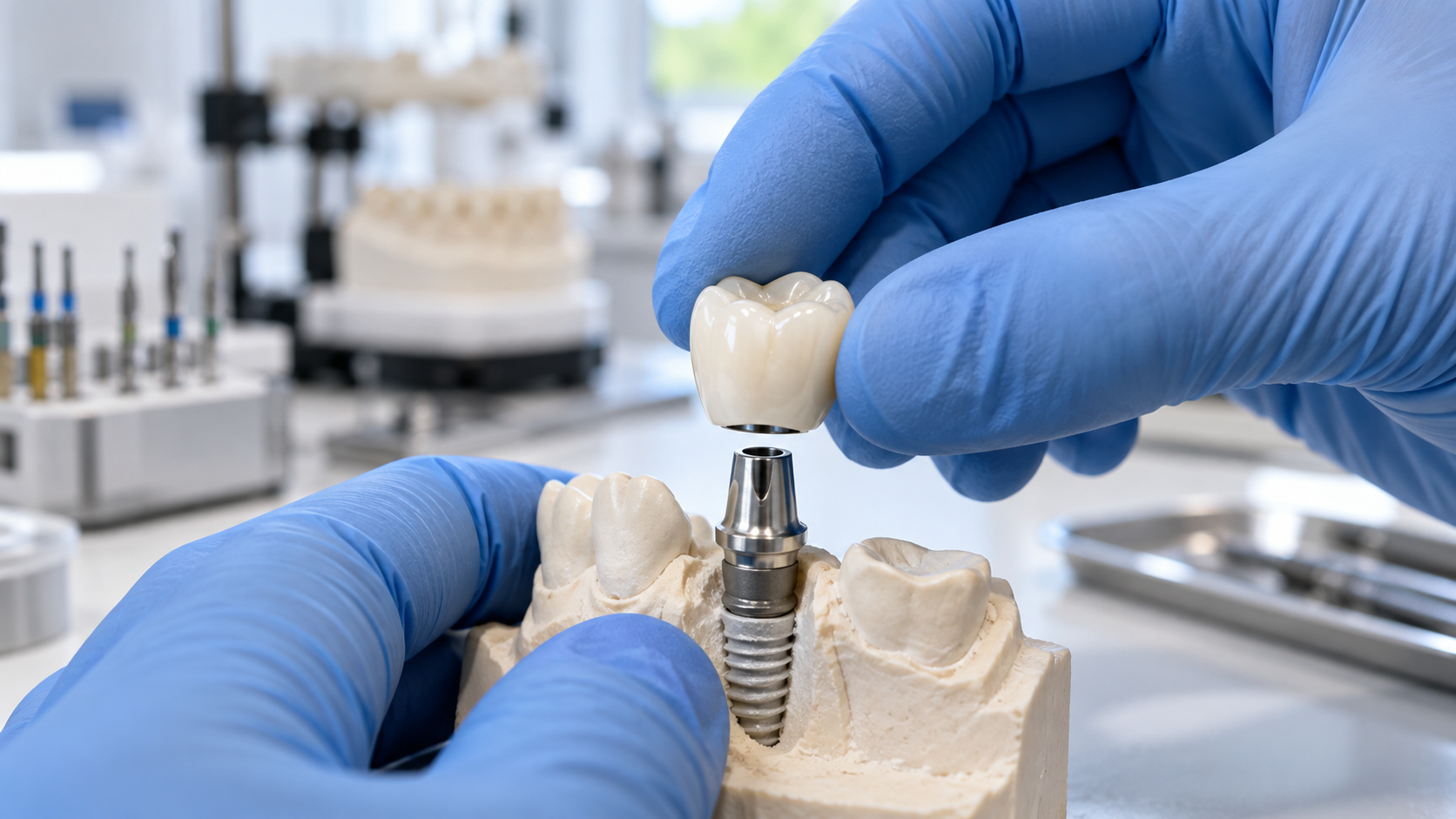
Topway’s product lines include Crown & Bridge, Dental Implant, Removable Restoration, Precision Attachment, and Orthodontics. Customers can review our crown and bridge restorations and dental implant restorations before asking whether a specific prescription is within scope. Our overseas service history since 2010 includes the US, UK, Germany, France, Canada, Australia, New Zealand, Israel, and Brazil.
Implant work needs exact identification, not confidence
For an implant case, terms such as “Ti-base” or “screw-retained” do not form a complete production instruction. The submitting team should provide the prescribed restoration type and the identifying system information needed for the case, along with scan records that can be matched to the same patient and prescription. If any component or design information conflicts, production should pause until the authorised contact resolves it.
The same principle applies to precision attachments, removable restorations, orthodontic work, and multi-unit crown and bridge cases. Ask the laboratory to review a de-identified example before sending volume. Confirm what records it requires, which decisions need approval, and how it documents a change. Capability is established case by case, not by a catalogue containing a broad category name.
How to Vet Any Overseas Dental Lab (Checklist)
Use the same evidence standard for Topway and for any other supplier. A transparent laboratory should expect detailed questions. The following checklist turns a general impression into a controlled purchasing decision.
| Check | What to request | What the evidence should answer |
|---|---|---|
| Manufacturer identity | Legal name, production address, and direct contact details | Who is responsible for manufacturing, and where does production occur? |
| Regulatory status | FDA registration details, CE certificate, and applicable Chinese licences or registrations | Do the documents belong to the supplier and cover the represented role or products? |
| Quality system | Current ISO 13485 and ISO 9001 certificates and an explanation of production checkpoints | Is control documented from case review through release? |
| Materials | Material identity, specification sheets, approval status, and lot traceability | Can the finished restoration be connected to the declared material? |
| Communication | Submission requirements, escalation contact, change-approval method, and final case record | Who can make a decision, and where is that decision preserved? |
| Scheduling | Case-specific production and dispatch plan, including holiday considerations | When is the case accepted, and which events can alter the date? |
| Trial | A small, representative trial case with agreed review criteria | Does actual performance match the documents and communication process? |
Begin with a trial that represents the work you may later outsource, but avoid choosing the most ambiguous case in the queue. Agree in advance on the supplied records, material documentation, communication route, inspection points, and how feedback will be recorded. Review the complete experience: initial case questions, adherence to the confirmed prescription, documentation, packaging and dispatch communication, and response to feedback.
Topway can be assessed against every row. Our current address is 4th Floor, Building 4, Fu'an First Industrial City, 99 Dayang Road, Fuhai Street, Bao'an District, Shenzhen, China. Prospective customers can contact us at [email protected] to request relevant documentation or discuss a trial case. If pricing is part of the evaluation, contact us for a current price list.
Frequently Asked Questions
Are Chinese dental labs FDA registered?
Registration must be verified laboratory by laboratory; “Chinese dental lab” is not a regulatory status. Topway Dental Lab is an FDA-registered contract manufacturer for Class I/II medical devices. Ask any prospective supplier for its registration details and verify that the legal manufacturer and address correspond to the organisation producing the work. Do not treat registration as a claim of FDA 510(k) clearance.
What materials do Chinese dental labs use for zirconia crowns?
There is no single material specification shared by all laboratories, so the country of manufacture does not answer the question. Request the exact material manufacturer and product identification, specification sheet, approval status, and lot traceability for the proposed restoration. At Topway, we use only FDA-approved materials; the case documentation should still identify what is prescribed and used.
How do I verify the quality certifications of an overseas dental lab?
Request current documents directly from the laboratory and check the legal entity, address, scope, and document identity rather than relying on website logos. Separate FDA registration, CE certification, ISO certification, manufacturing licensing, product registration, and material evidence in your review. Topway holds a CE certificate, ISO 13485 and ISO 9001 certification, China’s Medical Device Production License, and a Chinese Class II Medical Device Product Registration Certificate, in addition to our FDA registration.
Is it safe to outsource dental implant cases to China?
Safety and suitability depend on the specific manufacturer, its documented controls, the prescribed components and materials, and the completeness of the case records—not on country alone. Verify the laboratory’s credentials and product scope, require exact implant-system and restoration information, and begin with a controlled trial. Topway’s declared product lines include Dental Implant, but we still review whether an individual prescription and its records are suitable before production.
How long does shipping take from a Chinese dental lab to the US?
We do not give a universal shipping or turnaround figure because the route, case plan, acceptance date, and dispatch arrangements must be confirmed for the actual order. Ask for production and transit to be stated separately, plan backwards from the required delivery date, and leave time for receipt and inspection before the patient appointment. Around Chinese New Year, discuss forecasts early; Topway has maintained special holiday scheduling arrangements since 2022.
Top Posts

Recent Posts


How can we help you today?
We believe in providing the best possible care to all our existing patients and welcome new patients to sample.
