


Dental Implant Lab Workflows: Ti-Base to Full-Arch
What a Dental Implant Lab Actually Does
When a prescription arrives that says only "implant crown," design cannot begin. Before we touch the CAD software, we need to know the restorative level, the implant connection, the exact component references, and who approves the next stage. Most remakes we see in implant work trace back to one of those four items being assumed rather than stated.
We are Topway Dental Lab, an outsourcing dental lab founded in 2006 and based in Bao'an District, Shenzhen, China, serving overseas dental clinics and laboratories. We are an FDA-registered contract manufacturer for Class I/II medical devices, hold a CE certificate, and are certified to ISO 13485, working only with FDA-approved materials. Credentials tell you a lab is audited; this article tells you what actually happens to your implant case once it reaches our bench.
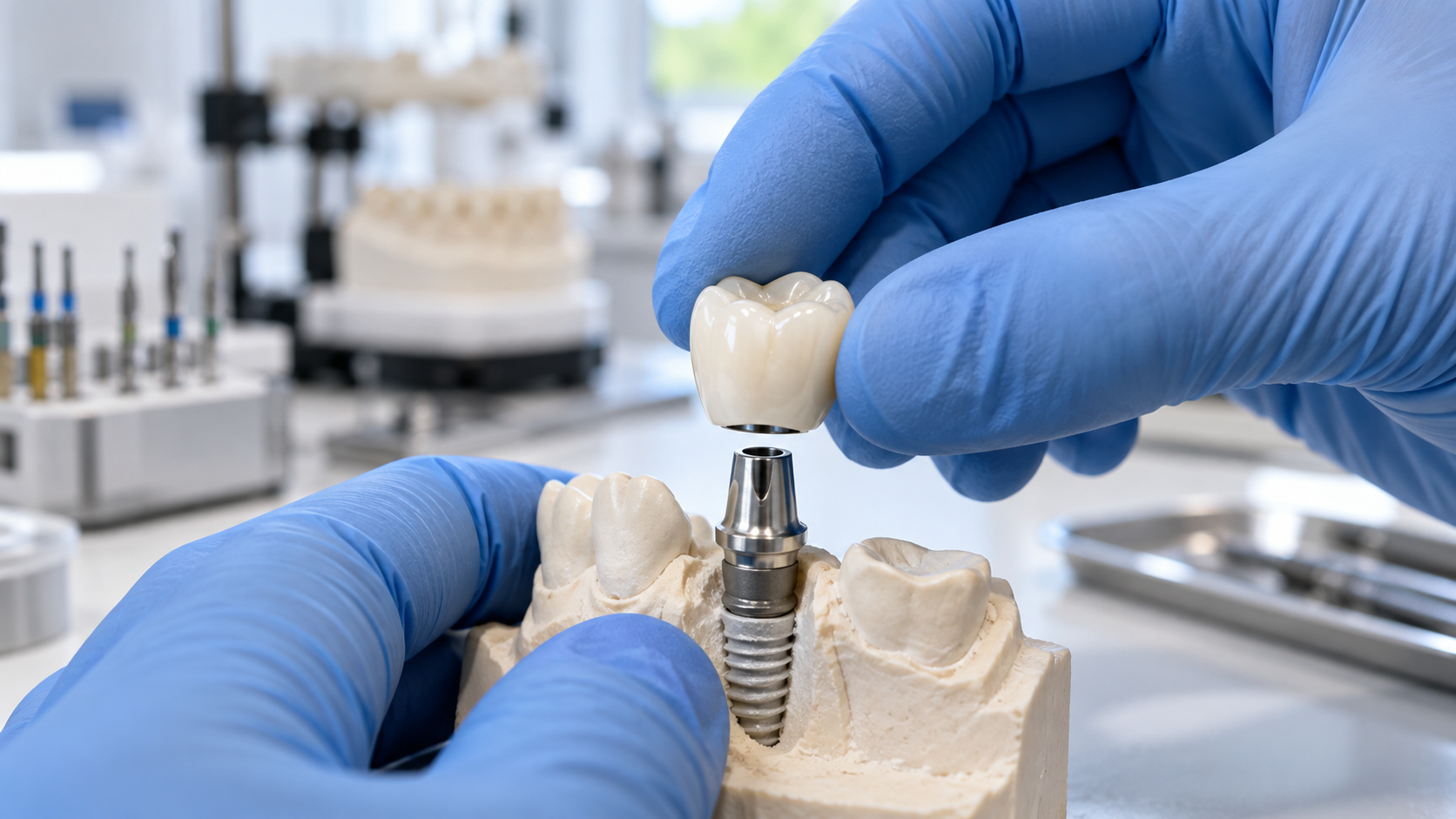
Implant work at the lab side spans custom abutments, Ti-base crowns, screw-retained bridges, overdenture bars, and full-arch prostheses. Compared with conventional crown and bridge, every implant case adds a layer that tooth-borne work does not have: a machined interface that must match a specific system and platform. A tooth number and a shade photo can carry a conventional crown; an implant case also needs the connection identified in writing. Our dental implant crowns and restorations page and our crown and bridge services page outline the scope of each service line.
Case Submission: What Your Implant Lab Needs from You
What we check before accepting a case
Every submission goes through a completeness review before it enters production. This is the checklist our case managers work from:
- Scan files: working arch, opposing arch, and bite registration, supplied as STL or PLY with each file clearly labeled.
- Implant information: system, connection, and platform, plus the scan-body reference used at the appointment.
- Restorative level: whether the scan records the implant connection itself or an abutment already seated.
- Prescription: tooth positions, requested restoration, retention approach, shade, and any photographs that define the intended appearance.
- Approval contact: who answers design questions, and which stage comes next — design review, provisional, verification, or final.
If you are a laboratory forwarding a clinician's case, keep the original component references alongside your own work order, and mark revised files as revisions. Two apparently current bites in the same submission will stop the case until we know which one governs.
Implant-level or abutment-level
State the restorative level in the prescription rather than leaving us to infer it from the scan. An implant-level submission needs the connection and scan body identified; an abutment-level submission needs the abutment and its restorative interface identified. When the written request and the supplied records disagree, we query the case before design — an unnamed scan body or an unspecified platform is not something we guess at. A photograph of the component label resolves most of these queries in one message. For file preparation and transfer, see our guide on how to send digital impressions to an overseas lab.
Single-Unit Implant Crowns on Ti-Base Abutments
Component pairing comes first
For a Ti-base crown, we confirm the Ti-base, implant platform, scan-body reference, and the matching design-library entry as one set before design starts. A familiar system name does not confirm every component combination within that system, so we verify the specific pairing against our compatibility libraries case by case. The order should also record who supplies the Ti-base and screw, and whether you want a crown component for assembly at your own lab or a restoration bonded to the Ti-base before dispatch — that distinction defines the scope we quote and the checks we run.
Design review: emergence profile and access channel
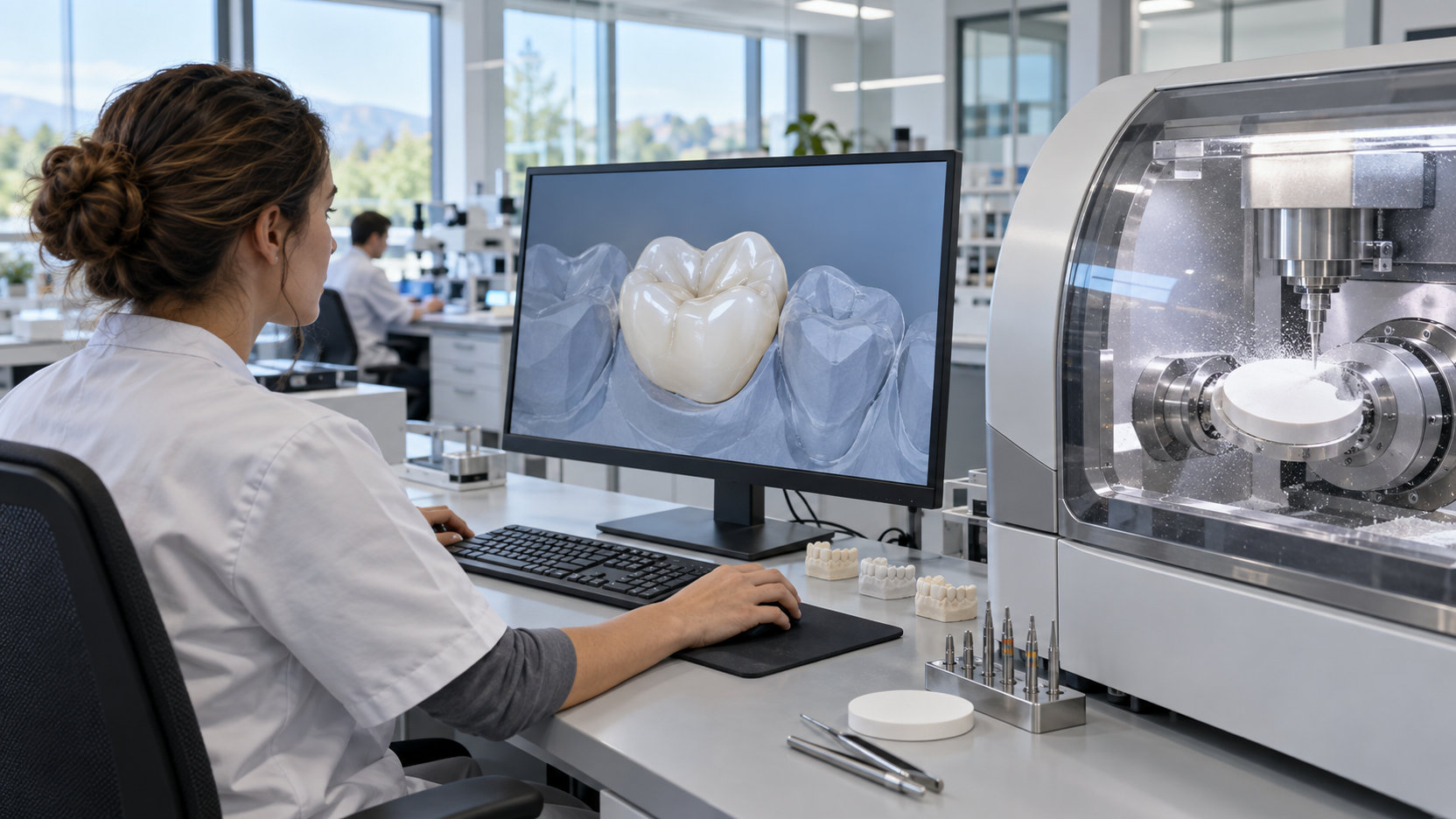
At design review we send you the proposed emergence profile, contours, contacts, and screw-access position for approval against the prescription. If the clinician has an approved contour reference — a provisional scan, a photograph — sending it with the initial records saves a revision cycle. Feedback works best when it is specific: the tooth, the view, the requested change, and whether it replaces an earlier instruction. If the access position raises a restorative concern, we flag it for the clinician's decision rather than resolving it silently at the bench.
Manufacture, bonding, and checks
The supra-structure is milled or pressed in zirconia or lithium disilicate as the prescription and configuration allow, then bonded to the Ti-base under controlled conditions when a bonded delivery is ordered. Before release, we verify seating on the model and check the screw fit against the applicable component instructions. Our verification and your delivery checks are listed separately in the handover, so the clinician knows exactly what remains to be confirmed in the mouth.
Multi-Unit Screw-Retained Bridges
Passive fit is agreed, not assumed
A screw-retained bridge order should list every support position and the component reference at each one; we review them as a single assembly, not as a row of independent units. For passive-fit frameworks, we agree with you up front how fit will be assessed, who assesses it, and what evidence authorizes final fabrication. That is usually a verification jig or a sectioned try-in returned with the clinician's findings. If verification shows a discrepancy, we correct the record and re-verify before the final framework is cut — an approval message should name the specific version it approves.
Construction options
The common constructions are a milled titanium bar with a layered zirconia component, or monolithic zirconia. We confirm which construction is available for your case and walk through the prescribed space, access openings, contours, and maintenance approach at design review. One question worth asking for either option: what remains adjustable at try-in, and what would require a new manufacturing step after approval. The answer often decides the construction more reliably than the material label does.
Full-Arch Implant Restorations (All-on-4 / All-on-6)
A staged workflow, not a single order
"All-on-4" describes a treatment concept, not a lab prescription. What we need are the actual implant positions, the restorative level, and the proposed components; from there the case runs through the stages below, and we agree with the clinician which stages the case requires before committing to a delivery date.
| Stage | What the lab produces | Approval recorded |
|---|---|---|
| 1. Provisional | Proposed form, bite reference, and appearance for clinical review. | Accepted features and requested revisions. |
| 2. Verification framework | A framework or jig to assess the recorded relationship between the supports. | The clinician's findings and any record correction. |
| 3. Final prosthesis | The approved design in the agreed construction and delivery state. | Explicit authorization for final manufacture on the identified records. |
We keep appearance approval separate from verification approval, and when a provisional serves as the design reference, we label the accepted version and list the features still open. An instruction to "copy the temporary" only works when everyone agrees which temporary, in which state.
Construction and durability
For hybrid versus monolithic designs, we describe the intended construction precisely before approval — contours, hygiene access, screw access, and future serviceability all belong in that discussion. Durability expectations should stay specific to the approved construction and its documentation; we do not attach service-life figures or clinical success statistics to a prosthesis, and we recommend clinicians request supporting evidence before using any such figure in a patient discussion.
Shipping a full arch
Full-arch cases ship with protection appropriate to the prosthesis, loose components identified separately, and an itemized packing list matched to the case reference. The order should state whether a model, verification item, or reference restoration is expected in the shipment. For scheduling, we distinguish laboratory completion from dispatch and arrival — and if the case must return for an intermediate stage, the return shipping arrangement is agreed before the first parcel leaves.
Implant-Supported Overdentures and Bars
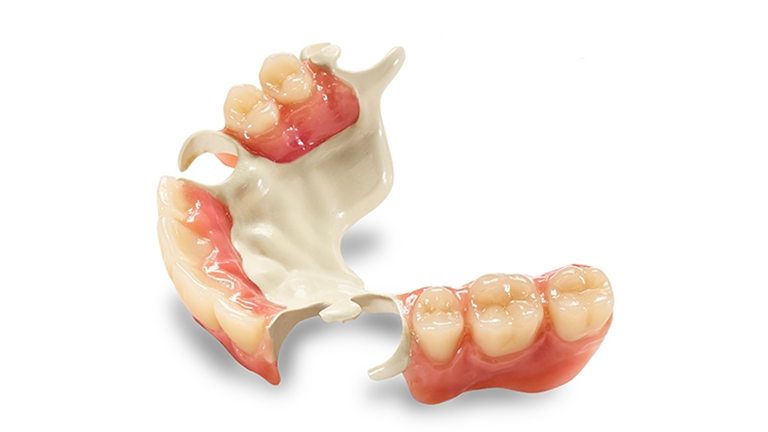
An overdenture order starts with the retention decision: bar-retained or locator-retained, with the exact attachment components identified. We ask for the removable prosthesis requirements in the same discussion, because a bar designed in isolation from its denture is a common source of rework. For a milled titanium or cobalt-chromium bar, the order should cover the material, the attachment arrangement, and the planned review stage — and, for lab-to-lab work, which elements your own team will complete: bar, denture, attachment parts, or final assembly.
Our removable restoration services page covers the denture side of these cases, and our article on titanium alloy overdenture bar technology goes deeper into bar fabrication.
Quality Control for Implant Cases
QC on implant work covers more than the restoration's appearance: the interface and component identity are explicit checkpoints. For every implant case we verify four things before release:
- Identity: the restoration and any separate components match the case reference.
- Approval: the design and records authorized for manufacture are the ones used.
- Verification: the agreed laboratory checks are complete and any clinician feedback has been applied.
- Handover: the supplied items are listed, along with anything that remains for the receiving team to assess.
For screw-retained restorations, the handover distinguishes the approved design, the components supplied, and the verification completed, with material and component traceability references included where applicable. The documentation package is confirmed at order acceptance, so there is no surprise about what accompanies the case. These implant-specific checks sit inside our 7-step quality control process, which applies to every restoration we ship.
Working with an Overseas Implant Lab: Practical Tips
Keep one current record of decisions
Send component references in writing, backed by label photographs — across languages and ordering systems, an exact reference survives where a translated product description does not. When a clinic and a forwarding laboratory both contribute instructions, designate one approval contact, and for each revision state what changed and whether the rest of the prescription still stands. A compact reply format helps: case reference, question, decision, approved file version. You can reach us at [email protected] to discuss a case before submitting it.
Schedule by stages, not by a single turnaround number
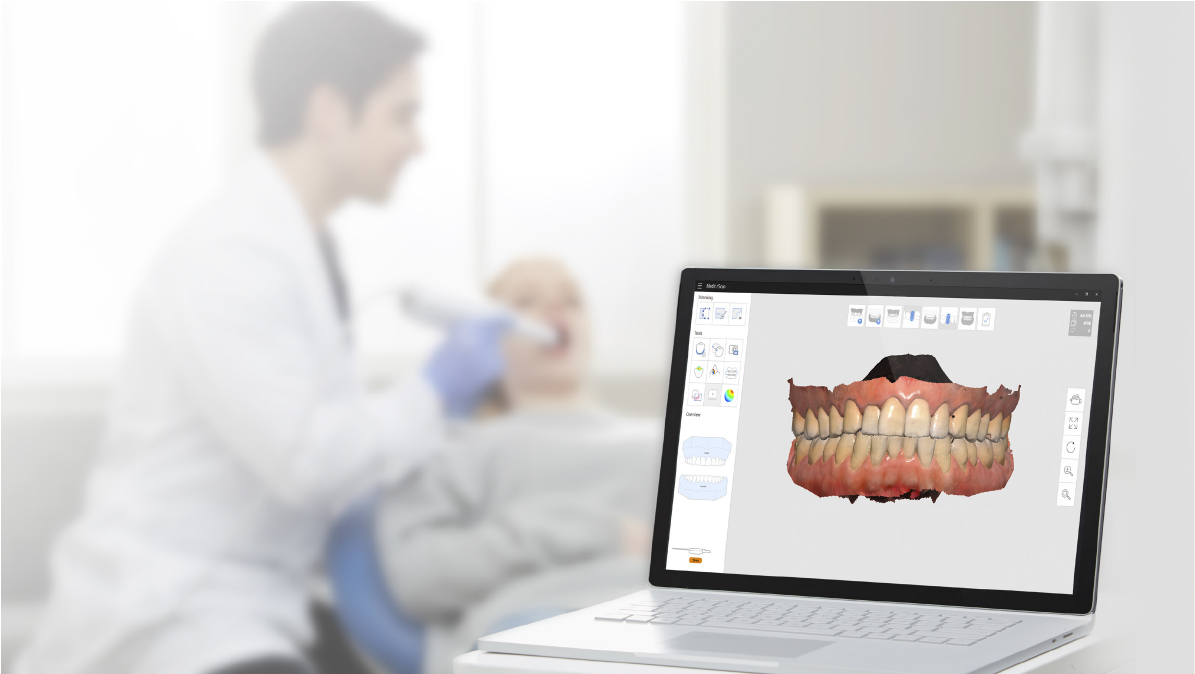
Implant cases carry more stages than conventional crowns: record review, design approval, fabrication, sometimes an intermediate shipment, then final dispatch. Ask for expectations per stage rather than carrying a conventional-crown deadline across. For full-arch work, we plan production backwards from the clinician's appointments, with each approval gating the next stage. A digital workflow keeps this manageable — versioned files, a complete prescription, and recorded approvals; our article on inside a digital dental lab workflow shows how that exchange is organized day to day.
Frequently Asked Questions
What information does a dental implant lab need to fabricate a Ti-base crown?
Working and opposing scans, bite registration, tooth position, shade, the implant system and platform, and the scan-body and Ti-base references — plus the restorative level and the requested delivery state (crown component or bonded restoration). We confirm file acceptance and the component pairing before design proceeds.
Can an overseas dental lab work with any implant system?
We work with major implant systems through compatibility libraries, but compatibility is confirmed case by case, not assumed. Send the exact system, platform, and component references and we confirm the proposed assembly before the order enters production. If a reference is unavailable, a photograph of the component label from the originating clinic usually resolves it.
How long does a full-arch implant case take from scan to delivery?
It depends on which stages the case requires — record review, provisional, verification, clinician approvals, final manufacture, and shipping. A staged schedule agreed at case acceptance is more reliable than any single generic turnaround figure; contact us with your case details for dates, including the next approval deadline and expected dispatch.
What is a verification jig and why is it important for multi-unit implant cases?
A verification jig is an intermediate device used to check the recorded relationship between the implant supports before the final framework is fabricated. It catches record errors at a stage where correction is cheap. The clinician's findings from the jig, returned to the lab, are the evidence that authorizes final fabrication.
How does a dental implant lab ensure passive fit on screw-retained bridges?
Through a defined verification plan rather than an assurance: accurate records, confirmed component identification, framework checks at the lab, and a clinician-assessed try-in or verification jig where the case warrants it. Discrepancies are documented and corrected before final approval, and the handover states what was verified and what remains for the clinician to assess at delivery.
Top Posts

Recent Posts




How can we help you today?
We believe in providing the best possible care to all our existing patients and welcome new patients to sample.
