


China Dental Lab Prices 2026: Crowns, Veneers & Dentures
Why Dentists Are Asking About China Dental Lab Prices in 2026
China dental lab prices attract attention when a practice or laboratory needs more capacity but cannot let the unit fee become the only purchasing criterion. The useful question is not simply, “What does a crown cost?” It is, “What will this prescribed restoration cost, what is included, and what information does the manufacturing lab need to quote it correctly?” We answer those questions case by case because a fixed public figure can be misleading before we see the restoration type, material class, design requirements, and working files.
Our pricing is significantly lower than typical domestic lab fees, but we do not publish unqualified figures online. A single crown, a multi-unit bridge, an implant-supported restoration, and a removable case do not draw on the same components or production work. Even two prescriptions for the same broad product category may require different designs and finishing. For an accurate comparison, contact us for a current price list and send enough case context for us to identify the relevant items.
We are Topway Dental Lab, an outsourcing dental laboratory founded in Shenzhen in 2006. From 2010 onward, our client base expanded to laboratories and clinics in the US, UK, Germany, France, Canada, Australia, New Zealand, Israel, and Brazil. Across 20 years of outsourcing work, we have learned that overseas dental lab pricing has to be clear enough for both a clinician and a lab owner to understand—not merely low enough to win an initial enquiry.
This guide explains how we build a quote, where cost differences arise across product lines, and what belongs in a proper total-cost comparison. If you are budgeting now, use the checklist near the end to request pricing that matches your actual case mix.
What Actually Determines the Price of an Outsourced Restoration
When we quote a case, we first translate the prescription into production requirements. The product name starts the conversation; the case details determine which line item applies. The following inputs are the ones we want clarified before an overseas client treats a quotation as final.
Restoration Type and Clinical Complexity
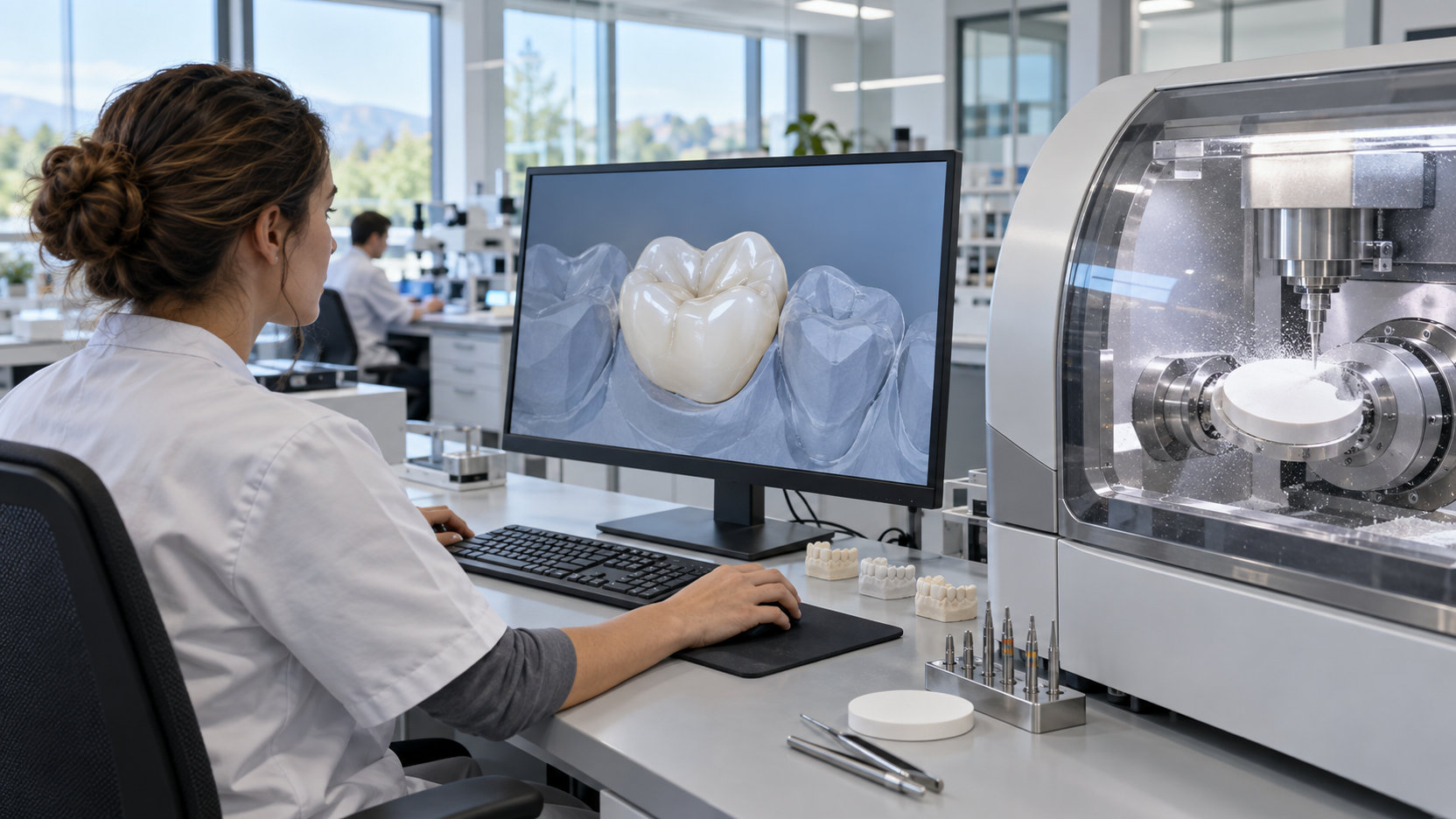
A conventional single-unit restoration is a different manufacturing task from a bridge, an implant-supported case, or a removable prosthesis. For fixed work, we look at the number and relationship of units, the requested contour and aesthetics, and whether the prescription calls for conventional or implant support. For removable work, we need to understand whether the case is full or partial and what setup has been prescribed.
This is why a search for dental lab outsourcing prices rarely produces a dependable answer by itself. A category-level figure cannot describe all the work hidden inside a prescription. Sending the actual case mix allows us to separate routine items from work that needs a more detailed review.
Material Class and Finish
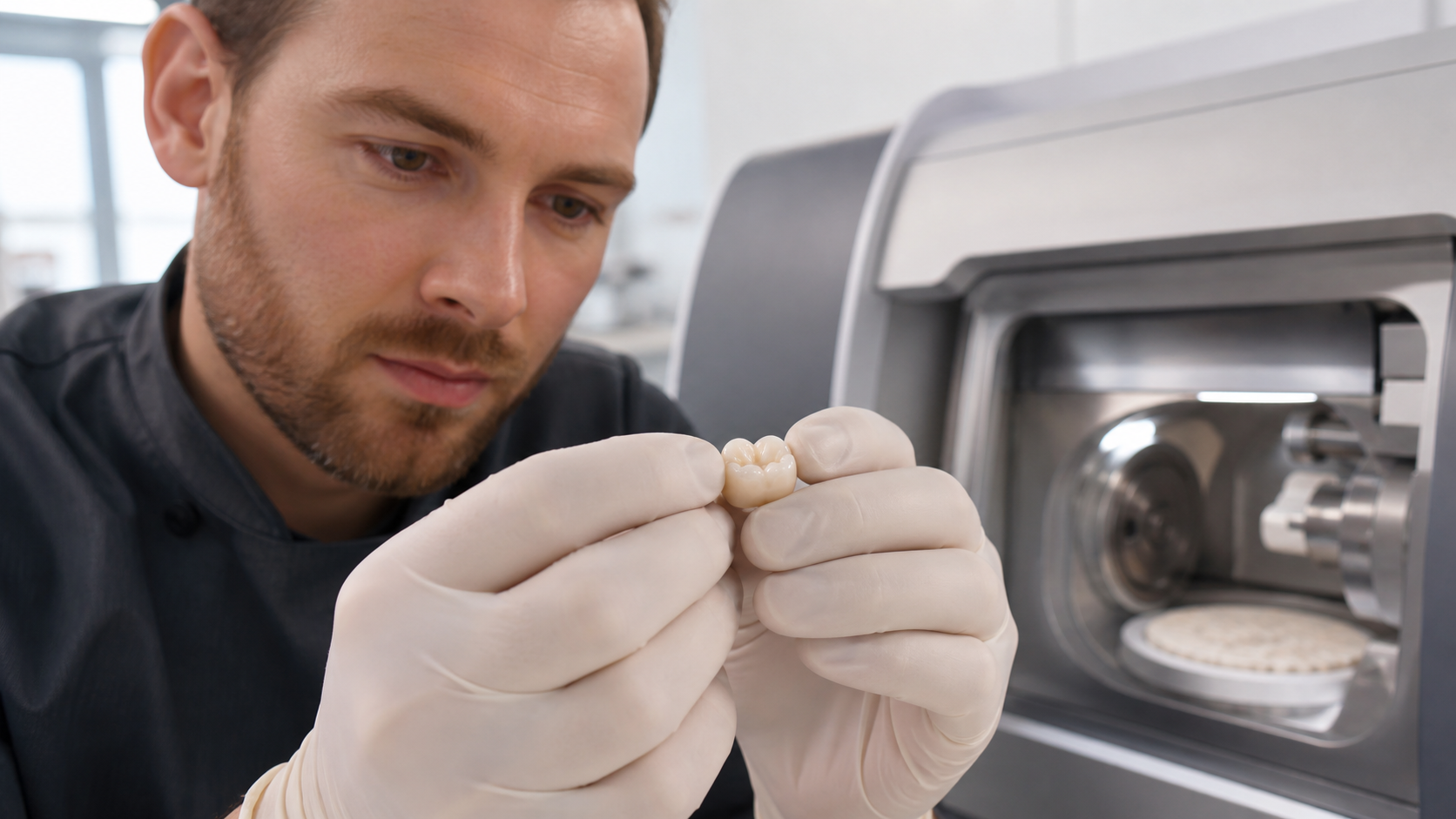
The material class affects the production route, while the requested finish affects the work performed within that route. Full-contour and layered restorations, for example, should not be treated as interchangeable quotation items. We use only FDA-approved materials, and we ask clients to identify the material class and aesthetic expectation rather than relying on a shorthand request such as “best crown.”
Clear prescriptions also prevent a common comparison error: placing quotations side by side when they describe different material or finishing specifications. We can quote more accurately when the same specification is sent to every laboratory being evaluated.
Digital Files or Physical Case Materials
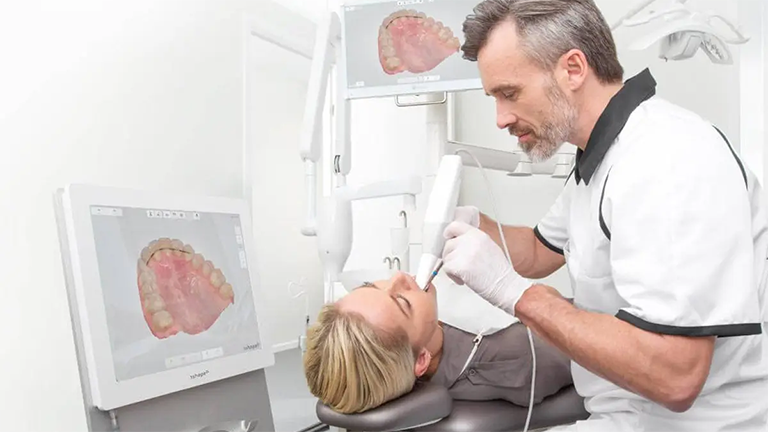
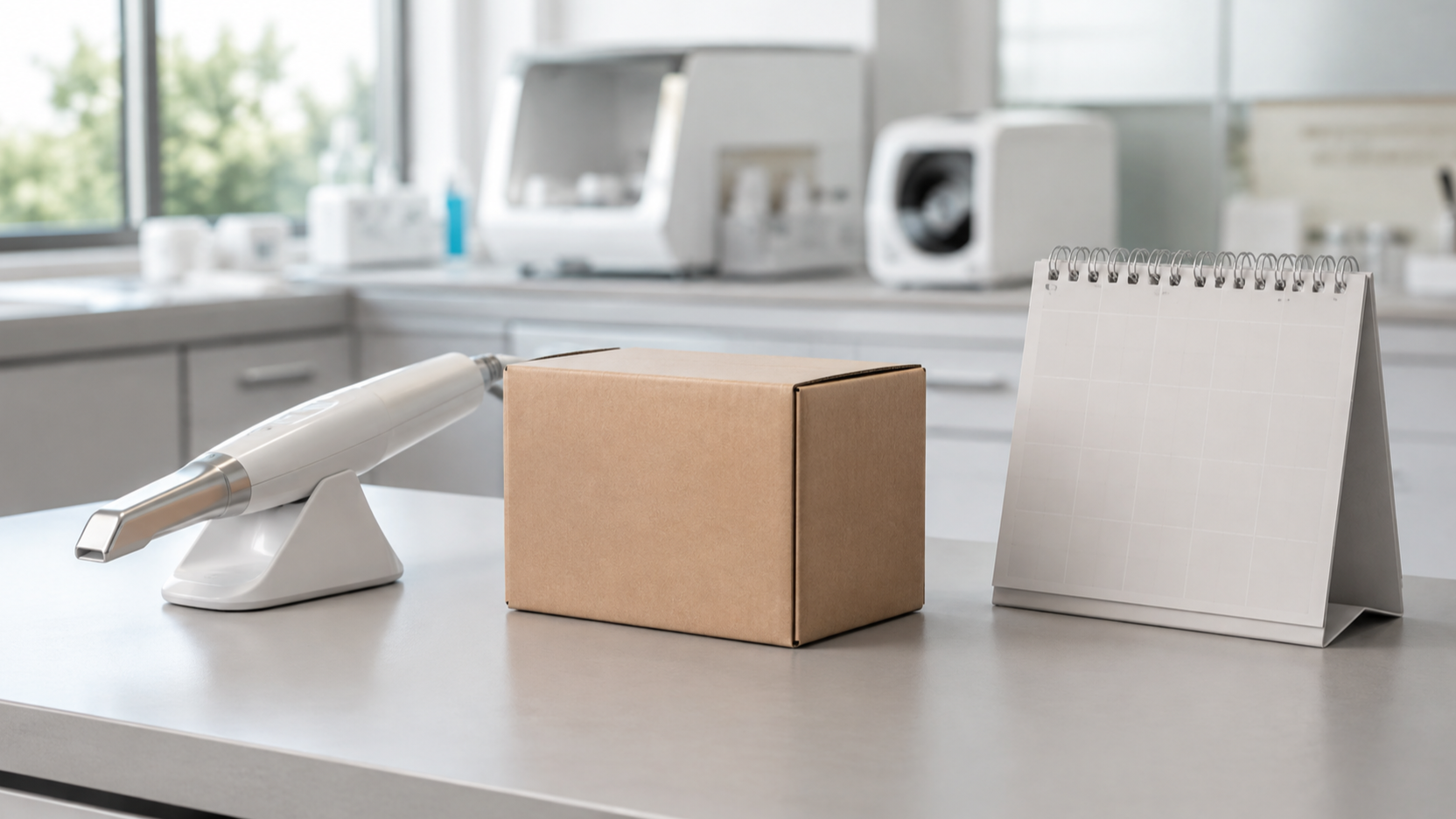
We ask whether the workflow begins with digital impression files or shipped physical models. A digital submission can reduce the physical handling, shipping, and coordination associated with getting the starting records to the manufacturing laboratory. A physical workflow requires the sender to account for packaging, transit, and the condition of the materials when they arrive.
Either way, the written prescription, the files, and the case contents need to agree. Ambiguity creates communication work before production can proceed.
Case Mix, Volume, and Working Relationship
A one-off enquiry and an ongoing account provide different planning information. For recurring work, typical monthly volume and product mix help us understand the likely production load. They also let us discuss a relevant price list instead of assuming that every item will be ordered in equal proportions.
Volume alone does not define the quote. A smaller set of repeatable prescriptions may be simpler to scope than a larger but highly varied mix. When you contact us, tell us what you actually send most often, which items are occasional, and whether the figures are an estimate or an established workload.
How Pricing Is Structured Across Our Product Lines
The fastest way to read a price list is to know which differences are meaningful within each product family. Below, we explain the main quotation logic without publishing figures that could become detached from a real prescription.
Crowns, Bridges, and Veneers
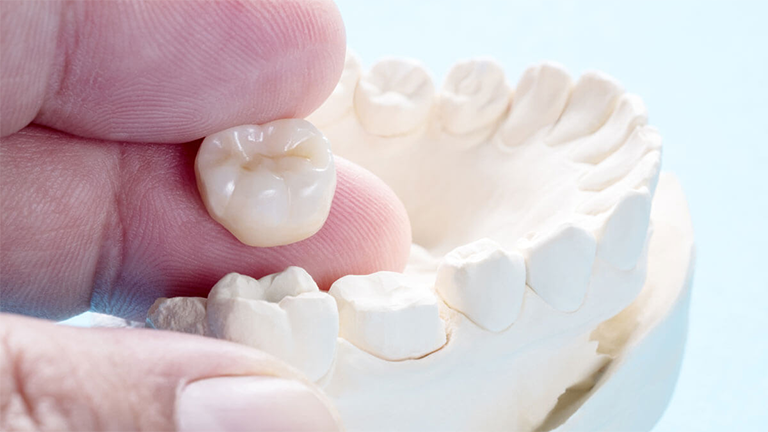
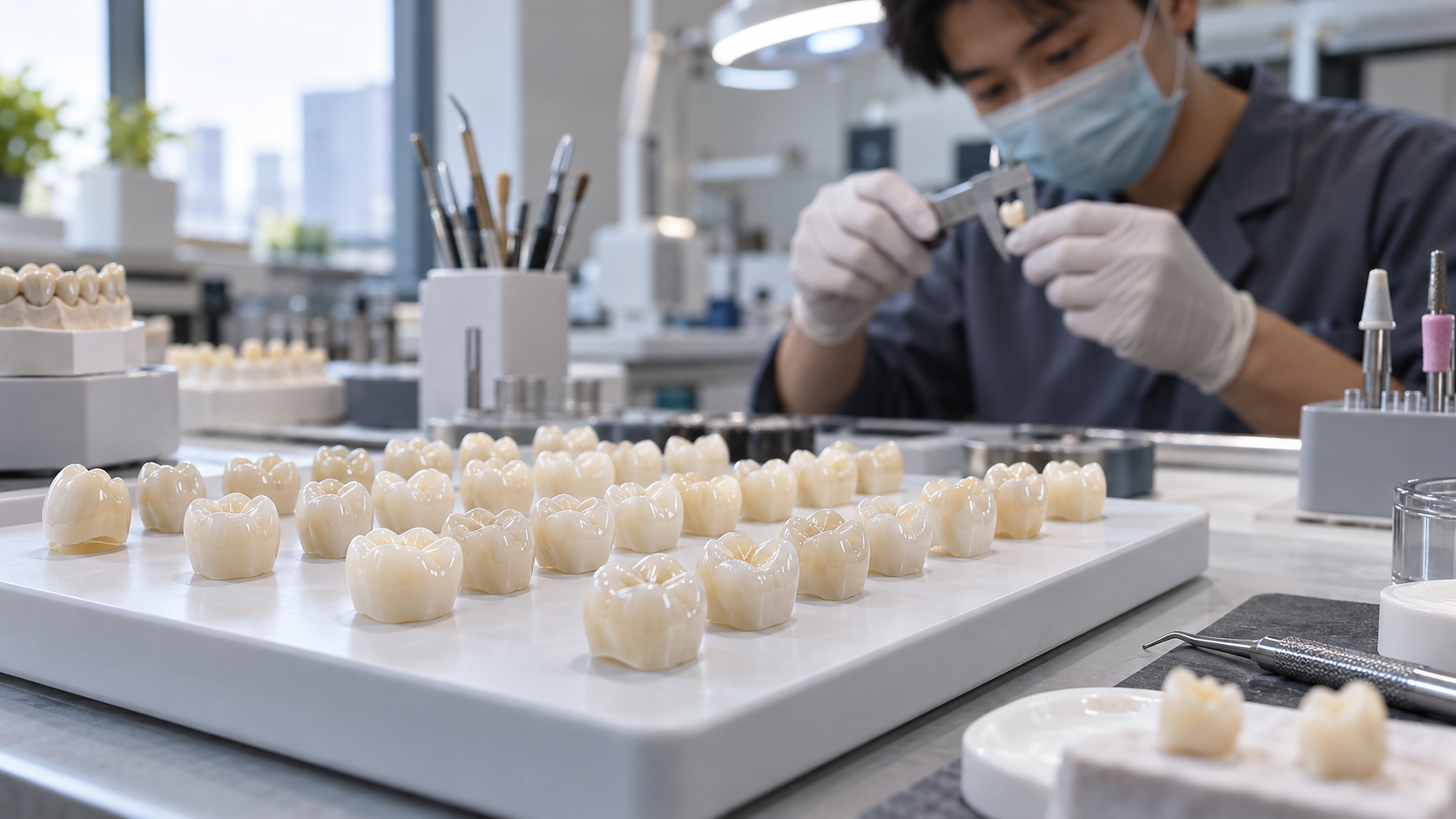
For crown and bridge outsourcing, we begin with the restoration configuration. A single crown and a bridge are not quoted as though they require identical design and production work. For a bridge, span and unit relationships matter. Across both crowns and bridges, material class and the choice between full-contour and layered work help define the appropriate item.
Veneers sit within this aesthetic fixed-restoration discussion. We need the prescribed material class, the scope of the case, and the finishing expectation before identifying the relevant pricing. A broad search for dental crown cost from a China lab cannot capture those distinctions. For crown, bridge, or veneer enquiries, contact us for a current price list.
Implant Restorations
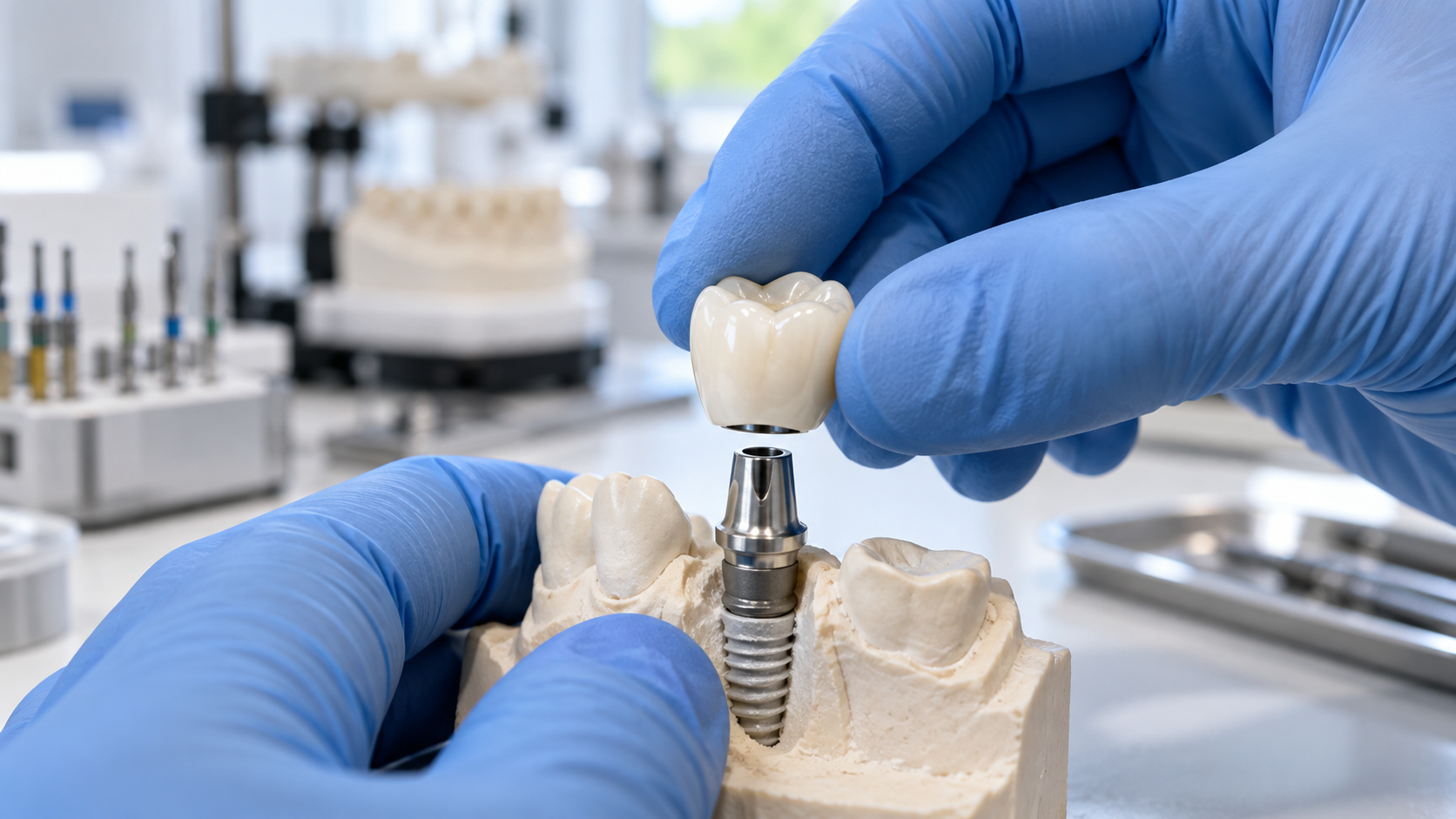
When we quote implant crowns, we distinguish them from conventional tooth-supported crowns because the component requirements and design pathway can be more involved. “Implant crown” alone is not a complete quotation instruction. We need to understand the prescribed restoration, the relevant component information, the units involved, and the material and finish requested.
Clear component identification at the quotation stage gives both teams a common basis for checking that the quoted item matches the intended case. For implant-restoration pricing, contact us for a current price list and include the case and component details available to you.
Removable Restorations
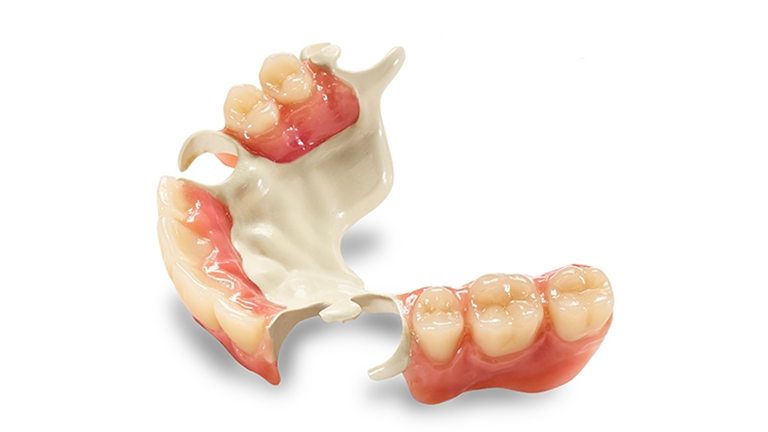
For removable dentures, the first distinction is the prescribed case type, including whether the restoration is full or partial. Setup complexity and the specific work requested then shape the quotation. A general search for denture lab fees may put unlike cases in the same bucket, which makes an apparently simple fee comparison unreliable.
Tell us the removable case types in your normal workload and whether you are enquiring about an individual case or a recurring mix. For current removable-restoration pricing, contact us for a current price list.
Orthodontics and Precision Attachments
Our wider product lines also include orthodontics and precision attachments. These labels cover distinct prescribed work, so we do not turn them into a single generic online fee. If these products form part of a broader outsourcing programme, list them separately from fixed and removable restorations so the quote is easier to review and an occasional specialist item is not mistaken for a routine product. For orthodontic or precision-attachment enquiries, contact us for a current price list.
The Full Cost Picture: What to Compare Beyond the Unit Fee
A lower unit fee can be valuable, but it is only one line in the operating cost of outsourcing. Before choosing a partner, we recommend mapping the full path from case submission to receipt and asking the same questions of every laboratory. The aim is not to force every cost into one number; it is to expose work that otherwise remains invisible until cases are moving.
| Cost Area | What to Clarify | Why It Matters |
|---|---|---|
| Manufacturing fee | Restoration, material class, finish, and included production scope | Quotations are comparable only when they cover the same specification. |
| Shipping and logistics | What must travel physically, who arranges it, and how charges are handled | Freight and handling sit outside the restoration's headline unit fee. |
| Communication | How prescriptions, questions, files, and approvals will be exchanged | Unclear responsibilities consume clinical and laboratory team time. |
| Remake exposure | How the prospective supplier defines, reviews, and handles a remake | A unit fee alone does not describe the operational effect of repeated work. |
| Consistency | How repeat prescriptions and preferences are communicated across cases | Variation creates checking and adjustment work for the receiving team. |
Do not assume shipping terms, turnaround, or remake arrangements from a product price. Ask for those terms directly and evaluate the response alongside the manufacturing quotation. We make no universal shipping-rate or turnaround promise here because those details require their own case and logistics context.
Digital submission can simplify part of this picture. It can remove the initial physical shipment where the prescribed workflow supports file-based transfer, while also making it easier to keep the prescription and files together. Our digital dental lab crowns page provides product context for teams considering that route. Digital does not make communication automatic, however; consistent file naming and complete instructions still matter.
For a fair comparison, build a small internal worksheet with the same columns for every supplier: quoted production scope, logistics assumptions, communication responsibilities, remake terms, and the way repeat preferences are carried forward. Then request the current price list and fill in the unit-fee column last. This keeps an attractive headline figure from hiding a mismatch in scope.
Why Lower Prices from Our Lab Don’t Mean Lower Quality
Our lower pricing relative to typical domestic lab fees comes from the economics of outsourced production in Shenzhen, including labor-cost differences and production at scale. It is not a claim that domestic laboratories are overpriced, and price alone is not our positioning. The useful comparison is whether a qualified manufacturing partner can meet the required product and compliance needs at a sustainable fee.
Topway was founded in Shenzhen in 2006 and now operates in Bao’an District. Our lab has over 300 employees and a 5,000-square-meter facility. Those facts explain the production base behind our quotation; they do not replace case evaluation. We still need the prescription, correct inputs, and a shared understanding of what is being ordered.
For buyers conducting supplier due diligence, our documented credentials provide a more useful starting point than a low price in isolation. We are an FDA-registered contract manufacturer for Class I/II medical devices and hold a CE certificate. We are certified to ISO 13485 and ISO 9001. We also hold China’s Medical Device Production License, an NMPA Class II Medical Device Product Registration Certificate, and High-tech Enterprise Certification. Our lab uses only FDA-approved materials.
These are the specific compliance and company facts we put behind our offer. When quotations differ, check whether material class, restoration design, finishing, and requested documentation are aligned before deciding that the difference reflects quality. To compare the relevant items, contact us for a current price list.
How to Get an Exact Quote for Your Cases
A useful enquiry does not need to be long, but it should describe your likely work accurately. If you are a practice, tell us what you prescribe. If you are a dental laboratory, tell us which parts of your case mix you intend to outsource. We can then ask focused questions instead of returning a broad list with items that do not apply.
Our Quote Review Sequence
- Step 1 — Define the scope: we sort the request into fixed, implant, removable, orthodontic, and precision-attachment work, then separate routine products from unusual cases.
- Step 2 — Align the specification: we review material class, configuration, finish, and the component information supplied for implant work.
- Step 3 — Map the workflow: we identify whether records will arrive digitally or physically and note the target markets and compliance documentation the client needs to evaluate.
- Step 4 — Match the quotation: we provide the relevant current price-list items and flag work that needs case-specific clarification.
This sequence keeps a category label from being mistaken for a complete prescription. It also gives the buyer a clear list of assumptions to check before comparing our quote with another supplier’s scope. Include the following in your enquiry:
- Restoration types: list the fixed, implant, removable, orthodontic, or precision-attachment work you expect to send.
- Typical monthly volume: provide a realistic estimate and indicate whether it represents routine or occasional work.
- Case mix: separate common items from more complex or less frequent prescriptions.
- Materials and finish: state the material classes and whether full-contour, layered, or other prescribed finishing is required.
- Workflow: tell us whether you plan to send digital impression files, physical models, or a mixture.
- Implant information: include the component and design details available for implant-supported work.
- Target markets and compliance needs: identify where the restorations will be supplied and what documentation your organisation needs to review.
- Commercial scope: explain whether you need pricing for one case, a product group, or an ongoing outsourcing relationship.
Email this information to [email protected] or call +86 153 2504 5142. Contact us for a current price list, and include representative case information where possible so we can match the list to your requirements.
If you are still deciding whether the operating model fits your practice or laboratory, read our complete guide to dental lab outsourcing to China. It broadens the evaluation beyond pricing and will help you prepare the operational questions to discuss with our team.
Frequently Asked Questions
How much cheaper is a China dental lab compared with a domestic lab?
Our pricing is significantly lower than typical domestic lab fees, but the difference depends on the restoration, material class, finish, volume, workflow, and scope being compared. We do not give an unsupported savings claim or headline figure. Contact us for a current price list and send your case mix so the comparison is based on equivalent work.
Why don’t you publish a fixed price list online?
A fixed public list can be misread when the case configuration and requested production work are unknown. We quote against the relevant product categories and clarify unusual or complex work rather than presenting one figure as though it fits every prescription. Contact us for a current price list matched to your needs.
Does a lower price mean lower-quality materials?
No. Our lab uses only FDA-approved materials. Topway is an FDA-registered contract manufacturer for Class I/II medical devices, holds a CE certificate, and is certified to ISO 13485 and ISO 9001; we also hold China’s Medical Device Production License, an NMPA Class II product registration certificate, and High-tech Enterprise Certification.
What information should I send to get an accurate quote?
Send the restoration types, expected monthly volume and case mix, material classes, finishing requirements, digital or physical workflow, and any implant component details. Also tell us the target markets, compliance needs, and whether the request covers an individual case or ongoing work. Representative prescriptions help us identify the right quotation items.
Are there additional costs such as shipping that I should budget for?
Shipping and logistics should be assessed separately from the restoration’s unit fee, especially where models or other physical case materials must travel. Communication time and the operational effect of remakes or inconsistent work also belong in a total-cost review. Ask for the applicable logistics and commercial terms with your quote rather than assuming they are included.
Top Posts


Recent Posts




How can we help you today?
We believe in providing the best possible care to all our existing patients and welcome new patients to sample.
