


Digital Dental Lab Services: CAD/CAM, 3D Printing & Milling
When a clinic or dental laboratory outsources restoration production overseas, the biggest bottleneck has historically been physical logistics: impressions in customs, distortion in transit, courier fees before a technician even touches the case.
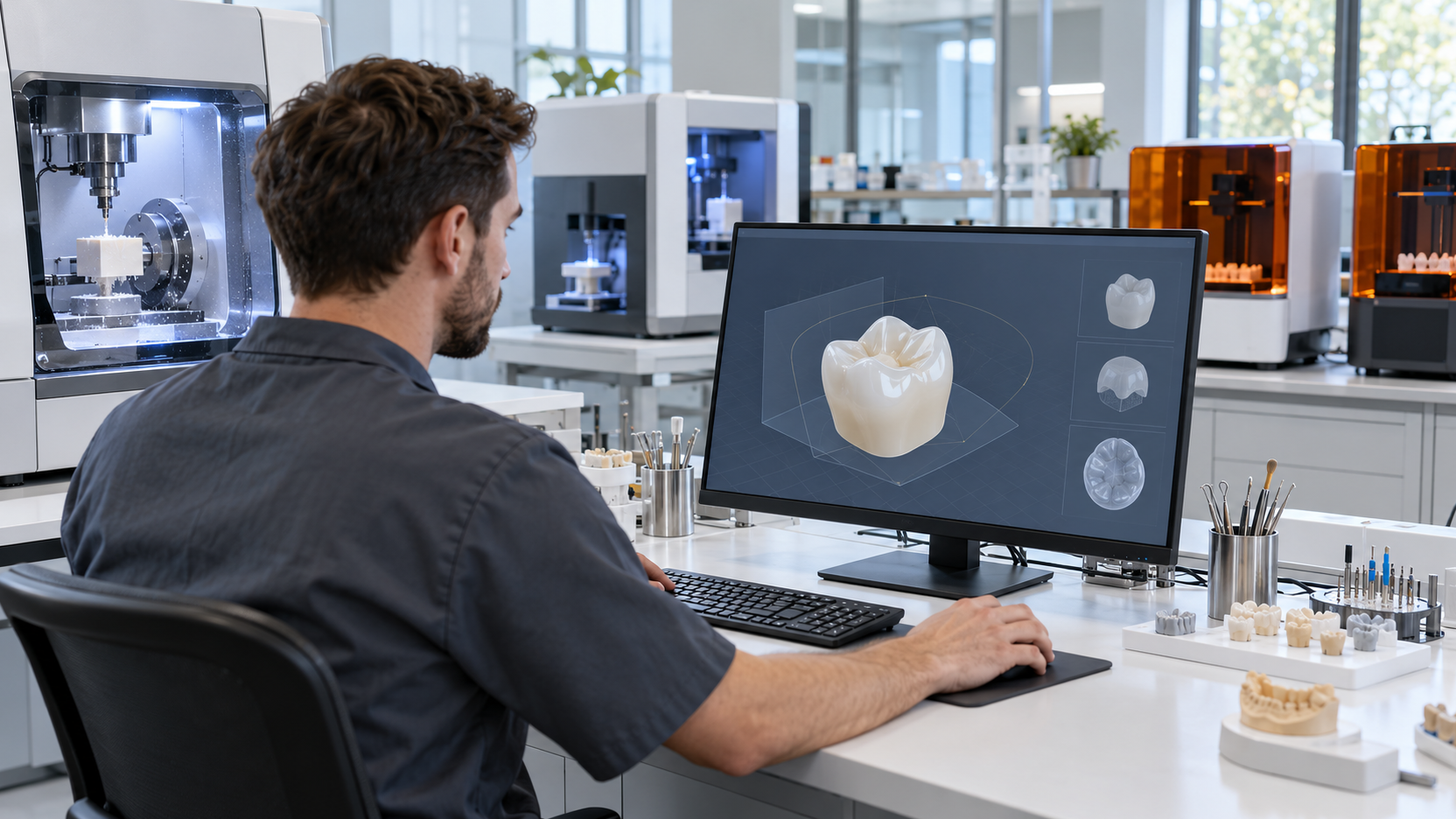
Switching to digital dental lab services removes the outbound shipping leg entirely. Once you export an intraoral or desktop model scan, our intake team in Shenzhen verifies the mesh and begins CAD design—often while your clinic is closed for the evening. Since founding Topway Dental Lab in 2006 and expanding across the US, UK, Germany, France, Canada, Australia, New Zealand, Israel, and Brazil from 2010 onward, we have seen digital workflows turn cross-border lab partnerships into a predictable daily extension of in-house production.
This guide is a practical service catalog: what you can order through a digital workflow, how CAD/CAM milling and 3D printing divide the workload, and how we manage design approvals, implant accuracy, and quality assurance inside our 5,000-square-meter facility.
What Are Digital Dental Lab Services?
Digital dental lab services encompass any prosthetic, implant, removable, or orthodontic service executed through a scan → CAD design → CAM manufacturing workflow (subtractive milling or additive 3D printing), rather than traditional lost-wax casting or hand-packed acrylic techniques.
Why the Digital Shift Matters for Outsourcing
Digital dentistry outsourcing changes the timeline and risk profile of overseas lab work in three ways:
- Zero outbound transit time: When a clinic in North America or Europe submits a scan at the end of the workday, our technicians in Bao'an District, Shenzhen review the file during your overnight hours.
- No physical distortion: Digital meshes do not shrink, tear, or absorb moisture in transit—the geometry recorded by your scanner is exactly what our CAD workstations import.
- Modular ordering: Depending on your in-house equipment, you can order complete design-and-manufacture packages, send pre-designed CAD files for milling, or use us for overflow CAD design and complex frameworks.
Core Taxonomy of Our Digital Services
We organize our digital dental lab crowns and restorations and broader digital catalog into four pillars:
| Service Pillar | Primary Method | Typical Deliverables |
|---|---|---|
| CAD Design Services | Digital CAD Modeling | Crown and bridge anatomy, custom abutment emergence profiles, full-arch bar designs, digital wax-ups |
| CAM Subtractive Milling | CNC Milling & Sintering | Multi-layer zirconia crowns and bridges, PMMA temporaries, wax patterns, titanium and cobalt-chrome frameworks |
| Dental 3D Printing Services | Additive Manufacturing | Surgical guides, quadrant and full-arch working models, try-in prototypes, resin removable frameworks |
| Digital Quality Verification | Optical Scanning & Overlay | Margin gap verification, occlusal contact mapping, passivity checks on multi-unit implant structures |
For a closer look at how the production floor is organized, explore our CAD/CAM and digital workflow infrastructure.
CAD/CAM Design & Milling Services
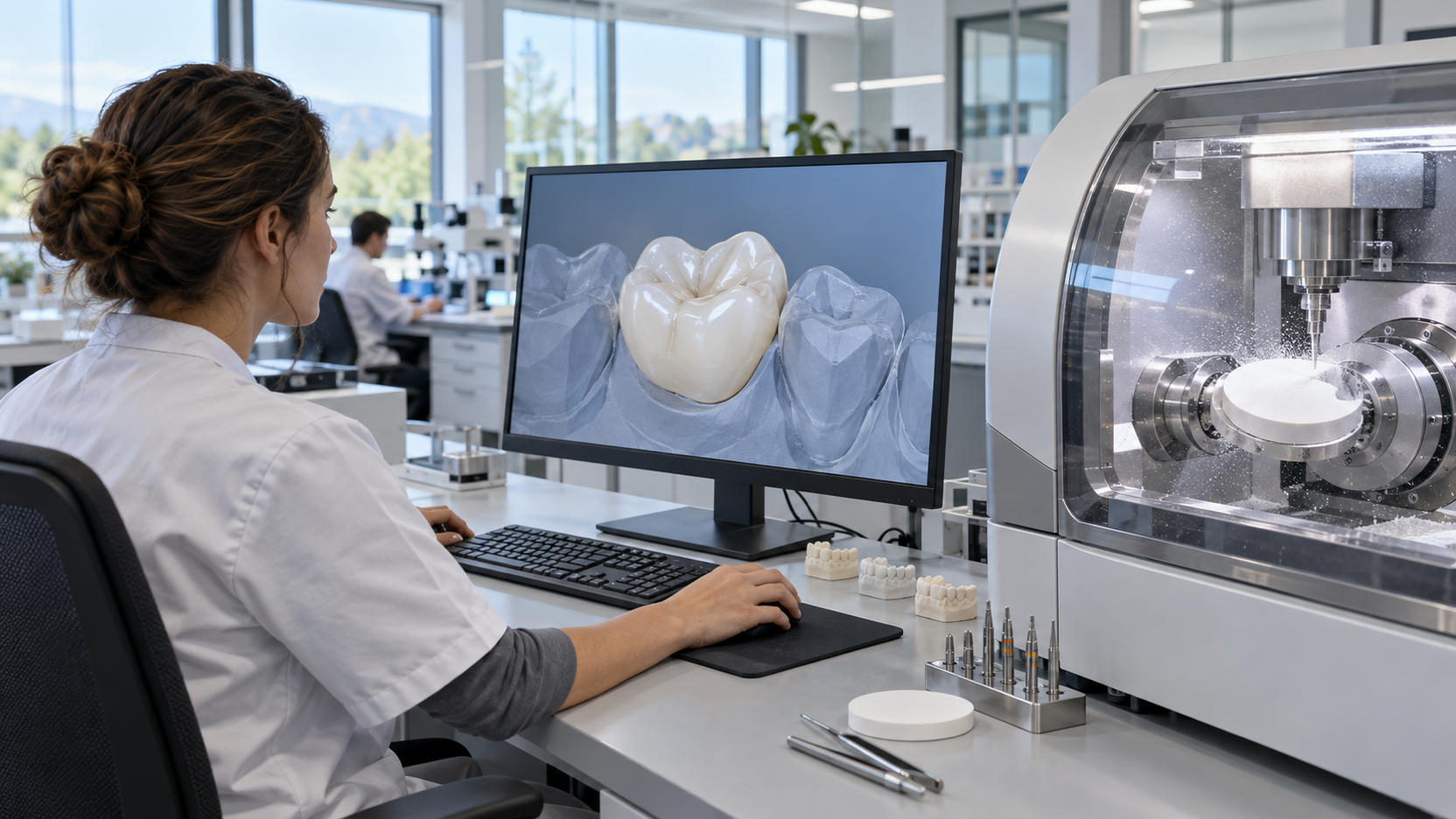
Whether you send five intraoral scans a week or offload fifty units a day, consistency in a CAD/CAM dental lab depends on intake discipline, saved design parameters, and material calibration.
Digital Impressions and Analog-to-Digital Conversion
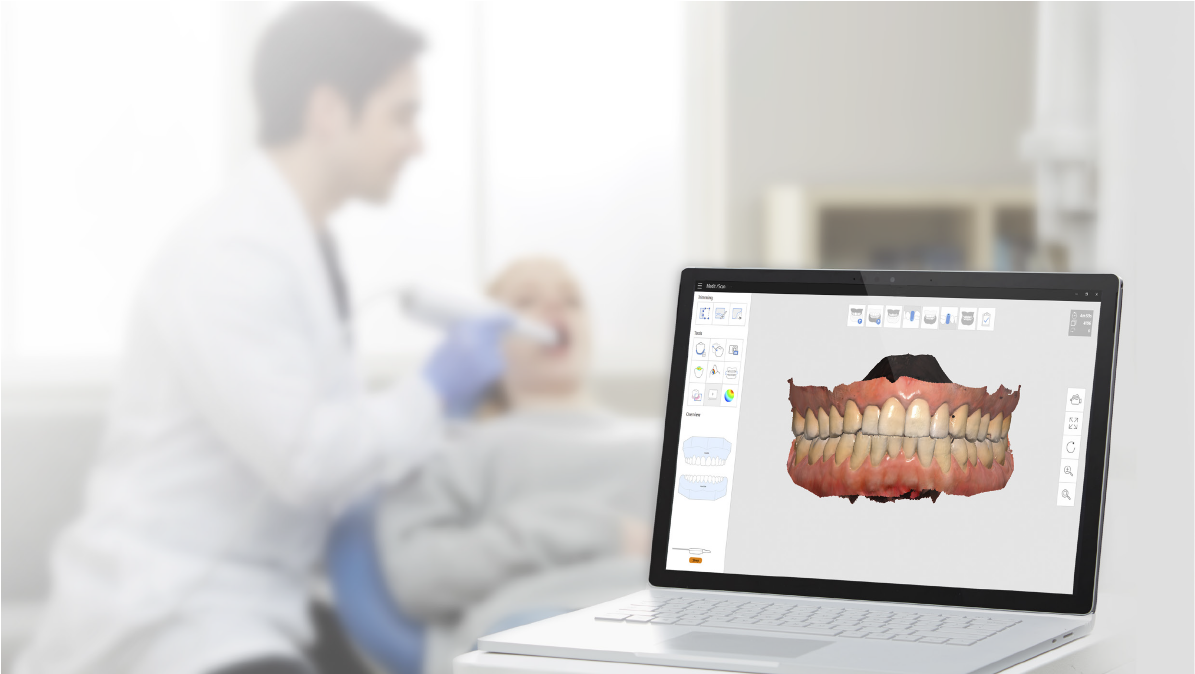
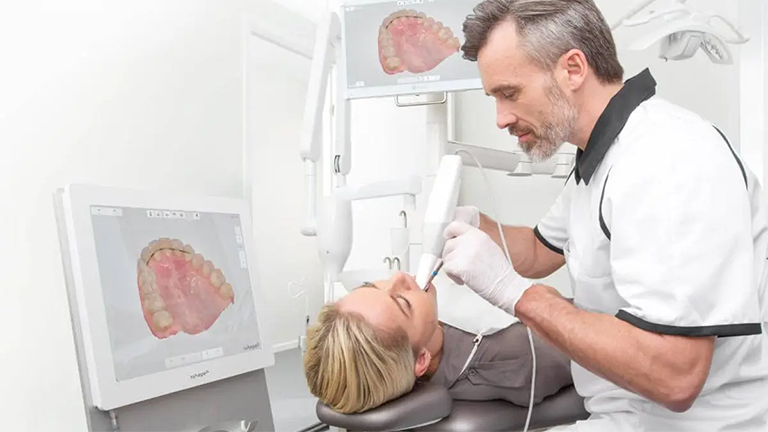
We accept direct digital impression files in standard open formats—primarily STL, PLY, and OBJ. PLY and OBJ preserve color and texture data, which is particularly useful on anterior or subgingival cases for distinguishing soft-tissue boundaries and marked margins.
If you still send physical impressions or stone casts for certain preparations, our receiving team digitizes them on desktop lab scanners before routing the case to the CAD department.
Dental Lab CAD Design Services
During onboarding we record your CAD parameters—die spacer thickness, proximal contact tightness, pontic tissue pressure—into your client profile, so every technician applies the same standards across:
- Single crowns and inlays/onlays: Full-contour anatomical designs or cutback cores for porcelain layering, with strict attention to marginal integrity and emergence profile.
- Multi-unit bridges: Engineered with appropriate connector cross-sections based on flexural requirements, balancing strength with cleansable embrasures.
- Custom implant abutments and screw-retained crowns: Designed around the exact gingival cuff height and fixture angulation to support peri-implant tissue health.
- Full-arch frameworks: Bar and monolithic architectures engineered with compensated shrinkage calculations and passive seating geometry.
Materials Milled In-House
At Topway Dental Lab, we use only FDA-approved materials across all production lines. Our CAM milling center processes five primary material groups:
- Multi-layer Zirconia: Gradient zirconia pucks transitioning smoothly in chroma and translucency from cervical dentin to incisal edge. For details on clinical indications, see our guide on sourcing zirconia crowns from a China lab.
- PMMA: Cross-linked pucks milled for long-term provisionals, full-arch healing prostheses, and functional verification try-ins prior to final zirconia milling.
- Milled Wax: Precision-milled wax patterns for pressed ceramics or cast metal structures.
- Titanium: Titanium blanks milled for custom implant abutments, implant bars, and lightweight suprastructures.
- Cobalt-Chrome (Co-Cr): Milled for rigid PFM substructures, long-span bridge frameworks, and implant bars requiring high elastic modulus.
Browse all fixed restorations on our crown and bridge products page.
Design Iterations and Approval Workflows
Before manufacturing begins, complex cases pass through a digital approval loop:
- Intake & Margin Check: Intake technicians inspect the preparation line, opposing arch, and bite registration; any scan artifact, double bite, or insufficient reduction triggers annotated screenshots back to you immediately.
- CAD Preview Delivery: For diagnostic wax-ups, anterior esthetic cases, implant bars, and full-arch rehabilitations, we send 3D design previews showing cross-sectional thickness, emergence profiles, and occlusal contacts.
- Revision & Sign-Off: You review the midline, contour, and screw-access channel trajectory. Only after your approval does the file enter the CAM milling queue.
3D Printing Services for Dental Applications
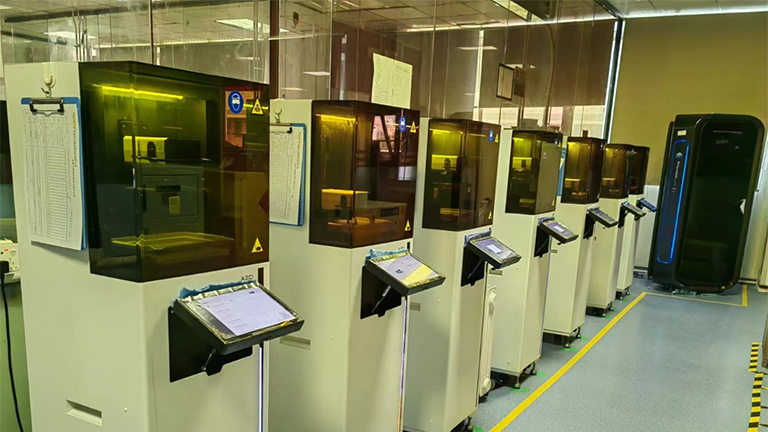
While subtractive milling excels at cutting dense, pre-sintered or pre-polymerized discs, dental 3D printing services allow us to fabricate complex internal geometries, diagnostic models, and surgical templates with high accuracy.
Core 3D Printed Applications
- Implant Surgical Guides: Fabricated from autoclavable surgical-guide resin based on merged CBCT (DICOM) and intraoral scan (STL) data, with verified sleeve tolerances for guided drill accuracy.
- Digital Working Models: When a digital case requires hand-layered porcelain, contact verification on a physical cast, or removable processing, we print high-accuracy resin models with removable dies and soft-tissue gingival masks.
- Try-In Prototypes and Temporaries: For full-mouth reconstructions or complete dentures, printed try-ins let you verify vertical dimension, phonetics, lip support, and midline esthetics chairside before we mill the final restoration.
- Removable Denture Frameworks (Resin): Additive printing produces uniform palatal straps, clasp arms, and denture bases without the thickness variations of manual waxing.
Accuracy and Integration with CAM Milling
Every batch of printed models and surgical guides in our lab follows standardized build-orientation, wash, and UV post-cure protocols to protect dimensional accuracy and prevent warpage in transit.
Printing complements milling rather than replacing it. On an anterior layered zirconia implant case, the titanium abutment and zirconia coping are milled for interface strength, while the working model and gingival mask are printed simultaneously so our ceramists can hand-layer the porcelain accurately.
Digital Implant Workflow Services
Implant prosthodontics demands tighter tolerances than tooth-borne restorations, because osseo-integrated fixtures have no periodontal ligament to compensate for misfits. Digital implant workflows replace physical impression copings with optical scan bodies and library-matched CAD components.
Ti-Base Abutments, Custom Abutments, and Screw-Retained Crowns
Depending on your clinical preference, prosthetic space, and fixture angulation, we fabricate these digital implant configurations:
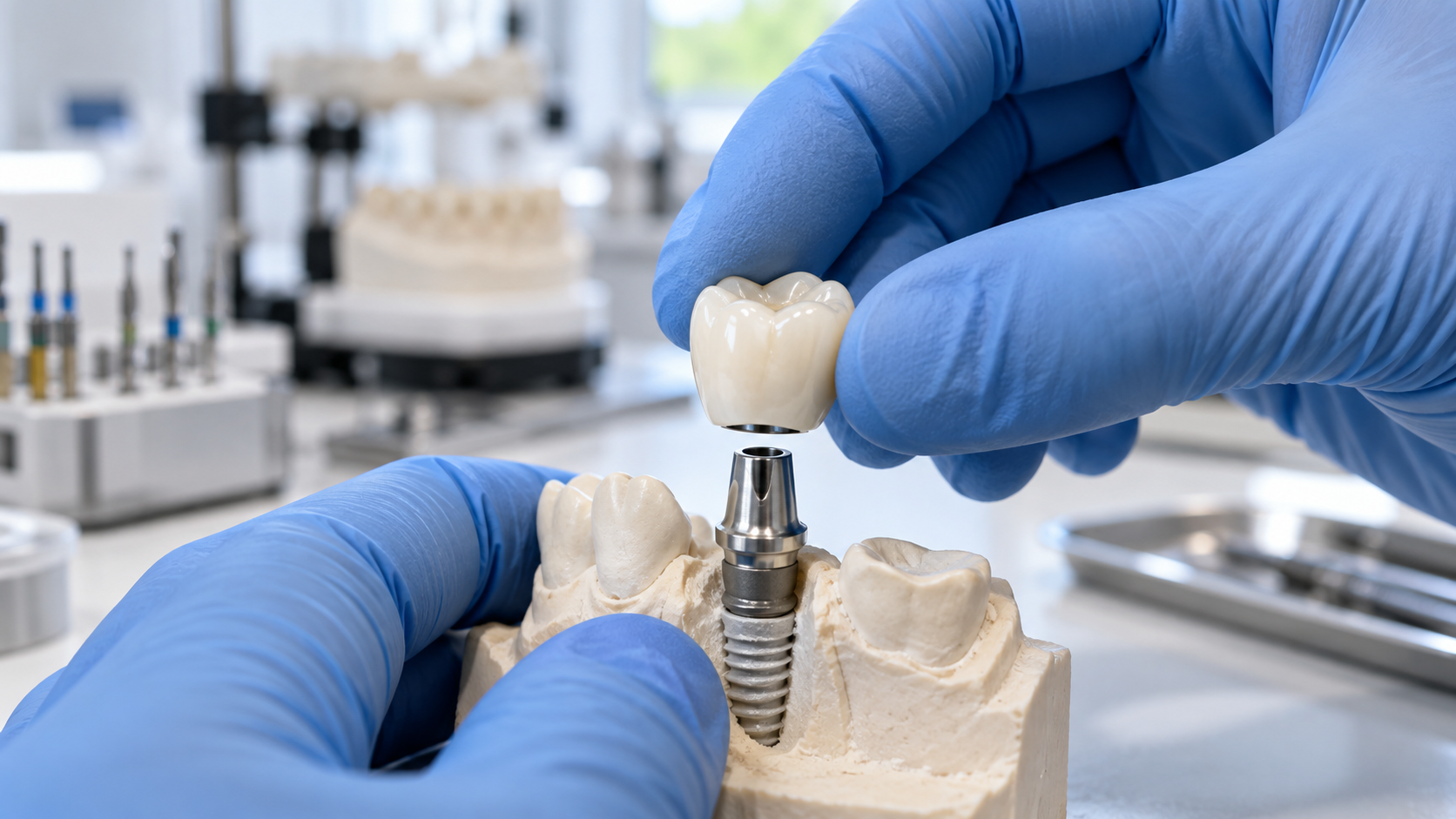
- Custom CAD/CAM Abutments (Titanium or Zirconia on Ti-Base): We design the transgingival emergence profile to mirror the natural root cross-section of the tooth being replaced, placing the cement margin slightly subgingival for easy cleanup.
- Screw-Retained Implant Crowns on Ti-Bases: We mill a full-contour zirconia crown with an integrated screw access channel and bond it under controlled lab protocols to a compatible titanium base, eliminating residual subgingival cement risks.
- Angled Screw Channel Solutions: When bone anatomy forces a labial fixture inclination, angled screw channel geometries redirect the access hole palatally or occlusally.
See the full range on our dental implant restoration options page.
Implant System Compatibility and Full-Arch Planning
Our digital library supports scan body alignments and prosthetic connections across major international implant systems. Simply specify the implant system, platform diameter, and scan body type on your digital Rx.
For full-arch rehabilitations (All-on-4 and All-on-6 protocols), we combine intraoral scans, verification jig scans, and facial reference photos to take your case from milled PMMA provisionals and printed try-in prototypes to the final monolithic zirconia arch or titanium bar superstructure. For a deeper look at multi-unit coordination, read our article on dental implant lab workflows.
Digital Removable & Orthodontic Services
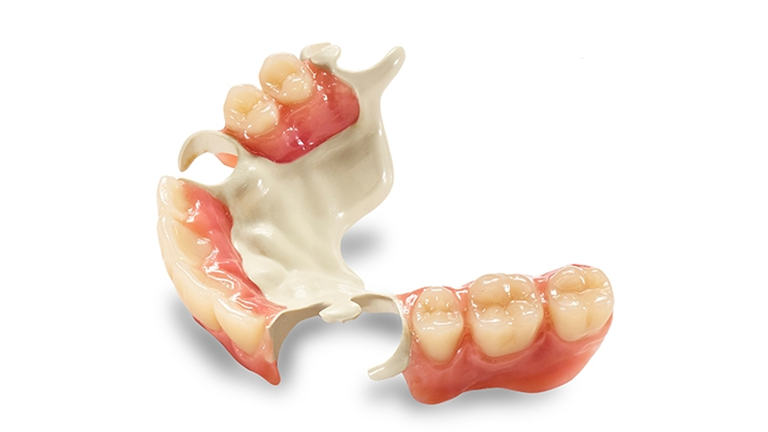
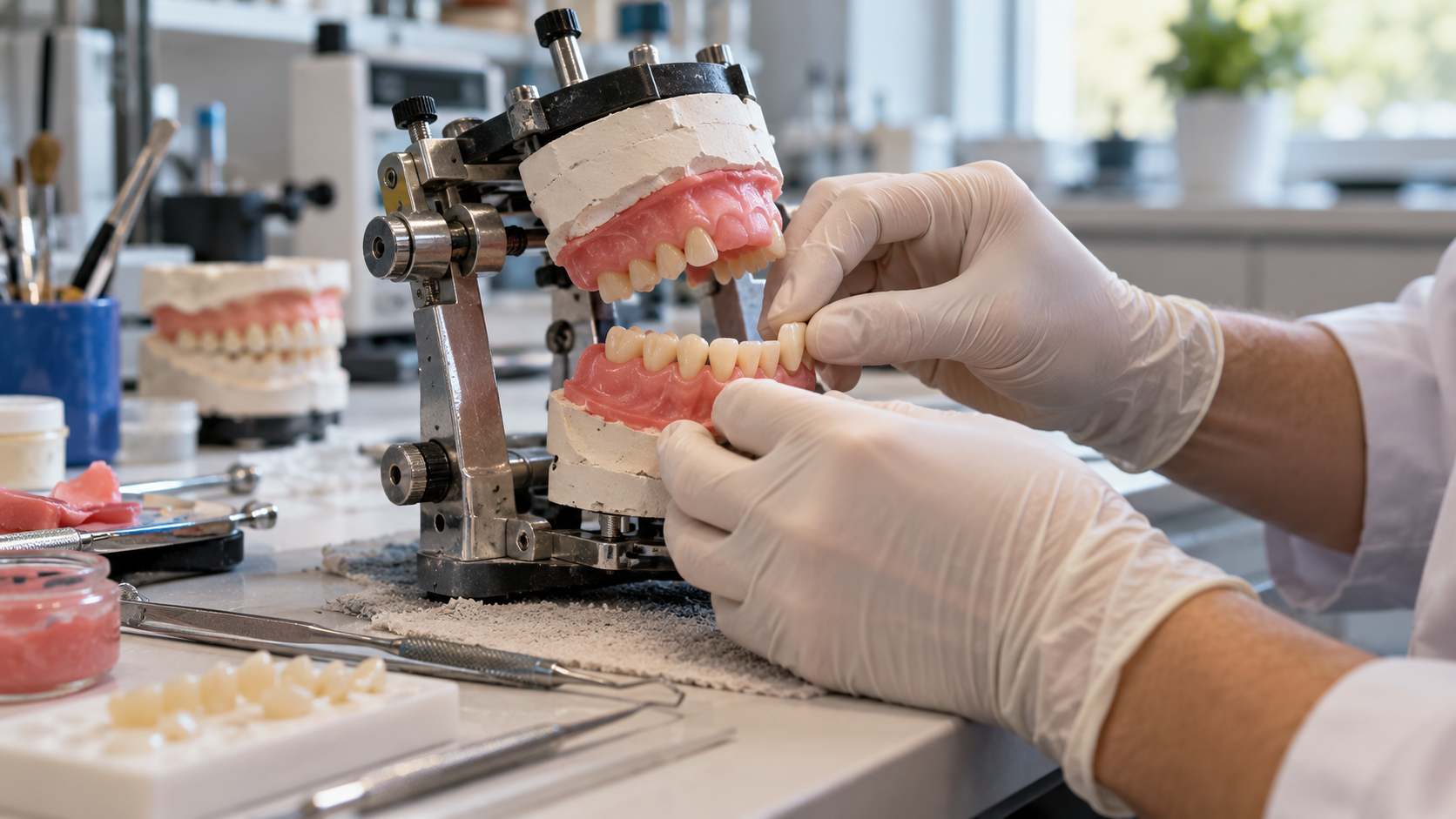
Digital Dentures and CAD-Designed Cast Partial Frameworks
For digital complete dentures, submit scans of edentulous arches, bite rims, or an existing well-fitting prosthesis (reference denture workflow). We set up the virtual tooth arrangement, share a 3D preview for approval, and supply a printed try-in if requested. Because the design stays archived, a replacement denture later requires only a work order.
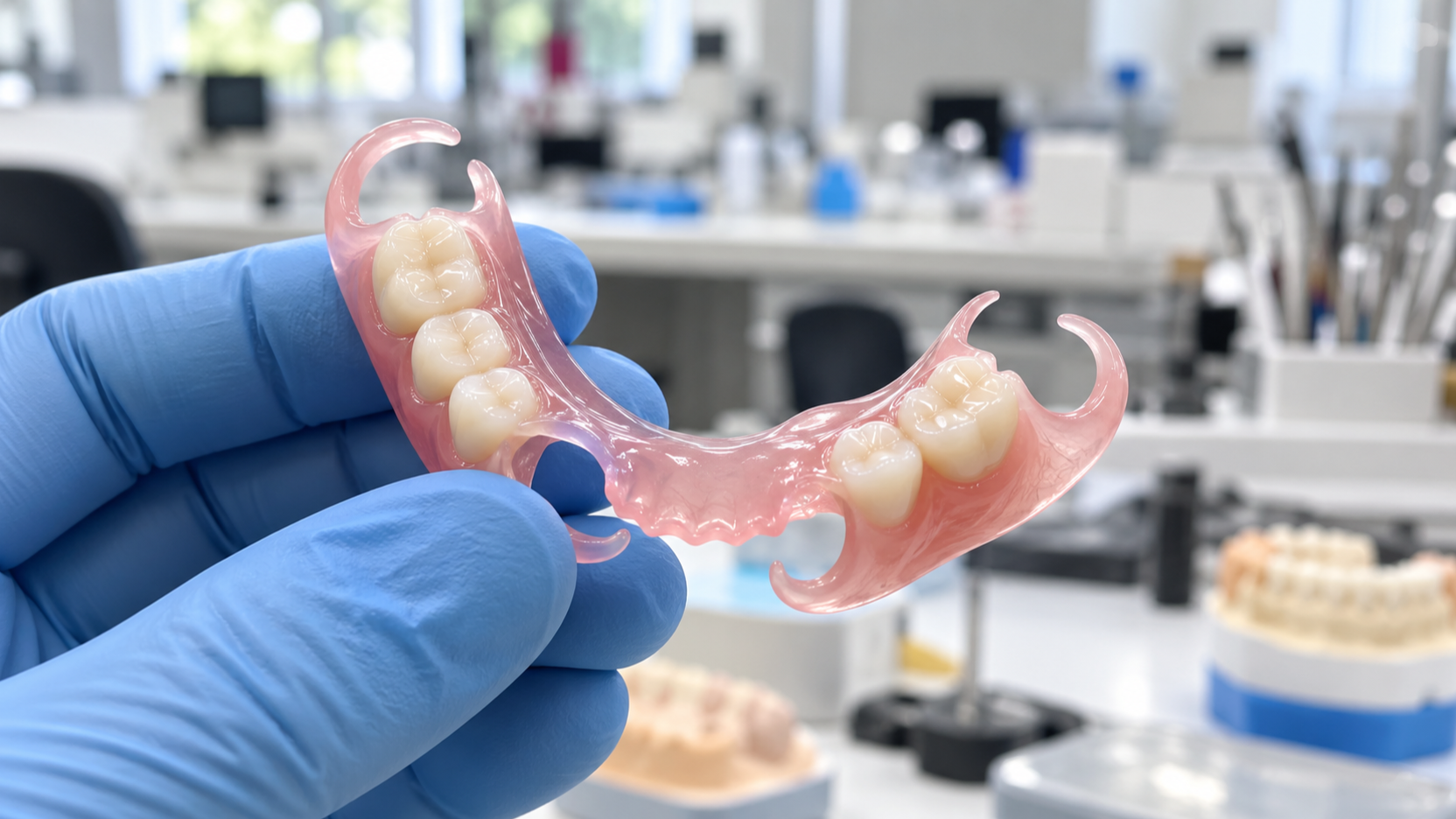
For removable partial dentures (RPDs), we scan the master arch, run a digital path-of-insertion survey to measure undercut depths precisely, and design major connectors, rest seats, and clasps in CAD—yielding uniform clasp flexibility and predictable seating at delivery.
Digital Orthodontic Appliances
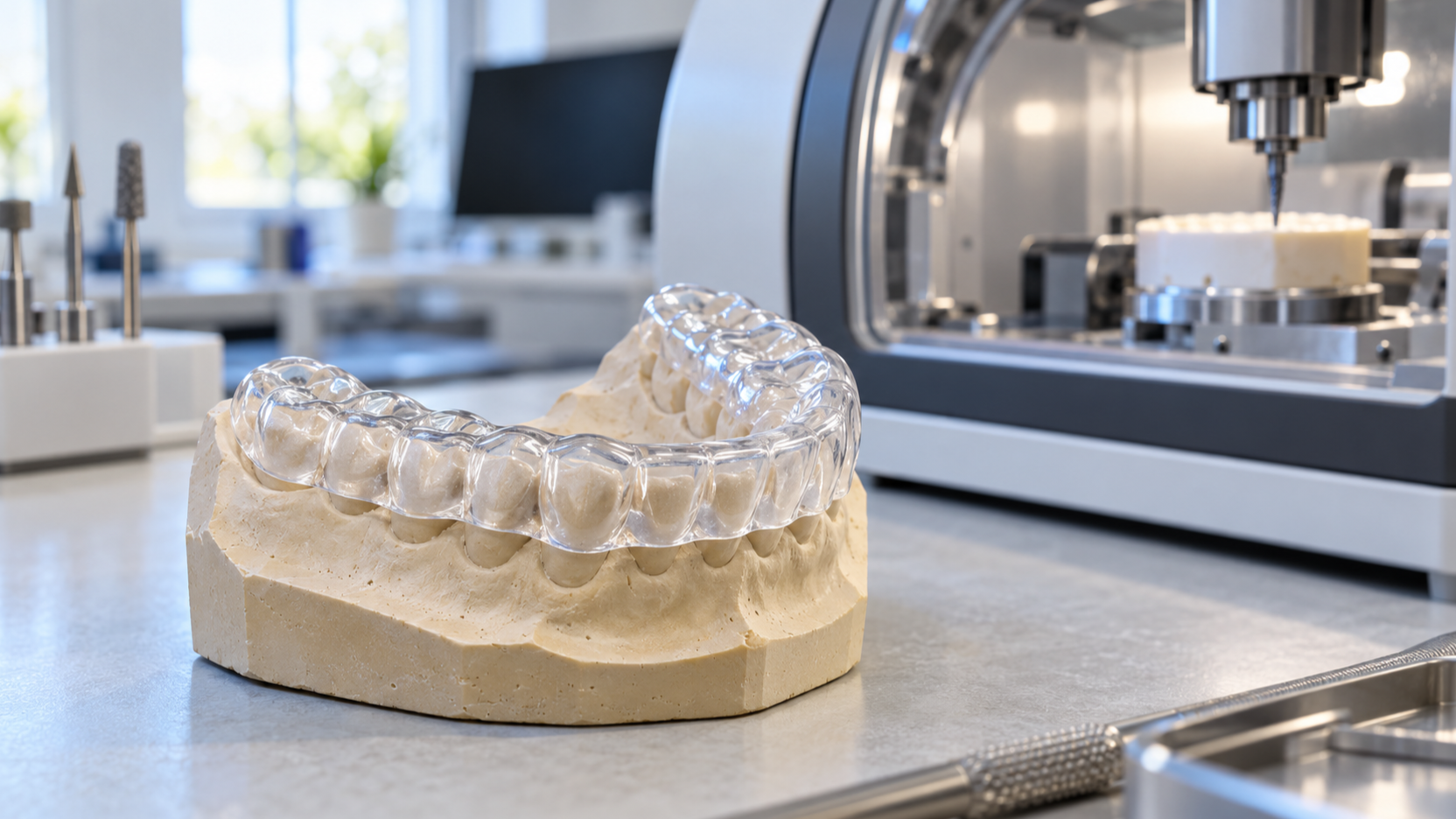
From your intraoral STL files, we fabricate digital palatal expanders, clear retainers, wire-and-acrylic retainers, and occlusal splints designed on virtual articulators to minimize chairside occlusal adjustment.
How to Send Digital Cases to an Overseas Lab
Accepted File Formats and Photo Protocols
Our intake team accepts open files (STL, PLY, OBJ) from all major intraoral and desktop lab scanners. For anterior and visible premolar cases, attach three clinical photos:
- Shade tab reference photo: Hold the shade tab on the same focal plane as the natural tooth, with the shade code clearly legible.
- Stump shade photo: Essential when ordering translucent zirconia or glass ceramics over discolored or metal-core preparations so we select the right block opacity.
- Full-smile retracted and non-retracted photos: Helps our CAD designers align the incisal plane with the patient's facial midline and lip curvature.
Typical Workflow Stages from File Submission to Shipping
We track every digital submission through a sequence of operational stages:
- Digital Intake & Case Review: Scan files, Rx instructions, and shade photos are checked for margin continuity, occlusal clearance, and scan body alignment. Any questions are flagged immediately via email or messaging.
- CAD Design & Preview Approval: Technicians design the restoration to your saved profile parameters. Routine single units proceed directly to CAM, while complex or anterior cases pause for your digital sign-off.
- CAM Milling / 3D Printing & Sintering: Approved files are nested and milled or printed, followed by calibrated thermal sintering for zirconia or UV post-curing for resins.
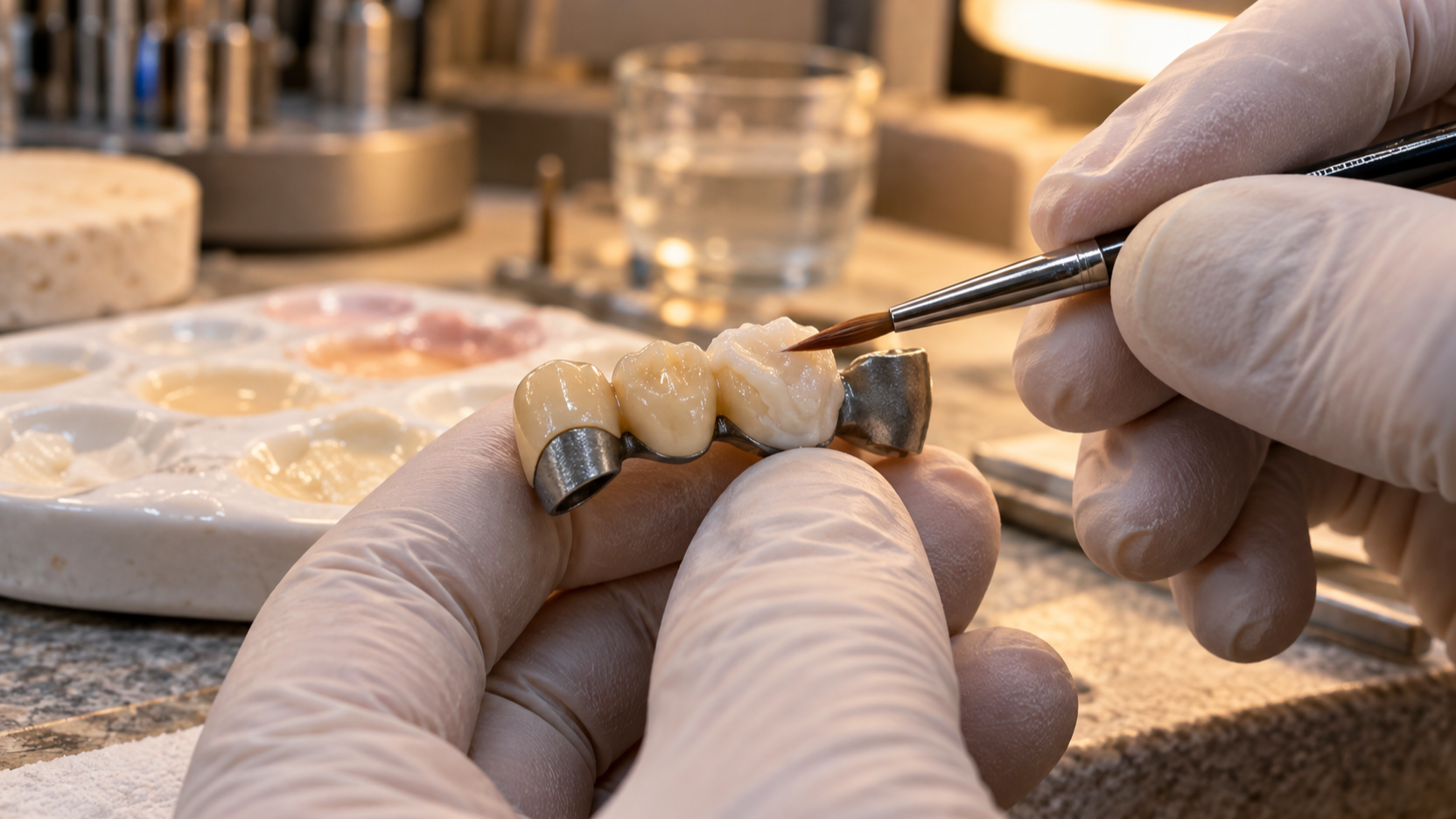
- Ceramist Detailing & QC: Restorations undergo staining, glazing, porcelain layering (if prescribed), and dimensional verification.
- Sanitization, Packaging & Dispatch: Completed work is sanitized, packaged, and shipped via international express courier with full tracking.
For step-by-step instructions on file preparation and bite registration, read our guide on how to send digital impressions to an overseas lab.
Quality Assurance in a Digital Workflow
An uncalibrated bur or rushed sintering schedule can compromise a digital crown just as easily as an analog error, so our digital verification tools work alongside hands-on technician inspection.
Digital Inspection, Traceability, and Remake Accuracy
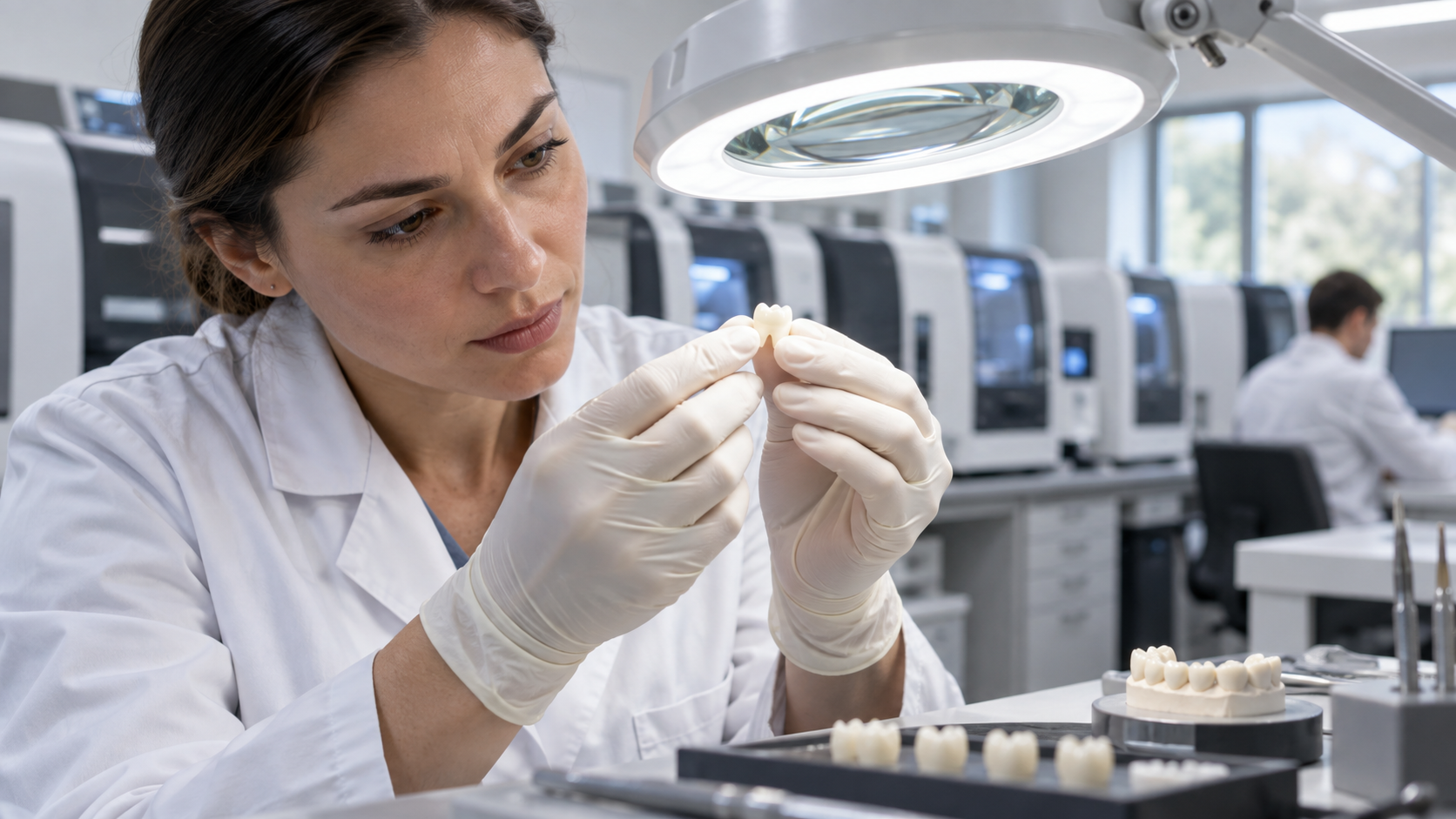
Quality assurance starts in the CAD software, where supervisors verify wall thicknesses, connector cross-sections, and occlusal contacts against your Rx. After milling and sintering, restorations are seated on printed verification dies when case complexity requires, and checked under magnification for marginal fit and proximal contacts. See how we inspect units at every workstation in our 7-step quality control process.
Digital records also enable traceability. In an analog workflow, stone dies often wear down during divesting and polishing. In our digital workflow, your master STL scan, CAD design file, and material batch records remain archived. If you ever request a modification—such as opening a screw channel or tightening a contact—we open the exact archived CAD file, apply the numerical adjustment, and remill without guesswork.
International Regulatory Certifications
Topway Dental Lab operates under a strict medical device regulatory framework to protect your practice and patients:
- FDA-Registered Contract Manufacturer: Registered with the U.S. FDA for Class I and Class II medical devices.
- CE Certificate: Compliant with European medical device standards.
- ISO 13485 & ISO 9001 Certified: Audited quality management systems governing medical device production and traceability.
- Domestic Medical Device Licensing: Holds the Medical Device Production License of China, the Class II Medical Device Product Registration Certificate (China FDA/NMPA), and High-tech Enterprise Certification.
- Material Safety: Exclusive use of FDA-approved materials across all departments.
Why Outsource Digital Dental Lab Services to China?
Scale of Infrastructure and Cost Advantage
Operating from our 5,000-square-meter facility in Bao'an District, Shenzhen with over 300 employees, Topway Dental Lab divides production into specialized cells: the technician designing your full-arch implant bar works on implant structures daily, while dedicated ceramists focus purely on anterior esthetics.
Because our equipment investment is spread across a high, steady international production volume, our fees are significantly lower than typical domestic lab fees in the US, UK, Western Europe, or Australia—while maintaining ISO 13485 standards and using only FDA-approved materials. Please contact us for a current price list customized to your case mix and volume.
Global Track Record and Year-Round Continuity
Founded in 2006 in Xili, Shenzhen initially to serve U.S. dental laboratories, we have expanded since 2010 to serve clinics and labs across the United States, United Kingdom, Germany, France, Canada, Australia, New Zealand, Israel, and Brazil. Since 2022 we have also maintained special production scheduling during the Chinese New Year holiday so our overseas partners experience uninterrupted quality and delivery continuity year-round.
To request our current price list or submit a test digital case, email us at [email protected] or call +86 153 2504 5142.
Frequently Asked Questions
What file formats does Topway accept for digital dental cases?
We accept standard open digital impression formats—STL, PLY, and OBJ—from any intraoral or desktop laboratory scanner. For anterior or subgingival cases we recommend PLY or OBJ, because the retained color data helps our CAD technicians distinguish preparation margins from soft tissue.
Can a digital dental lab handle both milling and 3D printing in-house?
Yes. Inside our 5,000-square-meter Shenzhen facility, we operate both CAM milling centers and 3D printing departments under one roof, milling final restorations while simultaneously printing surgical guides, working models, and try-in prototypes for the same case.
How does digital outsourcing reduce turnaround time compared to traditional impressions?
Digital outsourcing eliminates the entire outbound shipping phase—no packing impressions, courier scheduling, or customs wait before the lab can inspect the case. Your scan files reach our Shenzhen workstations within minutes, and thanks to time zone differences our technicians review margins and begin CAD design overnight.
Is CAD/CAM outsourcing suitable for implant cases with custom abutments?
Yes. From a compatible scan body capture, our CAD technicians design custom titanium abutments, zirconia-on-Ti-base abutments, screw-retained implant crowns, and full-arch All-on-4/6 frameworks. Complex implant cases receive 3D CAD design previews for your approval prior to milling.
What certifications should a digital dental lab have for international outsourcing?
Look for recognized medical device certifications and compliant materials. Topway Dental Lab is an FDA-registered contract manufacturer for Class I and Class II medical devices, holds a CE certificate, operates under ISO 13485 and ISO 9001, holds China Medical Device Production and Class II Registration certificates, and uses only FDA-approved materials.
Top Posts
Recent Posts

How can we help you today?
We believe in providing the best possible care to all our existing patients and welcome new patients to sample.
