


Porcelain Fused to Metal Bridges: When PFM Still Wins
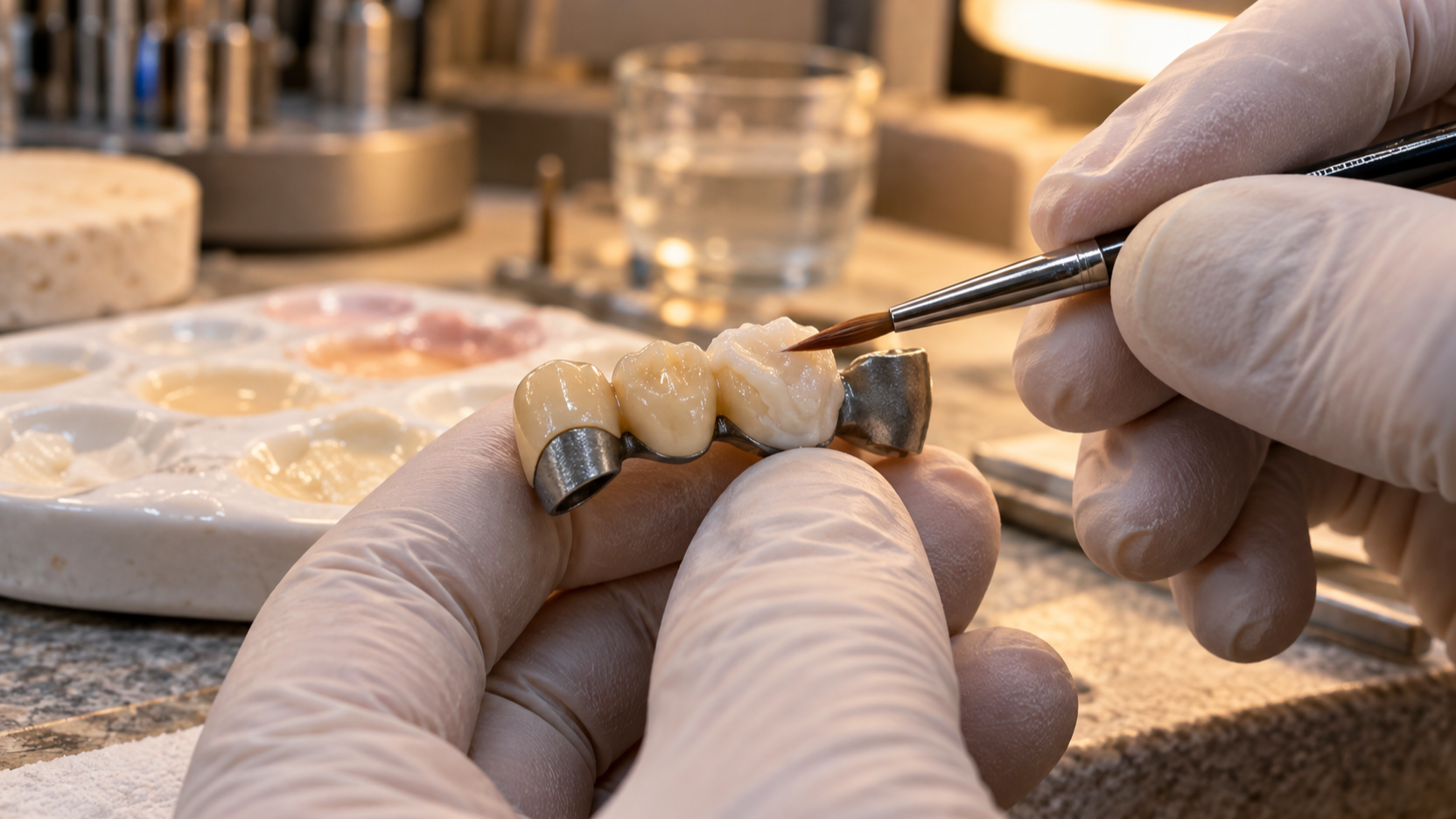
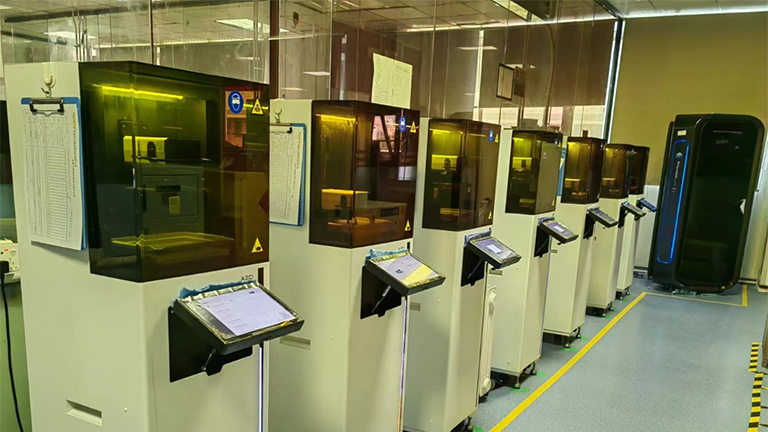
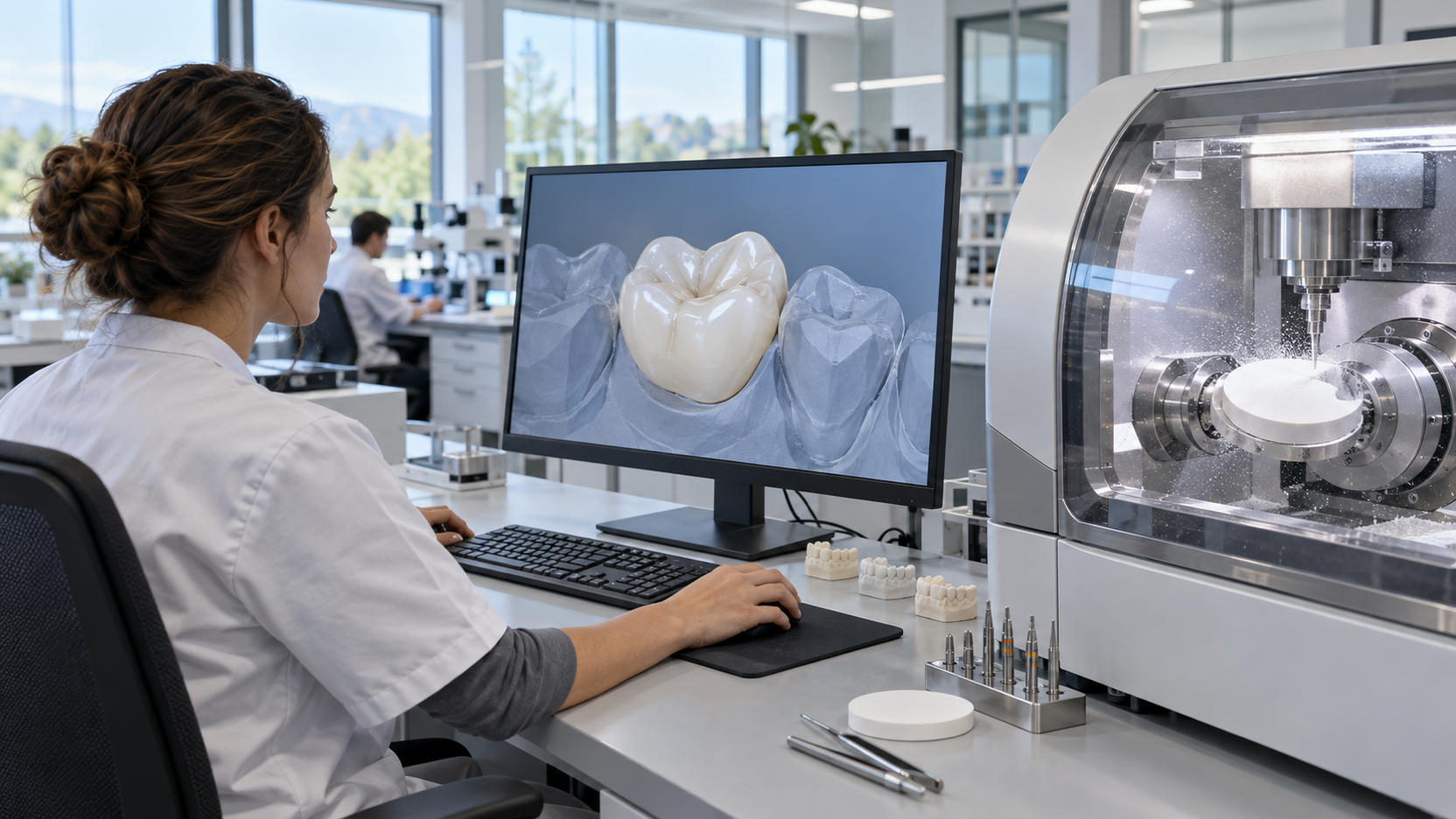
Walk onto the production floor of our 5,000-square-meter facility in Bao'an District, Shenzhen, and you will see rows of CAD/CAM milling machines cutting monolithic and layered zirconia. Yet just across the corridor, our metal-ceramic department stays consistently busy. Clinicians and dental laboratory owners across the United States, the United Kingdom, Germany, France, Canada, Australia, and New Zealand regularly send us cases specifically requesting porcelain fused to metal bridges.
With all-ceramic materials dominating continuing education courses and dental marketing, it is easy to assume that metal-ceramic restorations are a relic of the past. However, from the perspective of a contract manufacturer that has fabricated crown and bridge restorations since 2006, the clinical reality is much more nuanced. When a restoration involves a long posterior span, heavy parafunctional occlusal forces, complex implant substructures, or strict budget constraints, a well-engineered PFM bridge delivers mechanical predictability that all-ceramic alternatives often struggle to match.
What Is a Porcelain-Fused-to-Metal (PFM) Bridge?
A porcelain-fused-to-metal bridge—also referred to as a metal-ceramic bridge—is a fixed partial denture that combines two distinct materials to balance mechanical strength with tooth-like aesthetics. Rather than relying on a single homogeneous block of ceramic, a PFM bridge uses a dual-layer engineering approach:
- The Metal Substructure (Coping and Framework): The internal foundation is cast or milled from a dental alloy. This substructure fits over the prepared abutment teeth (or implant abutments) and forms the rigid connector beams spanning the edentulous ridge to support the pontics.
- The Masking Opaque Layer: A thin, specialized metal-bonding porcelain layer is fired onto the oxidized alloy surface. It forms a chemical and micromechanical bond with the metal oxide layer while blocking out the dark reflection of the underlying alloy.
- The Veneering Porcelain: Feldspathic or leucite-reinforced dental porcelain is hand-layered over the opaque core in dentin, enamel, and incisal shades, then fired in a vacuum furnace to recreate natural tooth morphology and surface characterization.
Why PFM Served as the Restorative Benchmark for Decades
Before high-translucency zirconia and pressed lithium disilicate entered daily practice, PFM was the workhorse of fixed prosthodontics. Dental porcelain is strong under compression but brittle under tension. When a patient bites down on a bridge, the gingival aspect of the connectors experiences tensile stress. By placing a ductile metal framework beneath the porcelain, a PFM bridge absorbs flexural loads across the metallic substructure and keeps the veneering porcelain under compression.
How PFM Differs from Full-Metal and All-Ceramic Bridges at a Glance
Compared to a full-cast metal bridge, a PFM bridge requires slightly more tooth reduction (to fit both metal and porcelain) in exchange for natural shade matching. Compared to an all-ceramic bridge, a PFM bridge replaces brittle ceramic failure modes with a ductile metal core. While all-ceramic bridges transmit light through the entire restoration, a PFM bridge reflects light off its internal opaque layer, relying on multi-layer ceramic build-up for visual depth.
Clinical Indications: When PFM Is Still the Right Choice
In our laboratory, our technical supervisors review incoming digital scans and physical impressions daily. While three-unit anterior bridges frequently go to the zirconia or lithium disilicate departments, there are five clinical scenarios where experienced prosthodontists and general dentists still write "PFM" on the lab prescription.
1. Long-Span Posterior Bridges (Four or More Units)
As the span between abutments increases, flexural stress across the pontic span rises exponentially. In four-, five-, or six-unit posterior bridges—or full-arch splinted reconstructions—maintaining rigidity without over-bulking the connectors is critical. Zirconia requires larger connector cross-sections on long spans, which can impinge on the papilla and impede hygiene. A cast or CAD/CAM-milled metal framework achieves high rigidity with compact connector dimensions, preserving gingival embrasure space.
2. Bruxism and Heavy Occlusal Load Cases
Patients with heavy clenching habits or a history of fracturing ceramic restorations challenge any fixed prosthesis. When designing a PFM bridge for a bruxer, our lab can modify the framework with metal occlusal islands on second molars or lingual metal guiding planes. Putting polished metal in contact with the opposing dentition on heavy functional inclines eliminates porcelain delamination in high-stress zones while keeping the buccal corridor aesthetic.
3. Cost-Sensitive Multi-Unit Cases
Not every patient has the budget for layered all-ceramic restorations across a multi-unit span. When fabricated using base-metal alloys (such as nickel-free cobalt-chromium), a porcelain fused to metal dental bridge offers a durable, aesthetic fixed solution that often comes in below lithium disilicate or layered zirconia fees, keeping fixed prosthodontics accessible within strict insurance or patient budgets.
4. Implant-Supported Bridge Frameworks and Hybrid Cases
Because implants lack periodontal ligament shock absorption, passive fit and framework ductility are paramount. Metal substructures allow precision milling of screw channels, custom emergence profiles, and pink gingival porcelain application where vertical bone loss requires soft-tissue replacement. Furthermore, when a case combines precision attachments—such as extracoronal slides or lingual milled ledges supporting a cast partial denture—a PFM bridge allows the attachment housing to be cast or laser-welded directly into the substructure.
5. Compromised Preparations Requiring a Proven Margin Seal
All-ceramic restorations demand rounded internal line angles and a uniform shoulder or deep chamfer. In crown-and-bridge revisions, periodontally involved teeth with long clinical crowns, or furcation-approaching margins, cutting a deep shoulder isn't always safe for the pulp. Metal copings can be finished down to a fine chamfer or bevel with a metal collar, providing a tight marginal seal where thin ceramic margins would chip.
PFM vs. Zirconia vs. E.max: Choosing the Right Material
Selecting the right bridge material requires weighing mechanical demands against aesthetic expectations and preparation geometry. Below is how PFM crown and bridge restorations compare against zirconia and lithium disilicate (e.max) in daily lab production.
| Clinical Parameter | Porcelain-Fused-to-Metal (PFM) | Zirconia (Monolithic / Layered) | Lithium Disilicate (e.max) |
|---|---|---|---|
| Substructure | Cast or milled alloy (Co-Cr, Noble, or High-Noble) | Yttria-stabilized zirconia polycrystal | Pressed or milled glass-ceramic |
| Primary Failure Mode | Superficial porcelain chipping (metal core resists bulk fracture) | Rare connector fracture (monolithic); veneer chipping (layered) | Bulk connector fracture if span or load is excessive |
| Recommended Span | 3 units up to 14-unit full-arch splinted bridges | 3 units to full arch (requires larger connectors on long spans) | Up to 3 units only (anterior to second premolar) |
| Translucency | Moderate (opaque layer blocks internal light transmission) | Moderate (monolithic) to High (layered cut-back) | Exceptional (mimics natural enamel vitality) |
| Margin Design | Chamfer, bevel, shoulder, or feather-edge metal collar | Chamfer or rounded shoulder (0.8–1.0 mm clearance) | Deep chamfer or rounded shoulder (1.0–1.5 mm clearance) |
| Chairside Repair | Predictable (sandblasting, metal/silane primer, composite) | Difficult (zirconia resists hydrofluoric acid etching) | Moderate (etchable with hydrofluoric acid + silane) |
Where Zirconia or E.max Outperforms PFM
If your patient has a high lip line, thin gingival biotype, and needs a three-unit anterior bridge, PFM is rarely our first recommendation. Over time, mild gingival recession can expose the cervical margin of a PFM restoration. Even with a 360-degree porcelain margin, the internal opaque layer blocks light from entering the root trunk, which can cast a subtle shadow at the free gingival margin. In these cases, lithium disilicate or layered zirconia provides superior optical integration. For a deeper look at all-ceramic options, read our guide on zirconia crowns from a China lab.
Where PFM Outperforms Alternatives
Conversely, PFM outperforms translucent ceramics when masking severely discolored substrates—such as dark tetracycline staining or cast metal post-and-cores—next to vital abutments. Because every PFM unit starts with a total-blockout opaque layer, achieving uniform shade across mismatched abutments is straightforward. Additionally, PFM bridges offer dependable retention with conventional glass ionomer or resin-modified glass ionomer cements on short, tapered preparations where subgingival moisture makes adhesive resin bonding difficult.
Lab Workflow: How a PFM Bridge Is Fabricated
Unlike monolithic restorations that move straight from a milling machine to a sintering furnace, a metal ceramic bridge passes through multiple specialized hands. Here is how a PFM bridge moves through our production floor at Topway Dental Lab:
Step 1: Case Review and Model Preparation
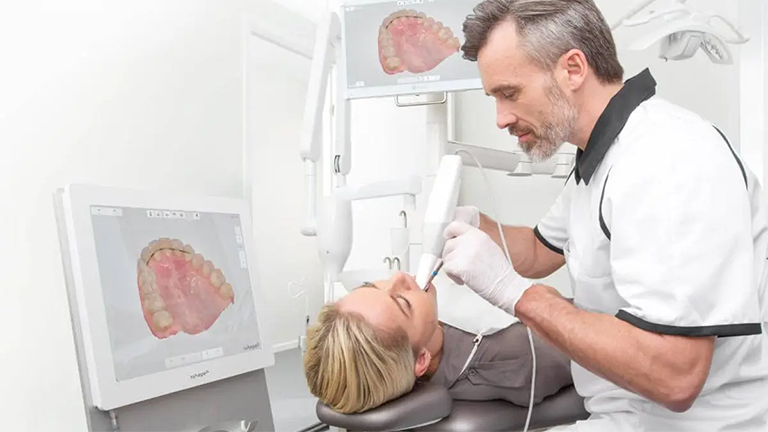
Whether a case arrives as a polyvinyl siloxane (PVS) impression or an intraoral STL scan, our intake team inspects occlusal clearance (ideally 1.5 to 2.0 mm on functional cusps), shared path of insertion across all abutments, and margin continuity. Physical impressions are poured in high-strength stone and sectioned; digital scans are processed in CAD software to verify parameters before working models are produced.
Step 2: Anatomical Substructure Fabrication
A common mistake in low-tier lab work is making the metal coping a simple 0.3 mm uniform shell regardless of tooth morphology, which leaves thick, unsupported cusps of porcelain that fracture under load. Our technicians design every PFM framework as a reduced anatomical replica ("cut-back" design) of the final contours so the overlying porcelain maintains an even 1.0 to 1.5 mm thickness. Depending on the prescription, the framework is produced via lost-wax casting or CAD/CAM fabrication.
Step 3: Metal Conditioning and Oxidation
Once the metal substructure is seated on the master dies and verified for a passive, rock-free fit, the external surface is finished with carbide burs in a single direction, airborne-particle abraded with high-purity aluminum oxide, and steam-cleaned. The framework then runs through a furnace oxidation (degassing) cycle to remove volatile contaminants and form the controlled surface oxide layer needed for chemical bonding with porcelain.
Step 4: Opaque Application and Porcelain Layering
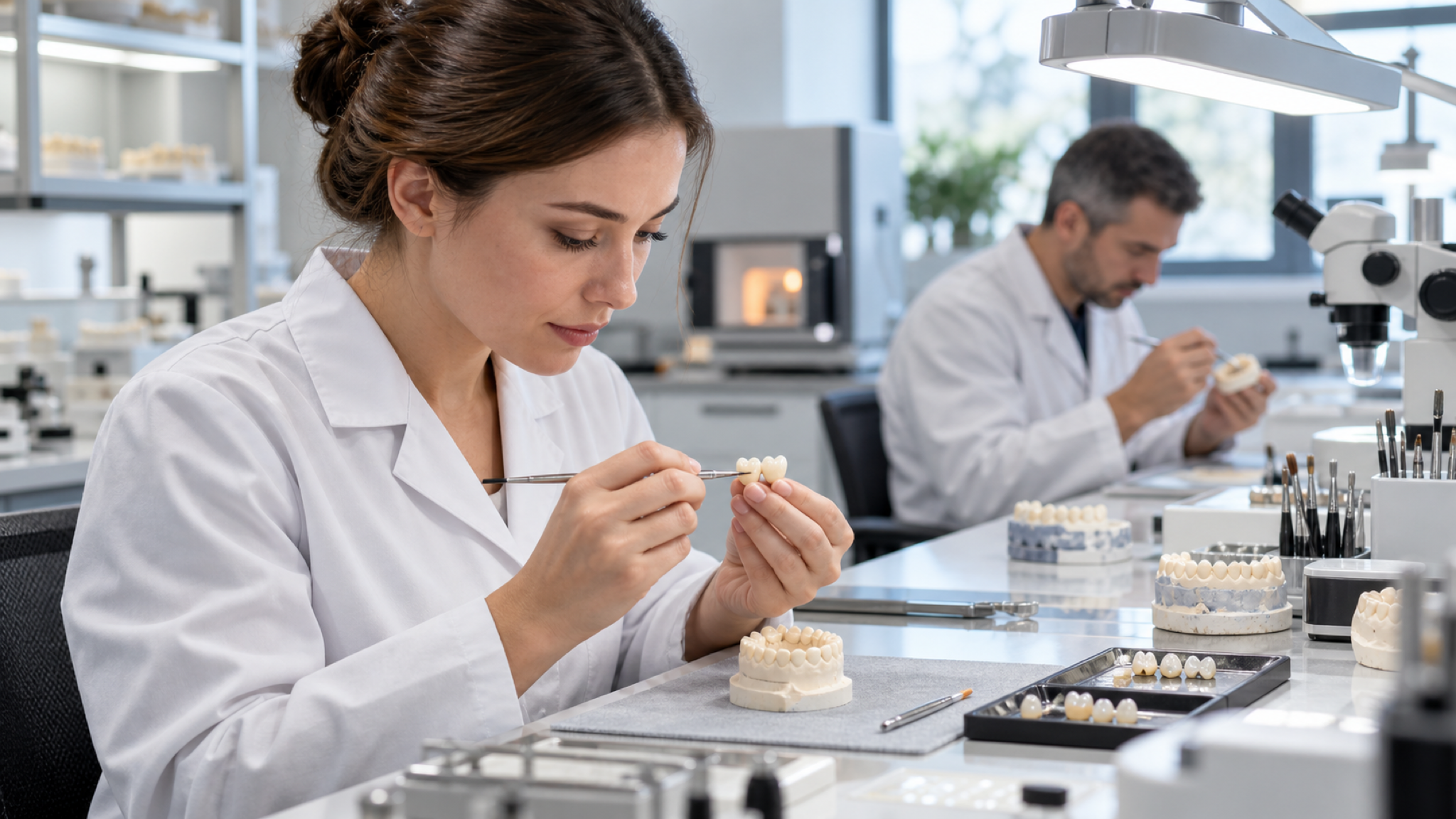
Our ceramists apply a wash opaque and masking opaque paste matched to the target Vita Classic or 3D-Master shade and fire it under vacuum. Next, using fine brushes and vibration condensation, senior ceramists build up cervical, opacious dentin, body dentin, enamel, and translucent incisal porcelains. Because porcelain shrinks roughly 15% to 20% during sintering, the bridge undergoes a first dentin bake, followed by mechanical refinement of interproximal contacts, pontic tissue adaptation, and occlusal stops on the articulator before a second corrective bake.
Step 5: Glazing, Polishing, and Final QC
After carving secondary occlusal anatomy and facial texture, the bridge completes a glaze firing cycle to seal surface microporosities. Exposed metal collars, lingual guiding surfaces, and pontic undersides are polished with rubber wheels and diamond pastes to a plaque-resistant mirror finish before final inspection.
Alloy Selection for the Metal Substructure
Alloy category dictates biocompatibility, framework stiffness, and porcelain bond integrity. Every material used at Topway Dental Lab is an FDA-approved material; on your prescription, you specify the alloy class. PFM alloys fall into three categories:
- High-Noble (Precious) Alloys: Containing at least 60% noble metal (minimum 40% gold, plus platinum and palladium). They offer exceptional corrosion resistance, warm oxide hues that enhance cervical aesthetics, and marginal burnishability, though their lower elastic modulus requires slightly thicker connectors on long spans.
- Noble (Semi-Precious) Alloys: Containing at least 25% noble metal (typically palladium-based). They balance cost and rigidity, offering reliable oxide formation and stronger resistance to long-span flexure than high-gold alloys.
- Base-Metal (Non-Precious) Alloys: Containing less than 25% noble metal—predominantly cobalt-chromium (Co-Cr) in modern laboratories. Co-Cr has roughly double the elastic modulus (stiffness) of high-noble alloys and lighter weight, making it ideal for four- to six-unit posterior spans where connector height is restricted.
Nickel-Free Options for Patients with Metal Allergies
Historically, non-precious PFM bridges were often cast in nickel-chromium (Ni-Cr) alloys, which can trigger Type IV hypersensitivity reactions (gingival inflammation or lichenoid mucositis) in nickel-sensitive patients. For allergy-prone patients, specify nickel-free and beryllium-free cobalt-chromium (Co-Cr) or a noble/high-noble alloy on the prescription. Co-Cr forms a stable chromium-oxide passivation layer and eliminates nickel allergy concerns.
How Alloy Choice Affects Porcelain Bonding
Long-term metal-ceramic survival depends on matching the Coefficient of Thermal Expansion (CTE) between alloy and ceramic. The metal substructure is formulated with a slightly higher thermal expansion coefficient than the veneering porcelain so that, as the bridge cools after firing, the metal contracts slightly more and pulls the porcelain into protective compression. We pair each alloy class with matched CTE porcelain systems and use controlled furnace cooling cycles on heavy frameworks to prevent thermal stress crazing.
Common PFM Bridge Failures and How Labs Prevent Them
Most clinical frustrations with PFM bridges—chipped cusps, tight rock-prone seating, or dark cervical collars—stem from preventable preparation or bench errors.
- Porcelain Chipping or Delamination: Clean separation down to the metal indicates contamination or improper oxide formation; fracture within the porcelain indicates an under-contoured coping leaving >2.0 mm of unsupported ceramic. We prevent both through anatomical cut-back framework design, strict sandblasting/degassing protocols, and calibrated furnace schedules.
- Metal Show-Through at the Margin: A shallow labial feather edge leaves insufficient room for metal, opaque, and dentin porcelain without over-contouring the emergence profile. For aesthetic-zone abutments, prepare a 1.2 to 1.5 mm labial shoulder or deep chamfer and request a 180-degree or 360-degree porcelain labial margin (collarless PFM), which terminates the metal slightly shy of the shoulder so light enters the cervical area.
- Framework Distortion on Long Spans: Manual wax removal and uneven casting expansion can warp multi-unit bridges. We prevent rocking fits with calibrated investment protocols and by checking every substructure for passive fit on both sectioned dies and a solid verification cast. You can read more about our inspection checkpoints in our 7-step quality control process.
Outsourcing PFM Bridges: What to Look for in a Lab Partner
For clinics and domestic laboratories outsourcing PFM work to control overhead or resolve technician shortages, selecting the right manufacturing partner is critical. For a broad overview of partner selection, review our dental lab outsourcing guide and our article on how to choose a crown and bridge lab. When outsourcing PFM bridges specifically, verify four essentials:
- Regulatory Compliance & Material Traceability: Topway Dental Lab is an FDA-registered contract manufacturer (Class I/II medical devices), holds a CE certificate, and maintains ISO 13485 and ISO 9001 certifications, as well as China's Medical Device Production License, Class II Medical Device Product Registration Certificate, and High-tech Enterprise Certification. Every bridge is fabricated exclusively with FDA-approved materials.
- Departmental Specialization at Scale: Operating from a 5,000-square-meter facility with over 300 employees, our metal framework specialists, opaque technicians, and senior ceramists each focus on their respective stages rather than rushing as generalists.
- Reliable Overseas Turnaround: Having served clinics and labs in the US, UK, Germany, France, Canada, Australia, New Zealand, Israel, and Brazil since 2010, we streamline international express logistics—and since 2022, we have maintained special Chinese New Year production scheduling to safeguard turnaround and quality through the holiday season. See our full breakdown of overseas lab turnaround times.
- Clear Case Communication: Whether you send physical impressions or digital scans, our team flags path-of-insertion undercuts or tight occlusal clearance with annotated photos before fabrication begins.
Ordering a PFM Bridge from Topway Dental Lab
Submitting a PFM bridge case to our lab is simple whether you use an intraoral scanner or conventional PVS impressions:
- Send Scans or Impressions: Upload STL files (upper, lower, and bite) or ship physical impressions via express courier.
- Specify PFM Details on Your Rx: Note your preferred alloy class (base-metal, noble, or high-noble—contact us to confirm current alloy options), margin design (lingual metal collar vs. labial porcelain margin), pontic design (modified ridge-lap, ovate, or hygienic), occlusal scheme (full porcelain vs. metal occlusal stops), and Vita shade (with reference photos if anterior).
- Request a Price List: Our factory-direct fees are significantly lower than typical domestic lab fees while using strictly FDA-approved materials. Because alloy pricing varies by specification, please contact us for a current price list.
To request our current fee schedule or discuss a complex bridge case, email us at [email protected] or call +86 153 2504 5142.
Frequently Asked Questions
How long does a porcelain-fused-to-metal bridge last compared to zirconia?
Both PFM and zirconia bridges are long-term restorations capable of serving patients for many years when supported by healthy abutments, balanced occlusion, and proper hygiene. While monolithic zirconia resists superficial surface chipping, a PFM bridge relies on a ductile metal substructure that prevents catastrophic bulk fracture through the connectors—making PFM a time-tested choice for long-span posterior bridges and splinted reconstructions.
Can a chipped PFM bridge be repaired chairside?
Yes. Provided the metal framework remains stable and the margins are sealed, a localized porcelain chip can be repaired in a single visit without removing the bridge. The clinician isolates the area, sandblasts the fractured surface with aluminum oxide, etches the porcelain bevel with buffered hydrofluoric acid, applies a metal primer (if alloy is exposed) and silane coupling agent, and bonds light-cured composite resin to restore contour.
Is PFM safe for patients with metal allergies?
Yes, when fabricated with biocompatible alloys. Most dental metal sensitivities involve nickel or beryllium found in outdated base metals. Specifying a nickel-free and beryllium-free cobalt-chromium (Co-Cr) alloy—or a noble or high-noble alloy—on the prescription avoids the common triggers, and every material we use is FDA-approved. For patients with severe multi-metal allergies, ask us for alloy composition details prior to fabrication or consider transitioning the case to all-ceramic zirconia.
What is the turnaround time for a PFM bridge from an overseas lab?
Although PFM bridges require casting or milling, oxidation, opaquing, and multiple porcelain firing cycles, our specialized departmental workflow keeps production efficient. Submitting digital STL scans shortens the timeline compared to shipping physical impressions, because framework design can begin without waiting on international transit. For detailed production and shipping schedules to your country, check our guide on overseas lab turnaround times.
Are PFM bridges still covered by dental insurance?
In most major markets, PFM crowns and bridge units remain standard covered benefits under commercial dental insurance plans and public health schedules, though coverage specifics vary by plan and region. Because our outsourcing fees are significantly lower than typical domestic lab fees, prescribing PFM helps practices keep laboratory overhead well within typical insurance allowances; contact us for a current price list.
Top Posts
Recent Posts

How can we help you today?
We believe in providing the best possible care to all our existing patients and welcome new patients to sample.
