


Dental Labs for Dentures: Materials, Fit & Cost Guide
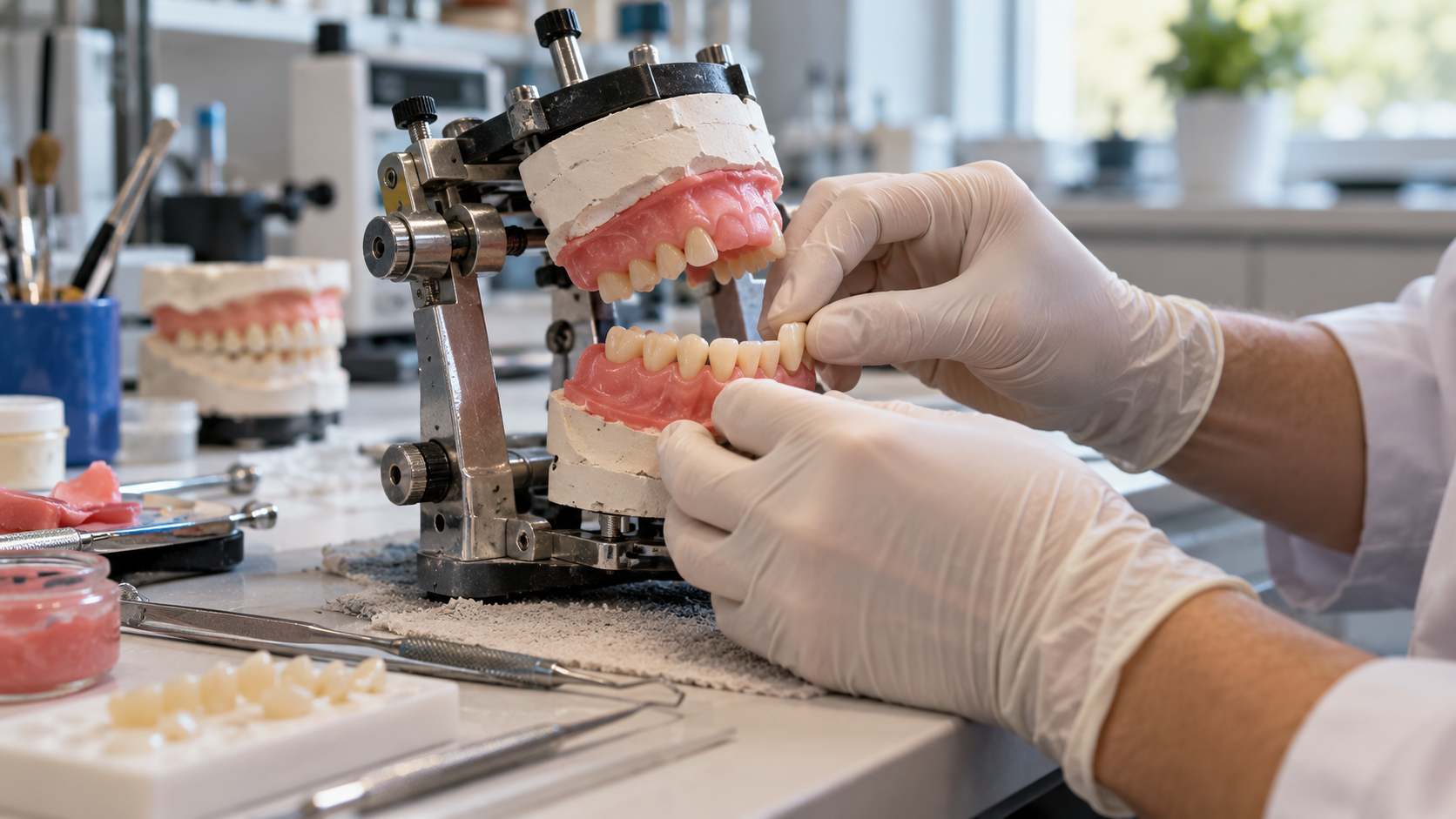
Finding reliable dental labs for dentures has become harder as experienced removable technicians grow scarce in domestic markets: setting denture teeth in balanced occlusion, surveying undercuts for cast frameworks, and controlling acrylic curing shrinkage all demand veteran bench skill that CAD/CAM alone cannot replace.
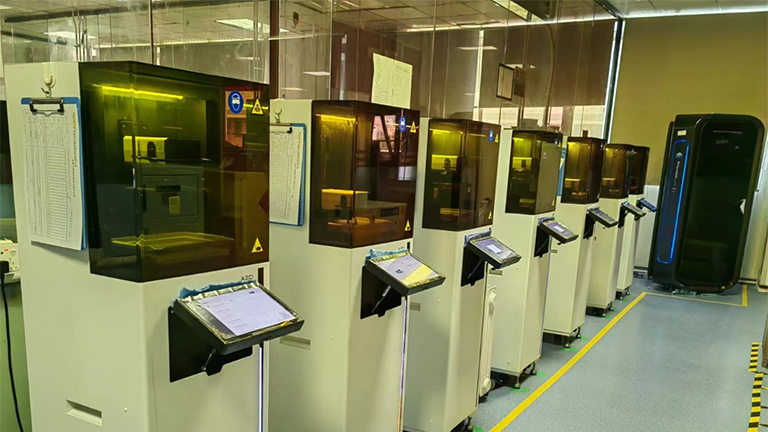
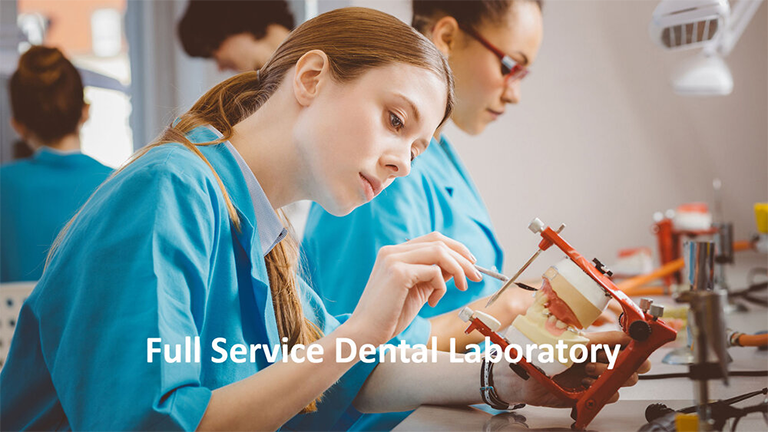
Topway Dental Lab was founded in Shenzhen in 2006 as an outsourcing partner for US dental laboratories, and since 2010 we have served clinics and labs across the United States, the United Kingdom, Germany, France, Canada, Australia, New Zealand, Israel, and Brazil. Operating from a 5,000-square-meter facility in Bao'an District, Shenzhen, with over 300 employees, we see firsthand what makes outsourced removable cases succeed. This guide covers the denture types, materials, quality control steps, and cost factors to evaluate when selecting an overseas denture lab.
Why Dentists Outsource Dentures to an Overseas Lab
The general case for offshore production is covered in our dental lab outsourcing guide; for removables specifically, three factors dominate the decision.
Cost Advantage Over Domestic Denture Fabrication
Removable prosthetics are labor-intensive. Unlike a monolithic zirconia crown that moves from CAD design straight to a mill, a complete or partial denture passes through custom tray fabrication, wax rim contouring, tooth setup, flasking, packing or injection molding, and multi-stage polishing. High technician wages in domestic markets drive up removable lab bills, compressing clinical margins—especially on insurance-driven cases. Partnering with a China-based contract manufacturer brings unit costs significantly lower than typical domestic lab fees while using exclusively FDA-approved materials. Contact us for a current price list, or review our dental lab price list overview to see how outsourced fee structures compare.
Scaling Capacity Without Adding In-House Staff
Recruiting experienced setup and framework technicians takes months, and seasonal volume spikes create immediate bottlenecks. Outsourcing lets a clinic or commercial lab scale removable volume on demand without hiring staff or expanding bench space. Even during the Chinese New Year holiday period, we have maintained special production scheduling arrangements since 2022 to safeguard quality and delivery continuity for our international accounts.
Access to Traditional Hand-Packing and Digital Workflows
Removable prosthodontics today spans both conventional physical impressions with wax try-ins and intraoral scans for CAD-designed, 3D-printed try-ins and milled PMMA denture bases. Equipping a local lab for both analog casting and digital milling requires heavy capital investment; a full-service outsourcing partner gives you immediate access to traditional flask-and-pack craftsmanship and digital CAD/CAM denture workflows under one roof.
Denture Types a Full-Service Lab Should Offer
Edentulous and partially edentulous patients present with widely varying ridge anatomy, abutment stability, and esthetic expectations. When evaluating removable restoration products from an overseas lab, confirm that all major removable designs are fabricated in-house rather than subcontracted.
Acrylic Full Dentures (Conventional and Injection-Molded)
Complete acrylic dentures remain the core of edentulous rehabilitation. We fabricate full upper and lower dentures using both conventional compression-molded heat-cured acrylic and closed-flask pressure-injection systems. Long-cycle water bath curing produces dependable bases, while continuous pressure injection compensates for polymerization shrinkage as curing progresses, yielding denser bases with tight palatal adaptation. We also fabricate immediate dentures from pre-extraction casts or digital scans following the clinician's socket-reduction guidelines.
Metal-Framework Partial Dentures (Co-Cr and Vitallium Castings)
When rigid major connectors and occlusal rests are needed for cross-arch stability, cast metal framework dentures remain the gold standard. Our framework technicians survey every master cast—physically on a mechanical surveyor or digitally in CAD software—to define the path of insertion, measure retentive undercuts, and block out unfavorable tissue contours.
Alongside FDA-approved Cobalt-Chromium (Co-Cr) alloys, we fabricate Vitallium denture frameworks. With high yield strength and spring-back elasticity, Vitallium allows thinner palatal straps and lingual bars alongside refined clasp arms that adjust chairside without brittle fracture.
Flexible Partial Dentures (Valplast and Thermoplastic Alternatives)
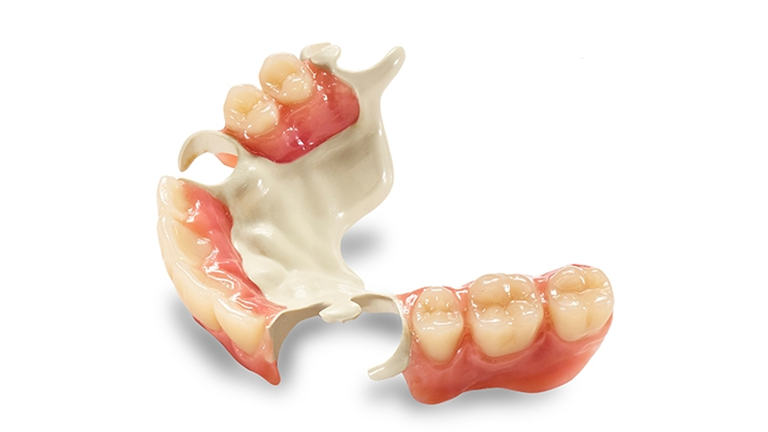
For patients who want to avoid visible metal clasps in the smile zone or who present with bony undercuts, we manufacture flexible dentures (Valplast) and nylon-based thermoplastic partials. The translucent pink resin lets retentive clasps blend over the natural gingiva around abutment teeth without metal display, and our technicians relieve the gingival collar zone so the flexible base seats without impinging on the free gingival margin.
Clear-Framework Removable Partials
When a case requires the vertical support and occlusal rests of a rigid framework without metal display, clear or tooth-colored high-performance polymer frameworks provide a practical alternative. We fabricate non-metallic frameworks with rests and clasps that blend with the teeth or surrounding mucosa.
Implant-Supported Overdentures and Precision Attachments
For patients seeking active mechanical retention, our removable and implant departments collaborate on implant-supported overdentures (locator-style stud attachments, ball attachments, or milled bars) as well as precision attachment restorations that pair surveyed crowns with intracoronal or extracoronal attachments. Housing fixed and removable teams in the same facility ensures that milled lingual ledges, parallel guide planes, and attachment housings seat passively before shipment.
| Denture Category | Primary Core Materials | Key Fabrication Advantage | Typical Lab Application |
|---|---|---|---|
| Full Acrylic Dentures | Heat-cured, pressure-injected, or milled PMMA | High mucosal adaptation, straightforward chairside or lab relining | Complete maxillary or mandibular arches |
| Cast Metal Partials | FDA-approved Co-Cr alloy or Vitallium | Rigid cross-arch stabilization, minimal bulk, occlusal rest support | Tooth-and-tissue supported partial arches |
| Flexible Partials | Thermoplastic nylon (e.g., Valplast) | Metal-free esthetics, fracture-resistant elasticity | Esthetic zone partials, bilateral tissue undercuts |
| Implant Overdentures & Attachments | Acrylic reinforced with cast mesh, milled bar, or attachment housings | Positive mechanical lock, reduced palatal coverage | Implant-retained arches and combination fixed-removable cases |
Materials & Manufacturing Processes
Biocompatibility and structural longevity in removable prosthetics depend on raw material purity and controlled curing protocols. At Topway Dental Lab, we use exclusively FDA-approved materials across every department.
Acrylic Resin Systems: Heat-Cured vs. Injection-Molded
Excess residual monomer irritates mucosa and weakens acrylic denture bases, and rushed water-bath curing leaves microporosity in thick ridge sections. We use extended, temperature-regulated polymerization cycles to maximize monomer conversion. In the pressure-injection workflow, resin is injected under continuous pressure into a closed flask, feeding material into the mold as polymerization progresses to prevent volumetric shrinkage and preserve the vertical dimension of occlusion. For digital cases, denture bases are milled from pre-polymerized high-impact PMMA pucks.
Co-Cr and Vitallium Alloys for Cast Frameworks
Every metal partial framework we fabricate uses FDA-approved Co-Cr or Vitallium alloy. After refractory model duplication and wax-up or printed resin pattern spruing, each casting is divested, sandblasted, polished, and hand-finished while protecting the internal tissue stops and occlusal rest contact surfaces.
Flexible Thermoplastics (Nylon-Based)
Nylon-based thermoplastics do not bond chemically to acrylic denture teeth, so tooth retention relies on mechanical interlocking. Before injection, our technicians drill precise diatoric channels into each denture tooth; molten thermoplastic flows through these channels during injection, locking each tooth mechanically into the flexible saddle.
Teeth Selection: Multi-Layer Composite vs. Acrylic Stock Teeth
We stock both cross-linked acrylic denture teeth and multi-layer composite teeth to match your prescription:
- Multi-layer cross-linked acrylic teeth: Natural incisal translucency, strong chemical bonding to PMMA bases, and balanced wear against opposing dentition.
- Multi-layer composite resin teeth: Inorganic micro-fillers give elevated wear resistance, well suited to implant overdentures, precision attachment cases, and heavy bruxers.
Quality & Fit: What to Expect from a China Denture Lab
The primary concern dentists raise about outsourcing dentures is chairside adjustment time. Eliminating palatal rock, premature occlusal contacts, and tight frameworks requires clear clinical records at the outset and disciplined bench verification before shipping.
Impression Requirements and What to Include in the Rx
Accurate removable prosthetics begin with complete anatomical border capture. When sending physical impressions or intraoral scans, verify the following landmarks:
- Maxillary arch: Full vestibular depth, labial and buccal frenum notches, maxillary tuberosities, fovea palatinae, and both hamular notches to define the vibrating line and posterior palatal seal.
- Mandibular arch: At least two-thirds of both retromolar pads, buccal shelves, mylohyoid ridges, and functional lingual sulcus depth.
- Partial denture abutments: Clearly defined occlusal rest seats, parallel guide planes, and void-free tooth contours extending past the gingival margin at clasp zones.
On the prescription form (Rx), note the tooth shade, mould preference (or patient age, gender, and facial profile), gingival shade, and requested workflow stage (custom tray, framework try-in, wax setup try-in, or direct finish).
How Topway's QC Process Applies to Removables
Every removable case passes through our 7-step quality control process before leaving our Shenzhen facility. Applied to dentures, each step means:
- Incoming case review: Senior removable technicians inspect incoming impressions or scan files for voids, tray distortion, or missing landmarks, contacting your clinic with photos if clarification is needed.
- Material traceability: Resin, alloy, and denture tooth lots are logged against the case, drawn only from FDA-approved materials.
- In-process inspection: Master casts are surveyed to map undercut depths and insertion paths, and wax tooth setups are checked against the bite registration for midline symmetry, occlusal plane orientation, and balanced centric and excursive contacts.
- Fit and accuracy check: Cast frameworks are tested on the master cast for passive rest seating with zero rock, and processed dentures are remounted on the articulator to correct minor processing shifts.
- Shade and aesthetic evaluation: Tooth shade, gingival shade, and festooning are compared against the Rx and shade tabs.
- Final QC inspection: Inspectors verify peripheral roll thickness, frenum clearance, and high-shine cameo polishing while preserving untouched intaglio anatomy.
- Packaging and documentation: A supervisor audits the appliance against the doctor's Rx before cleaning and sealed packaging.
Bite Registration Verification, Tooth Try-In Stage, and Final Delivery
While single-tooth flippers and small bounded partials can be finished directly from a master impression and bite record, staged verification yields the most predictable fit for full arches and distal-extension partials:
- Stage 1 — Custom Tray & Wax Bite Rim: Custom trays and occlusal rims built on your preliminary cast for border molding and jaw relation records.
- Stage 2 — Framework & Wax Tooth Try-In: Teeth set in wax on the baseplate or cast metal framework so you can confirm seating, vertical dimension, phonetics, and shade chairside.
- Stage 3 — Final Processing & Delivery: Final acrylic curing, articulator remount equilibration, and high-shine finishing after try-in approval.
Remake and Adjustment Policy Expectations
If you adjust tooth positions chairside during a wax try-in or record a new bite index on the try-in base, our technicians re-articulate, reset, and verify the setup before final processing. For how remakes are handled when a finished case needs rework, see the remake policy section of our 7-step quality control process.
Cost Breakdown: Outsourced Dentures vs. Domestic Labs
When dentists compare China dental lab prices against local commercial lab invoices, the savings on removable restorations are substantial: domestic labs often itemize base charges alongside per-clasp, per-rest, custom tray, and tooth-tier surcharges to cover local overhead.
Factors That Affect Denture Pricing
- Prosthesis Complexity and Arch Count: A single-arch acrylic partial requires less bench time than a dual-arch complete denture or a combination fixed-removable attachment case.
- Material Selection: Heat-cured acrylic, injection-molded PMMA, Valplast nylon, Co-Cr frameworks, and Vitallium castings carry distinct material and processing costs.
- Tooth Brand and Tier: Standard cross-linked acrylic stock teeth versus multi-layer composite denture teeth.
- Workflow Stages: Direct-to-finish cases require one round-trip shipment, while multi-stage try-in cases involve intermediate bench steps and shipping legs.
Shipping and Turnaround as Part of Total Cost
Consolidating multiple crown, implant, and denture cases into each shipment box spreads courier fees across several units. For international shipping schedules, see our breakdown of overseas turnaround times. Contact us for a current price list at [email protected] or +86 153 2504 5142.
How to Send a Denture Case Overseas
Sending removable cases to our Shenzhen facility follows a clear routine for both physical impressions and digital scans.
Physical Impression Packing and Shipping Best Practices
- Ship PVS, Polyether, or Poured Stone Casts: Never ship unpoured alginate internationally, as moisture loss distorts the impression. Pour alginate in-office with dental stone, or take final impressions in PVS or polyether.
- Cushion Wax Bite Rims and Try-Ins: Seal wax rims or setups in zip-top bags and wrap them in foam inside a rigid box, separated from stone casts.
- Cross-Label Every Component: Write the patient name or reference ID on casts, bite blocks, and the Rx sheet.
Digital Options: Intraoral Scans for Milled Denture Bases
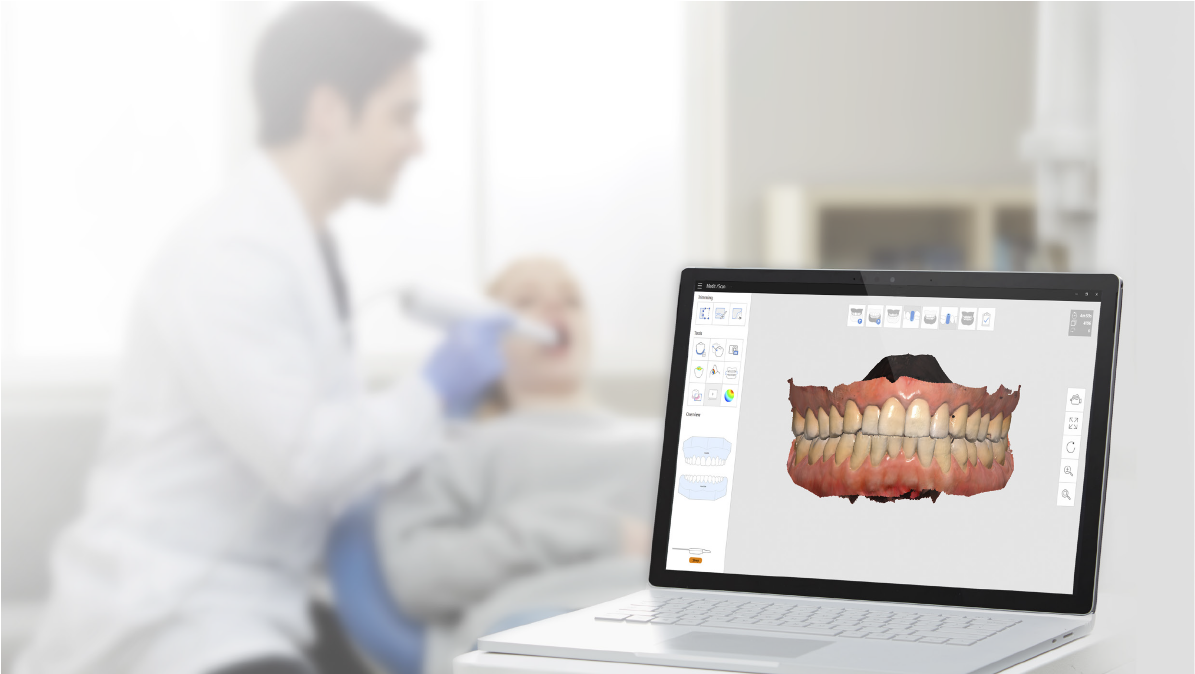
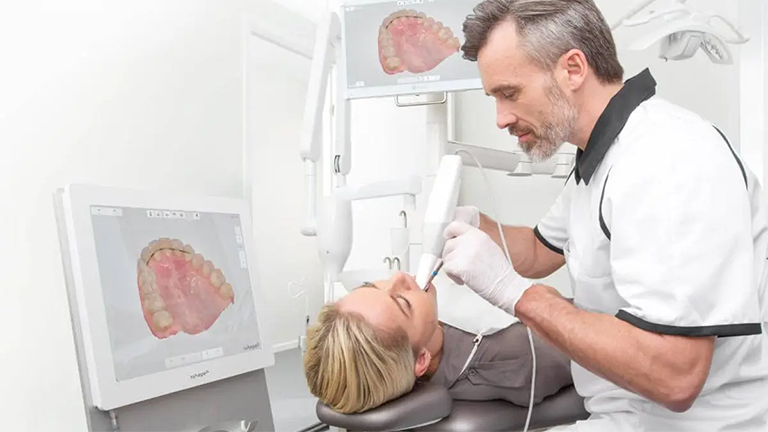
Practices with an intraoral or desktop scanner can send STL/PLY files directly to our CAD team, eliminating outbound shipping days. We can 3D-print a monolithic try-in denture for chairside verification before milling or injecting the final denture base. See our guide on how to send digital cases overseas.
Required Documentation: Rx, Shade, Bite Records, and Photos
Include four essentials with every removable case: (1) a completed Rx noting design, material, and try-in vs. finish instructions; (2) tooth and gingival shade selections; (3) a stable bite registration with marked midline, smile line, and canine lines; and (4) full-face smiling and profile photos for anterior cases.
Compliance & Certifications for Outsourced Dentures
Because dentures remain in constant contact with oral mucosa, regulatory compliance is essential for practices in the US, UK, EU, Canada, and Australia.
FDA Registration, CE Certification, and ISO 13485
Topway Dental Lab maintains verified medical device certifications:
- FDA-Registered Contract Manufacturer: Registered with the US FDA for Class I/II medical devices.
- CE Certificate: Certified for European Union and international medical device standards.
- ISO 13485 & ISO 9001: Certified quality management systems governing calibration, hygiene, and stage inspections.
- China Regulatory Licensure: Holder of the Medical Device Production License of China, the Class II Medical Device Product Registration Certificate (China NMPA), and High-tech Enterprise Certification.
Material Traceability and FDA-Approved Materials Guarantee
We use exclusively FDA-approved materials across all removable restorations, recording every lot number of resin, alloy, and denture teeth for full traceability. Read more in our guide to FDA & CE compliance for outsourced restorations.
Choosing the Right Denture Lab: Evaluation Checklist
Use this five-point checklist when evaluating overseas dental labs for dentures:
- Certification Verification: Confirm active FDA registration (Class I/II contract manufacturer), CE certification, and ISO 13485 / ISO 9001 credentials, backed by an explicit guarantee of FDA-approved materials.
- Full-Service In-House Range: Verify that acrylic full dentures, metal frameworks, flexible partials, and implant overdentures are all fabricated in-house rather than subcontracted.
- Trial Case Evaluation: Send a trial cast partial or complete denture setup to evaluate clasp adaptation, border contour, and occlusal setup accuracy before committing volume.
- Communication and Turnaround Transparency: Ensure responsive English technical support, CAD or survey previews, and uninterrupted holiday scheduling (such as our Chinese New Year production arrangements in place since 2022).
- Proven Overseas Track Record: Choose a laboratory with long-term cross-border experience—founded in 2006, we have served clinics and labs in the US, UK, Germany, France, Canada, Australia, New Zealand, Israel, and Brazil since 2010.
To send a trial case or contact us for a current price list, email [email protected] or visit https://www.topwaydentallab.com.
Frequently Asked Questions
What types of dentures can I outsource to a China dental lab?
You can outsource the full range of removable prosthetics to Topway Dental Lab, including heat-cured and pressure-injected acrylic full dentures, immediate dentures, Co-Cr and Vitallium cast metal partial frameworks, flexible partial dentures (such as Valplast), clear-framework partials, implant-supported overdentures, and precision attachment combination cases.
How do I ensure proper fit when outsourcing dentures overseas?
Consistent fit comes from capturing complete anatomical borders in dimensionally stable impressions (PVS, polyether, or poured dental stone) or accurate intraoral scans, paired with staged try-ins (custom trays, wax bite rims, and framework/tooth try-ins) for complex arches. Every case is verified on articulators and master casts under our 7-step quality control process.
Are materials used by Chinese denture labs FDA approved?
Policies vary by lab, so always ask. At Topway Dental Lab, we use exclusively FDA-approved materials, including casting alloys and denture resins. We are an FDA-registered contract manufacturer (Class I/II), hold a CE certificate, and operate under ISO 13485 and ISO 9001 quality management systems.
How long does it take to receive outsourced dentures from China?
Lead times depend on whether you send digital scans or physical impressions and whether you request intermediate try-in stages or a direct finish. For stage-by-stage scheduling details, see our article on overseas turnaround times.
Is it cost-effective to outsource dentures compared to domestic labs?
Yes. Because removable prosthetics require extensive manual bench labor, domestic lab fees are high. Outsourcing to our Shenzhen facility delivers production costs significantly lower than typical domestic lab fees while maintaining strict FDA-approved material standards. Contact us for a current price list tailored to your case volume.
Top Posts
Recent Posts

How can we help you today?
We believe in providing the best possible care to all our existing patients and welcome new patients to sample.
