


Night Guard Dental Lab: Materials, Fit & Ordering Guide
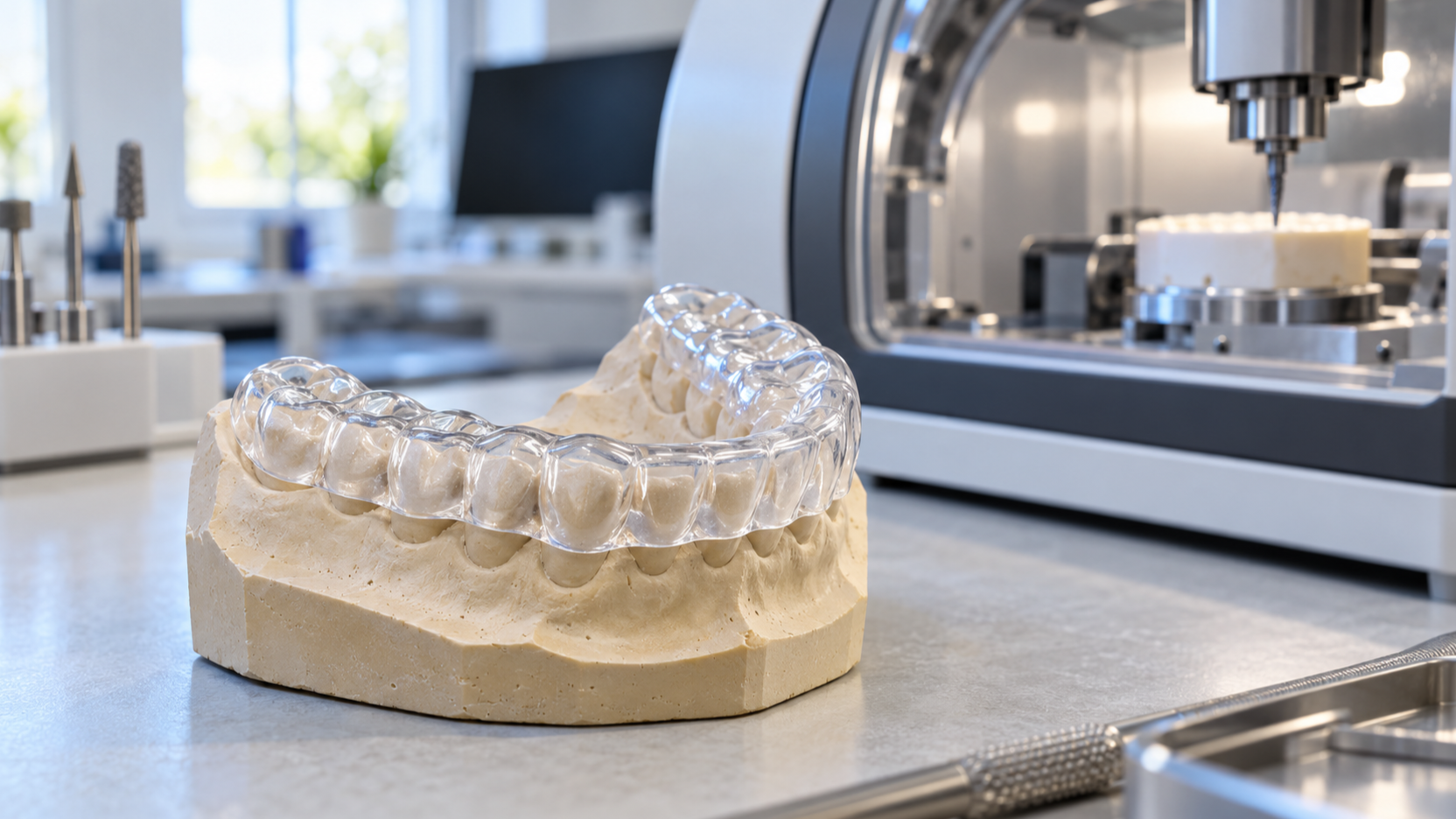
A custom night guard should drop onto the arch with passive retention, require only minutes of chairside occlusal adjustment, and withstand years of heavy parafunctional grinding without delaminating or cracking. When a splint arrives from the laboratory rocking on the stone cast, binding on the anterior undercuts, or opening the vertical dimension inconsistently across the posterior segments, chairtime quickly erodes the profitability of the appointment.
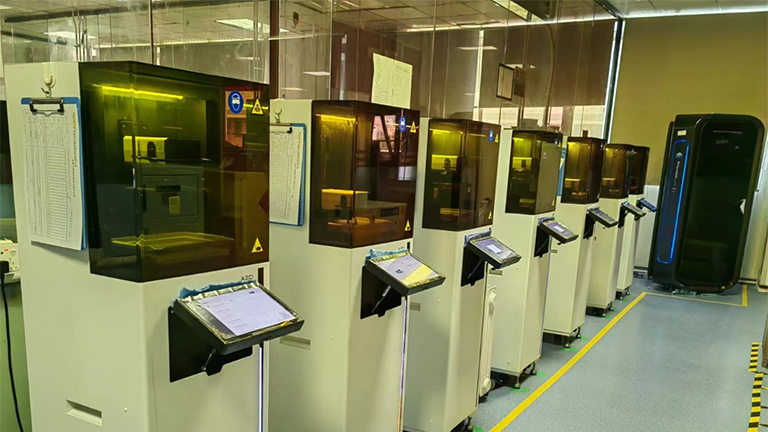
Topway Dental Lab was established in 2006 in Shenzhen, and today fabricates occlusal splints and protective appliances for dental practices and commercial laboratories across the United States, the United Kingdom, Germany, France, Canada, Australia, New Zealand, Israel, and Brazil. Operating from our 5,000-square-meter facility in Bao'an District, Shenzhen, with over 300 employees, we produce appliances ranging from flat-plane stabilization splints with canine guidance to thin daytime guards and post-orthodontic retention splints. Below is our laboratory perspective on selecting materials, comparing thermoformed and CAD/CAM milled workflows, submitting accurate prescriptions, and managing chairside fit when working with an overseas partner.
What Is a Custom Night Guard and Why Lab Quality Matters
In prosthodontic and restorative practice, a custom night guard—clinically referred to as an occlusal splint or bruxism appliance—is a precision-fitted removable acrylic or elastomeric barrier fabricated over a patient's maxillary or mandibular arch. Unlike over-the-counter (OTC) stock trays or boil-and-bite thermoplastic guards, a laboratory-fabricated splint is engineered around the patient's exact tooth morphology, gingival contour, and maxillomandibular relationship.
Custom Occlusal Splints vs. Boil-and-Bite Appliances
Boil-and-bite guards rely on low-melting-point copolymers softened in hot water and adapted in the mouth via finger and tongue pressure. From a laboratory technician's viewpoint, that method introduces three structural flaws:
- Uneven occlusal thickness: Patients bite down hardest on their first point of contact—usually the second molars—thinning out the posterior material while leaving unadapted bulk anteriorly. This creates premature posterior contacts or an unintended anterior open bite.
- Poor peripheral retention: Without controlled atmospheric pressure or CNC milling, boil-and-bite materials slump away from infrabulge areas and interproximal embrasures. The appliance stays in place only when the patient clenches against it.
- Rapid deformation: Low-density thermoplastics lack cross-linked polymer chains, causing them to shred, perforate, or warp within weeks of heavy nocturnal grinding.
By contrast, our dental mouth guard products are built either by high-pressure thermoforming over stone or 3D-printed resin models or by subtractive CAD/CAM milling from pre-polymerized polymethyl methacrylate (PMMA) pucks. Every step—from blocking out deep cervical undercuts to articulating the opposing arch—is controlled before the appliance ever touches the patient's teeth.
Primary Clinical Indications
Dentists send occlusal splint cases to our department for three main clinical objectives:
- Nocturnal bruxism and clenching protection: Absorbing and redistributing parafunctional forces to prevent enamel attrition, abfraction lesions, and fractures of ceramic veneers, zirconia crowns, or implant-supported prostheses.
- Temporomandibular joint (TMJ) and muscle stabilization: Establishing a mutually protected occlusal scheme—bilateral, simultaneous posterior point contacts with anterior and canine disclusion during lateral and protrusive excursions—to reduce elevator muscle hyperactivity and joint loading.
- Post-orthodontic retention: Combining tooth position stabilization with a durable occlusal table for patients who have completed aligner or fixed orthodontic therapy and exhibit grinding habits.
Why Laboratory Fabrication Outperforms Chairside Vacuum Forming
In-office single-chamber vacuum formers typically generate less than one atmosphere of suction, which fails to drive dense 2.0 mm to 3.0 mm sheets into sharp interproximal embrasures. Vacuum-formed sheets without opposing-arch articulation also leave the clinician grinding away excess acrylic at the chair to establish even centric contacts. In our lab, we mount the casts—or align the STL files in CAD software—survey the path of insertion, block out undesirable undercuts to a calibrated retention depth, and equilibrate the occlusal surface prior to final polishing.
Night Guard Materials: Hard, Soft, and Dual-Laminate
Selecting the right polymer is the single most important prescription decision affecting patient compliance and appliance longevity. At Topway Dental Lab, we fabricate all orthodontic appliances and guards exclusively from FDA-approved materials, with material traceability managed under our ISO 13485 quality system from raw disc or sheet to the final shipped case.
Hard Acrylic (PMMA) Splints
Hard night guards are fabricated from rigid polymethyl methacrylate (PMMA)—either heat-cured, poured, or CAD/CAM milled from cross-linked PMMA pucks—or from rigid copolyester sheets. They are the standard choice for moderate-to-severe bruxism, TMJ stabilization, and patients with extensive fixed restorations.
- Advantages: High flexural strength and wear resistance. Rigid acrylic can be precisely adjusted with carbide burs and re-polished chairside, or modified with autopolymerizing acrylic to build up guidance ramps.
- Occlusal performance: Opposing teeth glide freely across the smooth rigid platform without catching, allowing true canine disclusion.
- Considerations: Because rigid PMMA has minimal elasticity, undercut blockout must be exact so the guard seats passively without causing tooth soreness.
Soft EVA Guards
Soft night guards are thermoformed from flexible ethylene-vinyl acetate (EVA) sheets that remain pliable at intraoral temperatures.
- Advantages: Patients sensitive to hard acrylic pressure accept soft EVA immediately. Its elastomeric nature provides a cushioned feel and forgiving insertion over minor crowding.
- Best applications: Mild clenching, sensitive periodontal ligaments, short-term protective splints, and athletic mouthguards.
- Considerations: Harder to adjust cleanly with rotary burs and shorter-lived in heavy bruxers who chew into resilient materials.
Dual-Laminate (Hard Outer / Soft Inner) Guards
Dual-laminate splints combine a soft elastomeric inner liner (1.0–1.5 mm) bonded to a rigid copolyester or polycarbonate outer shell (1.0–2.0 mm).
- Advantages: The soft inner liner hugs the enamel below the height of contour for comfortable retention, while the hard outer shell resists occlusal wear and permits light rotary occlusal adjustment.
- Best applications: Moderate bruxers, patients who rejected hard acrylic due to tightness, and arches with pronounced undercuts.
- Considerations: Requires 2.5 mm to 3.0 mm total thickness; clinicians must avoid grinding through the hard shell into the soft liner.
| Material Type | Primary Composition | Typical Thickness | Best Clinical Scenario | Chairside Adjustability |
|---|---|---|---|---|
| Hard Guard | Cross-linked PMMA or rigid copolyester (FDA-approved) | 1.5 mm – 3.0 mm | Moderate-to-severe bruxism, TMJ stabilization, implant protection | High (easily contoured, polished, or relined) |
| Soft Guard | Flexible Ethylene-Vinyl Acetate (EVA, FDA-approved) | 2.0 mm – 3.0 mm | Mild clenching, tooth sensitivity, athletic impact protection | Low (requires specialized trimming wheels) |
| Dual-Laminate | Rigid outer shell + soft elastomeric inner liner (FDA-approved) | 2.5 mm – 3.0 mm | Moderate bruxism, patients sensitive to hard acrylic, undercut arches | Moderate (adjust outer shell only) |
Thermoformed vs CAD/CAM Milled Night Guards
Across the dental lab industry, splint manufacturing has shifted steadily from stone-model thermoforming toward digital CAD/CAM workflows, and our Shenzhen facility runs both. Understanding how each workflow operates helps clinicians prescribe the best method for their case.
Traditional Thermoforming (Pressure-Formed) Workflow
In our conventional workflow, physical impressions are poured in dental stone—or digital scans are 3D-printed into resin working casts. A technician surveys the cast, blocks out deep interproximal triangles and gingival embrasures with wax or resin, and forms the heated sheet inside a multi-bar positive-pressure thermoforming unit. When articulated occlusal contacts are prescribed, technicians add clear acrylic over the base on an articulator, refine excursive ramps by hand, and wet-polish the appliance on high-torque lathes.
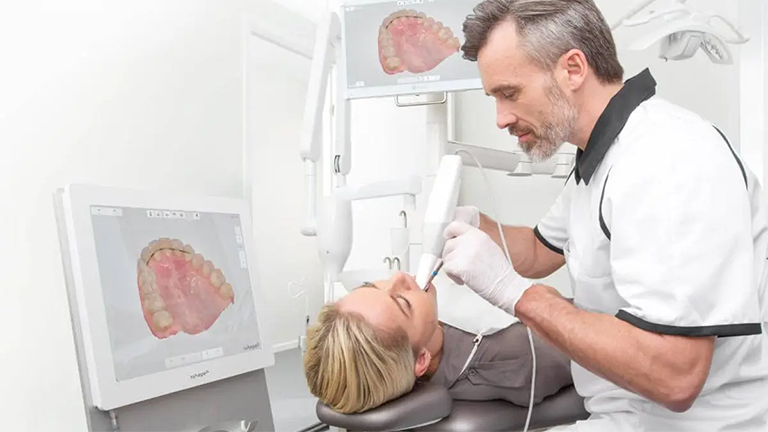
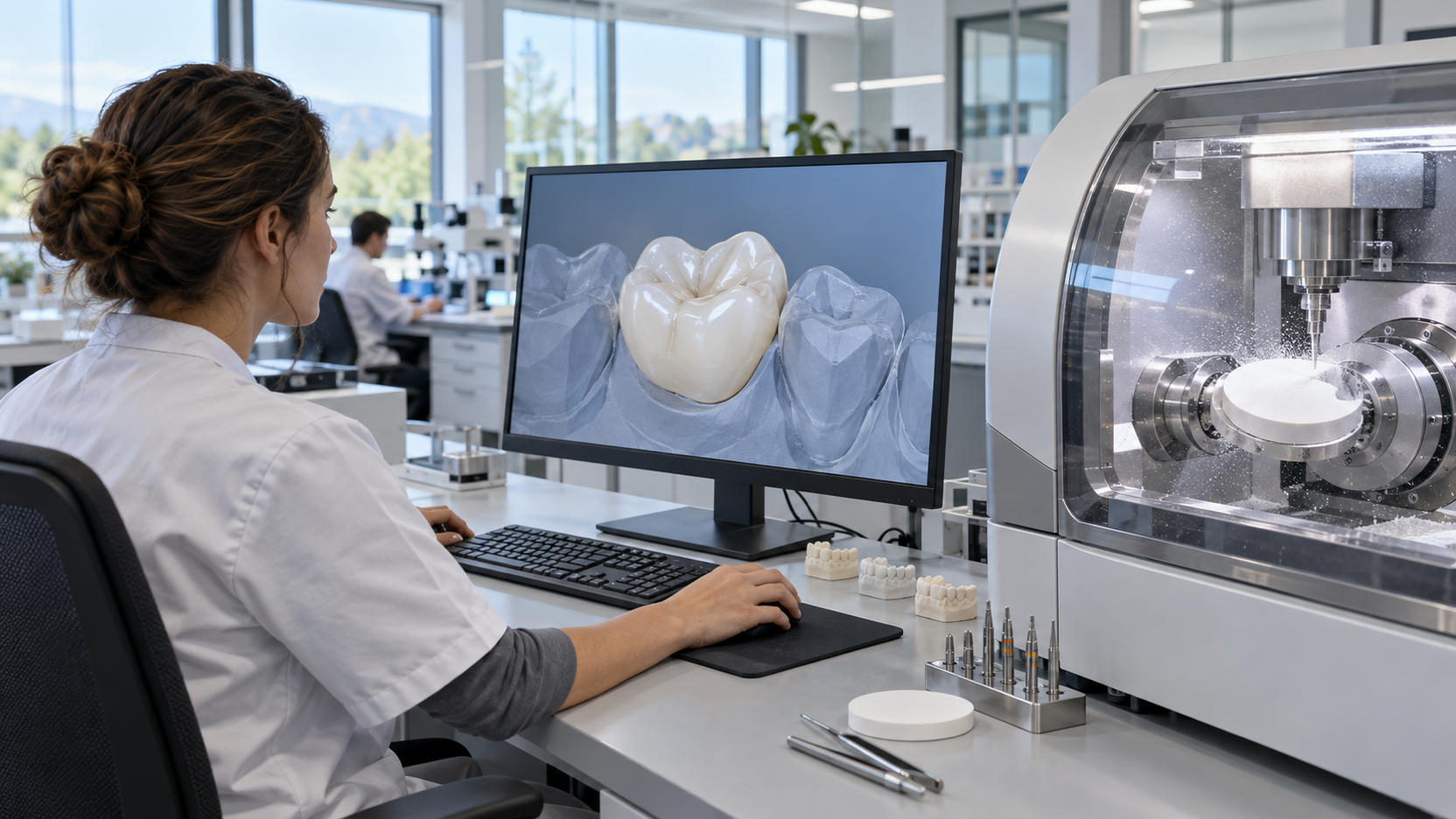
Digital CAD/CAM Workflow: Intraoral Scan to Milled PMMA
When a clinic submits digital STL or PLY scans—or when we digitize stone models on our lab scanners—the case enters our CAD splint module:
- Virtual Articulation: We import upper, lower, and bite scans, setting the virtual articulator pin to open the posterior clearance to the exact prescribed millimeter thickness.
- Digital Survey and Undercut Control: The software maps undercuts across the entire arch. Our designer sets a calibrated retention value and uniform digital spacer so the splint seats passively without binding on isolated teeth.
- Occlusal Table Engineering: We design either a flat plane with uniform posterior contacts and canine rise or an anatomic surface, running virtual protrusive and lateral excursions to subtract posterior interferences automatically.
- Subtractive Milling: The file is milled from an industrial, pre-polymerized, FDA-approved PMMA disc on a CNC mill, eliminating polymerization shrinkage and residual monomer.
Accuracy, Consistency, and Remake-Rate Differences
CAD/CAM milled PMMA night guards offer three production advantages over thermoformed splints:
- No thermal thinning: When a thermoforming sheet stretches over high cusps, a 3.0 mm blank can thin down significantly. A milled guard is carved directly to its final geometry with exact thickness over every cusp.
- Higher density and stain resistance: Pre-polymerized PMMA pucks lack the microporosity of hand-mixed acrylics, absorbing less moisture and resisting yellowing, odor, and fracture.
- Repeatable duplicates: Because the appliance exists as a CAD file, an identical replacement can be milled from the retained design if a patient loses or damages their guard and the dentition is unchanged—no new impressions required.
How to Order Night Guards from an Overseas Lab
Whether you are a dental clinic ordering directly or a local lab owner outsourcing dental lab work overseas to relieve internal technician bottlenecks, complete case submission prevents reception holds and ensures predictable seating.
Impression and Digital Scan Submission Requirements
- Arch coverage: Capture every tooth completely, including the distal surfaces of the terminal molars and 3 mm to 5 mm of gingival tissue beyond the CEJ on facial and lingual aspects.
- Opposing arch and bite record: Always include a full opposing arch scan or impression plus a centric bite registration so we can balance posterior contacts and excursive ramps.
- Physical vs. digital files: Ship poured stone casts or PVS/polyether impressions (never ship unpoured alginate overseas, as dehydration during air transit warps the arch). For intraoral scanners, follow our guide on how to send digital impressions to an overseas lab for STL/PLY upload steps.
Prescription Details Our Technicians Need
- Arch selection: Maxillary (preferred for most nocturnal grinders and canine guidance) vs. mandibular (often chosen for daytime wear or over upper anterior veneers).
- Material and workflow: Hard milled PMMA, hard thermoformed, dual-laminate, or soft EVA.
- Posterior thickness: Typically 1.5 mm (thin/daytime), 2.0 mm (standard), or 3.0 mm (heavy bruxism / TMJ splint).
- Border extension: Full labial coverage (1–2 mm onto facial gingiva), inciso-labial trim (stopping at the incisal/middle third anteriorly), or lingual-only retention.
- Occlusal scheme: Flat plane with canine rise, anatomic/indented occlusion, or anterior deprogrammer.
Production Stages and Shipping Protocols
Clear visibility into overseas dental lab turnaround times helps your front desk schedule delivery appointments reliably. A night guard case moves through four stages in our Shenzhen facility:
- Case Reception & QC Audit: Digital STL uploads are audited for scan voids and bite alignment. Physical impressions arriving via international courier are disinfected, barcoded, and digitized.
- CAD Design or Model Prep: Technicians block out undercuts and design the splint geometry. If we spot a scan distortion or crossed bite, we contact your team with annotated screenshots before production proceeds.
- Milling / Forming & Finishing: CNC mills carve the PMMA pucks or pressure formers adapt the EVA/dual-laminate blanks, followed by articulator equilibration and high-gloss external polishing.
- Final QC & Dispatch: Every guard is verified against the master cast and prescription before international air express dispatch. Since 2022, we have also maintained special holiday scheduling during Chinese New Year to safeguard turnaround continuity.
Fit, Adjustments, and Common Issues
Step-by-Step Chairside Delivery Check
- Passive seating: Wet the guard before insertion. For dual-laminate or thermoformed guards, soaking in warm tap water for 60 seconds relaxes minor shipping tension and eases insertion over heights of contour.
- Rocking check: Press alternately on the right and left molars and incisal edges to confirm stability without seesawing.
- Gingival clearance: Confirm peripheral acrylic borders do not blanch the attached gingiva or impinge on frenula.
- Occlusal equilibration: Check centric stops with 20–40 micron articulating paper for uniform posterior point contacts, then use a contrasting color to verify smooth canine/anterior disclusion without posterior drag.
Typical Chairside Adjustments and Remake Criteria
- Tight interproximal binding: Apply pressure-indicating paste (PIP) inside the intaglio, seat until resistance is felt, and lightly relieve the burnished interproximal spot with a pear-shaped carbide bur. Avoid grinding the occlusal floor of the tooth recess.
- Heavy second-molar contact: Hinge-axis closure differences appear first on the terminal molars. Use an egg-shaped carbide bur to spot-grind heavy distal marks until premolars and first molars contact evenly.
- When to request a remake: Chairside adjustments should take under five minutes. Request a lab remake if you see diagonal rocking across the arch, an anterior open bite requiring grinding through more than half the splint's thickness, or complete lack of retention.
Shelf Life and Replacement Cycle Guidance
CAD/CAM milled hard PMMA guards offer the longest clinical lifespan—typically several years under moderate grinding when cleaned daily with non-abrasive soap. Dual-laminate guards generally last one to three years before showing wear or edge delamination, while soft EVA guards usually require replacement every six months to two years in active bruxers.
Cost Considerations for Lab Night Guards
For dental practices and domestic laboratories in the US, Europe, and Australia, night guards are high-volume appliances that can tie up skilled technicians. Three primary factors determine laboratory production cost:
- Material type: Single-layer EVA or copolyester sheets carry lower raw material costs than dual-laminate blanks and industrial cross-linked PMMA milling pucks.
- Fabrication method: CAD/CAM milling requires dedicated CAD design time, CNC spindle hours, and bur tooling compared to standard pressure forming.
- Occlusal complexity: Articulated stabilization splints with customized anterior guidance ramps require more bench finishing than simple non-articulated guards.
Even with international express shipping, partnering with our Shenzhen lab allows clinics and commercial labs to source custom splints at fees significantly lower than typical domestic lab fees. Bundling digital night guard scans with crown, bridge, or implant shipments reduces per-case shipping costs even further. Please contact us for a current price list at [email protected] or +86 153 2504 5142 for clinic or lab-to-lab volume rates.
Quality and Compliance: What to Look for in a Night Guard Lab
Because an occlusal splint remains in the mouth for six to eight hours every night, regulatory compliance and biocompatibility are essential. See our detailed guide on FDA and CE compliance for outsourced restorations when auditing potential lab partners.
- FDA & CE Credentials: Topway Dental Lab is a U.S. FDA-registered contract manufacturer (Class I and Class II medical devices) and holds a European CE certificate.
- ISO Quality Management: Our facility operates under ISO 13485 and ISO 9001 quality management systems, alongside our Medical Device Production License of China, Class II Medical Device Product Registration Certificate (China FDA/NMPA), and High-tech Enterprise Certification.
- FDA-Approved Materials: Uncertified labs sometimes use industrial acrylics that leach residual monomer and irritate oral mucosa. We use strictly FDA-approved materials, and our ISO 13485 quality system governs material traceability on every PMMA puck, EVA sheet, and dual-laminate blank.
Frequently Asked Questions
What is the difference between a hard and soft night guard?
A hard night guard is fabricated from rigid, FDA-approved PMMA or copolyester, offering maximum durability, straightforward chairside occlusal adjustment, and reliable protection for moderate-to-severe bruxism and TMJ stabilization. A soft night guard is thermoformed from flexible EVA for a cushioned fit suited to mild clenching or sensitive teeth, but is less durable under heavy grinding and harder to adjust with rotary burs. Dual-laminate guards combine a soft inner liner with a hard outer shell for patients needing both comfort and occlusal durability.
Can I send a digital scan instead of a physical impression for a night guard?
Yes. We accept open STL and PLY files from all major intraoral scanners. Digital scans eliminate outbound shipping time, prevent impression distortion, and allow our CAD/CAM team to mill your guard from pre-polymerized PMMA discs or 3D-print precision casts for thermoformed guards. Include full-arch scans capturing the terminal molars plus 3–5 mm of gingiva, an opposing arch scan, and a centric bite registration.
How long does a custom night guard last before it needs replacing?
Lifespan depends on material selection and grinding severity. CAD/CAM milled hard PMMA guards typically last several years even in moderate-to-heavy bruxers. Dual-laminate guards average one to three years, while soft EVA guards usually last six months to two years. For digitally designed cases, the CAD file can be reused to mill an exact replacement without new impressions if the patient's dentition is unchanged.
What certifications should I look for when outsourcing night guards to a lab?
Verify that the laboratory is a U.S. FDA-registered contract manufacturer (Class I/II medical devices), holds a valid European CE certificate, and operates under an ISO 13485 quality management system using only FDA-approved materials. Topway Dental Lab holds FDA registration, CE certification, ISO 13485, ISO 9001, and China NMPA Class II medical device registration.
How do I handle adjustments when the lab is overseas?
Because undercuts are surveyed and the occlusal surface is equilibrated on a virtual or mechanical articulator before dispatch, a well-made guard should need only light occlusal spot-grinding at delivery. If an appliance exhibits a structural fit issue such as arch-wide rocking or poor retention, send us photos or a short video of the guard on the cast or in the mouth; our technical team will review the CAD file or master model and arrange a remake.
Top Posts

Recent Posts

How can we help you today?
We believe in providing the best possible care to all our existing patients and welcome new patients to sample.
