


Outsource Dental Lab Work: China vs. Domestic Labs Compared
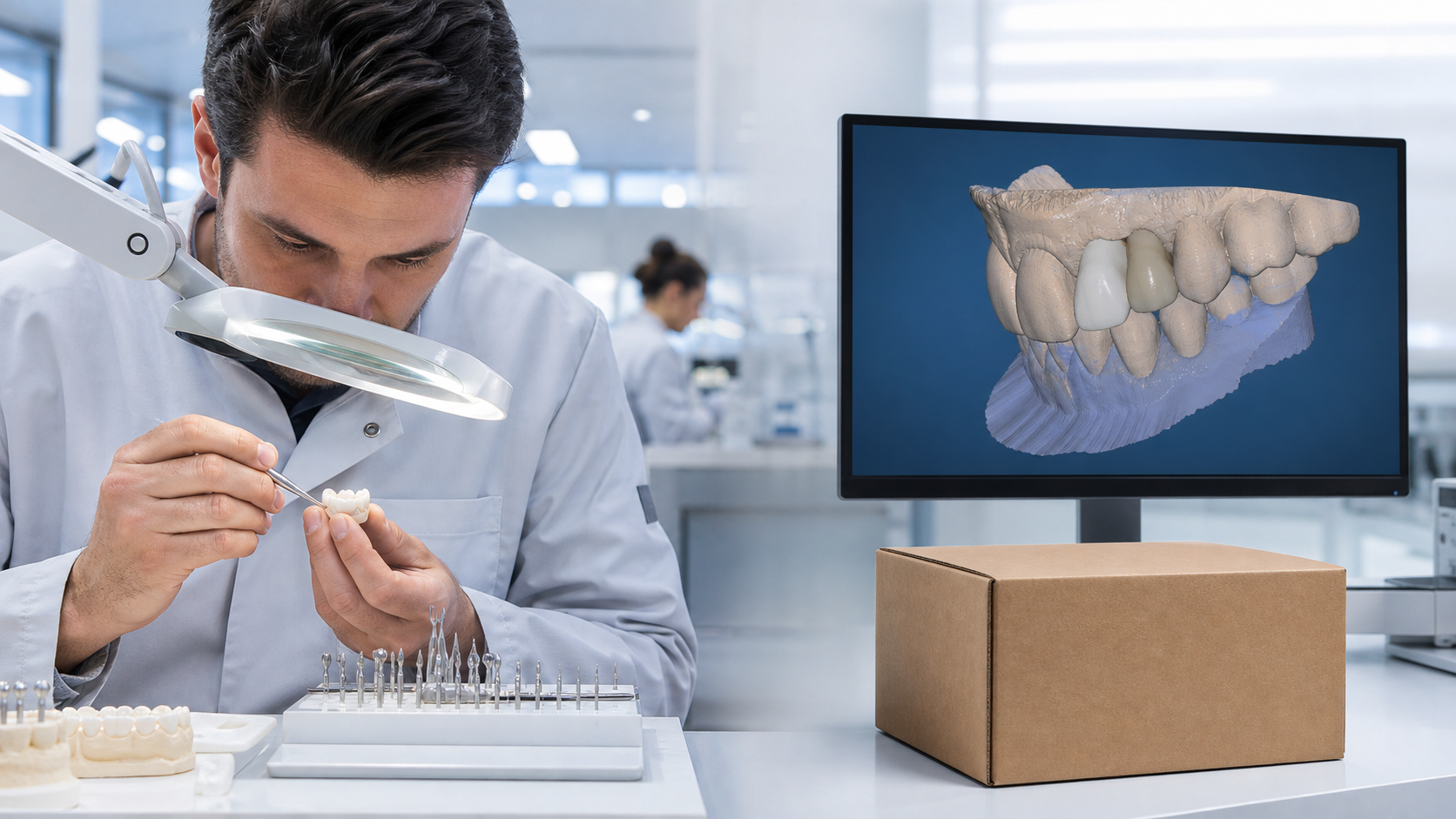
Choosing where to outsource dental lab work is not simply a choice between a lower quote and a shorter shipping route. The practical question is whether the laboratory can deliver consistent work, keep a traceable compliance record, communicate clearly when a prescription is incomplete, and support the case when the first result needs attention.
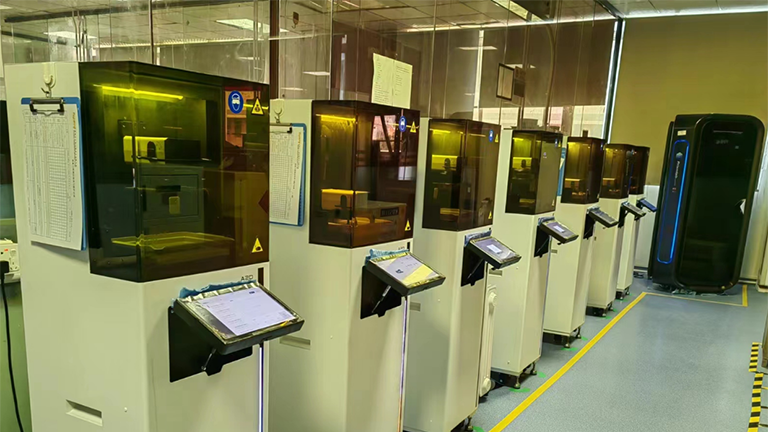
We see this decision from the production side. Topway Dental Lab was founded in Xili, Shenzhen, in 2006 and began by taking outsourced work from US dental laboratories. From 2010 we expanded to laboratories and clinics in the US, UK, Germany, France, Canada, Australia, New Zealand, Israel, Brazil, and other markets. Our current facility in Bao'an District, Shenzhen, has over 300 employees working across 5,000 square meters. That experience has taught us that neither "domestic" nor "China-based" automatically means better. The right answer depends on the case mix, required response time, workflow discipline, and the evidence behind the supplier.
Why Dentists Are Rethinking Where They Outsource Lab Work
Lab fees are only one part of the decision; predictability matters just as much. A partner that can absorb planned crown-and-bridge, implant, or removable volume helps a practice or local laboratory manage capacity without adding the same production overhead internally. That makes overseas outsourcing worth evaluating, particularly for repeatable work that can be prescribed and documented clearly.
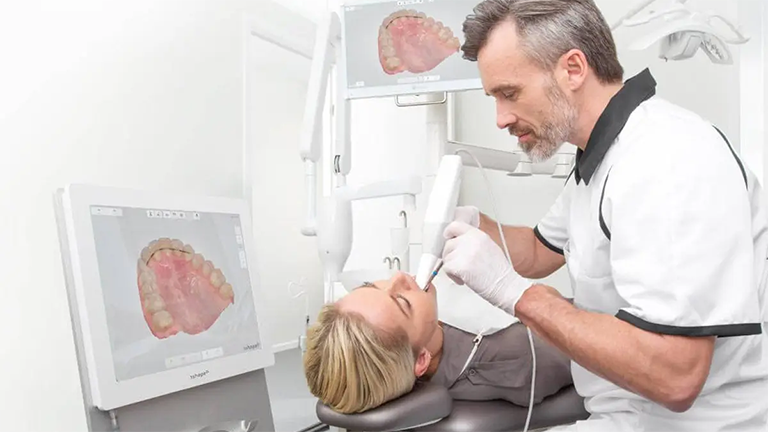
Digital case transfer changes the shape of the decision. When a clinic submits a digital impression and case information electronically, the case enters review without waiting for a physical impression to reach China. Distance still matters for delivery of the finished restoration, but it no longer delays the initial review. For the broader operational model, our complete guide to dental lab outsourcing covers the subject beyond this domestic-versus-China comparison.
Credentials also make it possible to screen partners rigorously. Topway is an FDA-registered contract manufacturer for Class I/II medical devices and holds a CE certificate, ISO 13485, and ISO 9001. These are specific facts a buyer can request and verify—the beginning of due diligence, not a substitute for evaluating actual case handling.
Cost Comparison: Domestic Labs vs. China-Based Labs
A China-based outsourcing laboratory can offer fees significantly lower than typical domestic lab fees. The unit quotation is not the complete cost, though. A useful comparison includes international shipping, case consolidation, staff time spent preparing records, the effect of unclear prescriptions, and the procedure when a restoration requires correction or remake.
| Cost factor | Domestic laboratory | China-based laboratory |
|---|---|---|
| Quoted laboratory fee | Weigh against the value of proximity and local support. | Can be significantly lower than typical domestic lab fees. |
| Logistics | Domestic transport is part of the total cost. | International shipping and case consolidation must be included. |
| Case administration | Local communication may be easier for incomplete or changing cases. | Clear digital records reduce avoidable clarification across time zones. |
| Corrections | Proximity may simplify physical adjustments. | Agree the correction and remake procedure before volume is sent. |
The economics also differ by buyer. A dentist sending directly to a laboratory is purchasing a finished technical service. A domestic laboratory outsourcing selected production stages is balancing external capacity against the work, quality control, and customer service it retains locally. In both models, the sound comparison is landed, usable output—not the lowest line on a price list.
We do not quote specific figures here. See our guide to China dental lab pricing for crowns and veneers for pricing context, or contact us for a current price list.
Quality Standards: What to Expect from Each Option
A domestic laboratory offers proximity. When a dentist wants a local conversation or a physical adjustment without an international shipment, location has real value, and the laboratory may carry a reputation within the dentist's own professional network. Those advantages matter most when a case is difficult to describe remotely.
For an overseas partner, buyers need objective filters before they assess individual restorations. Our own compliance profile includes:
- FDA-registered contract manufacturer, Class I/II medical devices;
- CE certificate;
- ISO 13485 and ISO 9001;
- Medical Device Production License of China;
- Class II Medical Device Product Registration Certificate, China FDA/NMPA;
- High-tech Enterprise Certification; and
- use of FDA-approved materials only.
ISO 13485 is the credential most relevant to a medical-device quality-management discussion; FDA registration and Class I/II status matter to US-facing work; the CE certificate is relevant to European-market work. A prospective customer should still review documents, sample cases, material records, and the laboratory's response to feedback.
Quality is also product-specific. Do not infer performance across an entire catalogue from one simple unit. A trial should represent the work likely to be sent, whether that means crown and bridge restorations, dental implant crowns and abutments, or removable restoration options. The records and evaluation criteria differ across those categories.
Turnaround Time and Shipping Logistics
Domestic laboratories have a shorter physical route. That matters when a patient appointment cannot accommodate international delivery or when a physical item must move back and forth for adjustment. Geography is not irrelevant.
With a China-based laboratory, production and international shipping must both fit the clinical schedule. A digital impression removes outbound impression transit, but the finished work still requires delivery, and physical cases need an inbound route. Customer and laboratory should distinguish production time from transit time rather than discussing "turnaround" as a single undivided promise.
A Practical Case Timeline
- Intake and review. We check the prescription and available scan, impression, shade, implant, and design information as applicable.
- Clarification. If a production decision depends on missing or ambiguous information, it is resolved before the affected work proceeds.
- Production and internal control. The restoration follows the applicable production path and is checked before dispatch.
- International delivery. Shipping is planned against the requested appointment, with room for events outside the production bench.
- Receipt and clinical feedback. The customer inspects the case and reports any concern with the relevant records.
Seasonal planning matters as well. Since 2022, Topway has made special production scheduling arrangements for the Chinese Spring Festival to protect quality and delivery timing during the holiday. Customers should still share forecasts and key appointment dates early; special scheduling works best when expected volume is visible.
Compliance and Regulatory Considerations
For US-related purchasing, confirm the claimed FDA registration and the stated device scope. For European-market work, request the CE certificate. For the quality system, request the ISO documentation itself rather than relying on a logo on a website or sales sheet.
Topway's record includes FDA-registered contract manufacturer status for Class I/II medical devices, a CE certificate, ISO 13485, ISO 9001, a Medical Device Production License of China, and a Class II Medical Device Product Registration Certificate issued by China FDA/NMPA. We use FDA-approved materials only. These details let a prospective customer ask precise questions instead of accepting a broad claim that the laboratory is "compliant."
Build a Documentation Trail Before Sending Volume
At minimum, ask for:
- the laboratory's legal and operating identity;
- copies of the credentials relevant to the work and destination market;
- confirmation of the material-sourcing policy;
- a defined method for prescriptions, files, approvals, and revisions; and
- a written route for reporting a fit, shade, design, or delivery concern.
The purpose is traceability: if a question emerges later, both parties can identify what was prescribed, what was supplied, what was approved, and how the case was handled.
Communication and Digital Workflow Integration
Distance becomes manageable when case information is structured. A digital impression or CAD file moves electronically, but a file alone is not a complete prescription. The laboratory may still need the restoration request, shade, relevant implant information, design expectations, and delivery context. The discipline is to resolve production-critical gaps early.
Time-zone differences need a routine. The customer should know where to send a case, who reviews questions, and which decisions require approval. The laboratory should group clear questions rather than sending a chain of fragmented messages, and the customer should name who can make the clinical or design decision. That turns the time difference into a planned handoff instead of a source of delay.
Make Feedback Usable
"Doesn't fit" is not enough for a useful technical review. Good feedback identifies the case, the restoration, the observed issue, and the supporting records; shade feedback should say which aspect needs attention. If a remake or adjustment is requested, the laboratory compares the original prescription and files with the new clinical information. That is how both sides avoid repeating the same result.
Before routine cooperation begins, agree on file naming, prescription fields, approval points, dispatch notices, and the escalation contact. Those operating decisions influence daily reliability more than marketing language does.
When Domestic Makes More Sense (and When It Doesn't)
A domestic laboratory often makes more sense for an urgent single-unit case, a case needing close local collaboration, or work where a short physical route is central to the treatment plan. If the dentist expects repeated chairside discussion or rapid physical adjustment, proximity may justify a higher laboratory cost.
China-based outsourcing becomes more attractive when the work is planned, records are complete, and volume runs through a repeatable workflow. Crown-and-bridge, implant, and removable categories can all be considered, each with an appropriate trial. The strongest reason to outsource is not merely a lower quotation; it is significantly lower fees than typical domestic lab fees combined with a supplier that can demonstrate compliance, production discipline, and clear case communication.
Many buyers do not need an all-or-nothing policy. A hybrid model keeps urgent or adjustment-heavy cases domestic while sending suitable planned volume overseas. Allocate by case characteristics, review results by category, and expand only where the workflow is reliable.
How to Evaluate an Overseas Dental Lab Partner
Start with Evidence
- Verify the claimed FDA registration and device classification where relevant.
- Request the CE certificate for European-market considerations.
- Review ISO 13485 and ISO 9001 documentation.
- Ask for a clear statement about material sourcing and supporting records.
- Confirm the operating facility and the people responsible for case communication.
Run a Representative Trial
Begin with a small number of cases you can evaluate carefully. Choose work representative of the category you may outsource, but not an urgent case. Send the same quality of records you would use long-term. Then assess the complete experience: intake questions, interpretation of the prescription, communication, dispatch information, received work, and response to feedback.
A trial also tests the buyer's process. If key information was missing, improve the submission checklist before concluding that distance caused the problem. If the laboratory proceeded through a material ambiguity without asking, treat that as a workflow concern.
Green Flags and Red Flags
Green flags: specific documentation, transparent material policies, questions raised before production, named communication contacts, and a clear procedure for corrections. A credible partner can explain what happens after the purchase order, not only the quotation.
Red flags: vague certification claims, reluctance to provide documents, unclear answers about materials, promises made before the case has been reviewed, and a supplier that treats every restoration as operationally identical.
Topway's history began with US dental laboratory outsourcing in 2006 and expanded across multiple overseas markets from 2010. Examine that experience alongside our documented credentials and actual trial performance—the decision should rest on evidence from the workflow, not nationality alone.
Frequently Asked Questions
Is it legal to outsource dental lab work to China?
Assess cross-border sourcing against the requirements that apply to the restoration and destination market rather than relying on a general assurance. Verify the manufacturer's documentation and keep a clear case record. Topway is an FDA-registered contract manufacturer for Class I/II medical devices and holds a CE certificate, ISO 13485, and ISO 9001.
How do I verify that a Chinese dental lab is FDA registered?
Ask the laboratory for its exact registered identity and registration details, then check that information against the relevant FDA record. Confirm the identity matches the supplier you are evaluating and ask how the stated Class I/II scope relates to the work you intend to send.
What happens if an outsourced restoration doesn't fit?
Agree the correction route before the first case. Report the case identity, the observed fit issue, and the supporting clinical or digital information. The laboratory then compares the feedback with the original prescription and files and determines the next production step. During a trial, evaluate this response as carefully as the initial restoration.
How long does shipping take from a China dental lab to the US?
Transit depends on the route and shipping circumstances of the actual order, so we do not state a universal promise. Ask for production and international transit to be shown separately, provide the appointment context, and allow for review and clarification before production. Contact us with case details for current scheduling information.
Can I send digital impressions directly to an overseas lab?
Yes. Digital case files transfer electronically and eliminate outbound shipping of a physical impression. The submission still needs the prescription and supporting information for that restoration. Before the first live case, confirm accepted file formats, the transfer method, required prescription fields, and who answers technical questions.
Top Posts
Recent Posts

How can we help you today?
We believe in providing the best possible care to all our existing patients and welcome new patients to sample.
