


Flexible Partial Dentures: Lab Outsourcing Guide
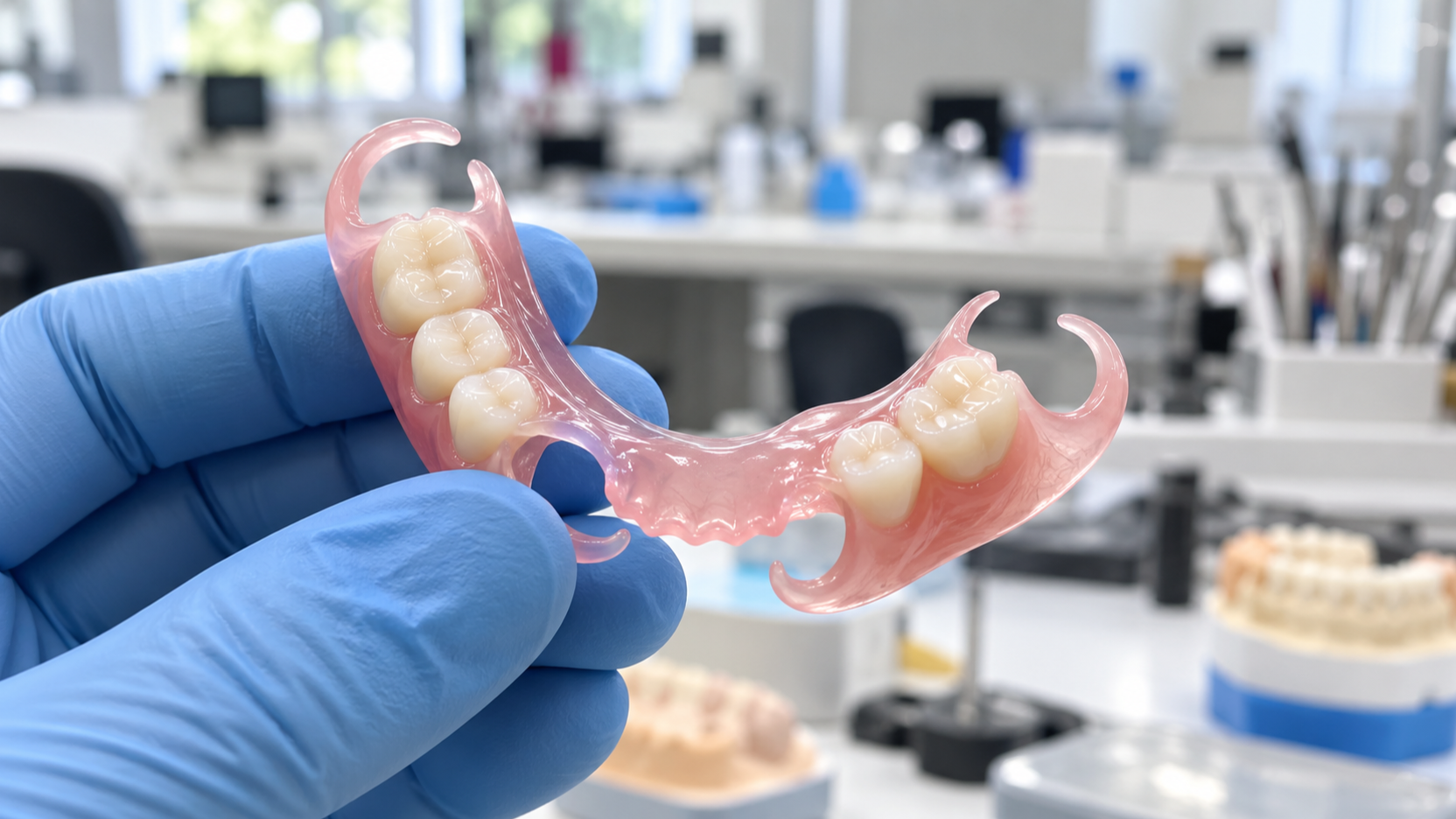
When a patient presents with a bounded edentulous space in the aesthetic zone and refuses visible metal clasps, or cannot tolerate acrylic monomer, a flexible partial denture is often the most practical removable solution. Yet for many dental practices and laboratories across the US, UK, Germany, France, and Australia, thermoplastic partials can be frustratingly inconsistent when outsourced without clear protocols. Poorly surveyed undercuts lead to clasps that either impinge on the gingiva or fail to engage, while improper material selection turns a routine delivery into a chairside adjustment marathon.
At Topway Dental Lab, we have fabricated removable prosthetics for overseas clinics and dental laboratories since our founding in Shenzhen in 2006. Operating from our 5,000-square-meter facility in Bao'an District with over 300 employees, we process flexible partial dentures within our removable restoration services. This guide covers the clinical indications, material choices, case submission protocols, clasp design principles, and quality checks you should expect when outsourcing thermoplastic partials.
What Is a Flexible Partial Denture?
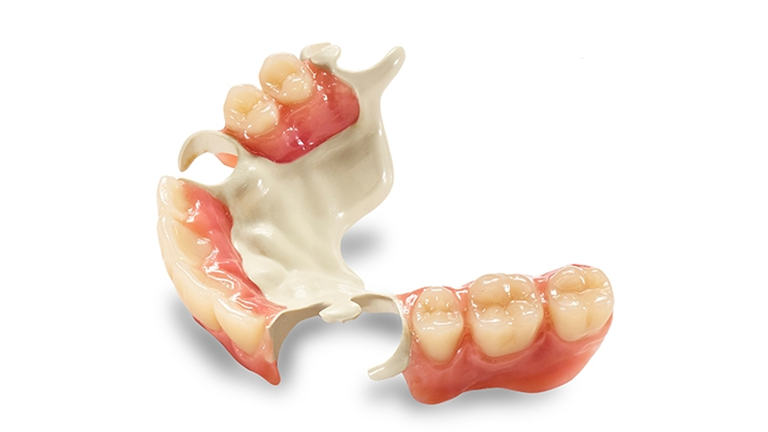
A flexible partial denture is a removable partial denture (RPD) fabricated from a biocompatible thermoplastic resin—most commonly a nylon polyamide or an acetal resin—rather than rigid polymethyl methacrylate (PMMA) or a cast cobalt-chromium (Co-Cr) alloy framework. Instead of relying on metal occlusal rests and cast clasps for retention, a standard nylon partial uses thin, translucent extensions of the denture base material itself to engage natural cervical and proximal undercuts around the abutment teeth.
Structural Differences From Traditional Acrylic and Cast Metal RPDs
From a laboratory bench perspective, a thermoplastic partial differs from conventional prostheses in four main ways:
- Monomer-Free Injection Molding: Unlike heat-cured or cold-cured PMMA partials that undergo chemical polymerization and retain trace methyl methacrylate monomer, thermoplastic resins arrive as pre-polymerized cartridges that are melted under heat and injected into a closed flask under pressure.
- Continuous Clasp Integration: In a traditional RPD, metal clasps are cast or embedded into an acrylic saddle. In a nylon partial denture, the retentive clasp, major connector, and saddle are injected as a single continuous unit (or combined with a cast metal frame in hybrid designs), eliminating the junction where metal meets acrylic.
- Mucosal Stress Distribution: Where a rigid Co-Cr framework transfers masticatory forces primarily to the abutment teeth via occlusal rests, an all-flexible partial flexes under load, transferring chewing forces directly to the underlying edentulous ridge.
- Reduced Cross-Sectional Thickness: Because thermoplastic polyamides resist brittle fracture under flexing, major connectors and palatal straps can be finished thinner than conventional acrylic transitional partials, improving tongue space and phonetics.
From Valplast to Modern Thermoplastic Systems
When clinicians request a Valplast denture, they often use the brand name synonymously with the entire category. Valplast pioneered injection-molded nylon polyamide for removable dentistry, demonstrating that a translucent, flexible resin could blend with natural attached gingiva while providing mechanical retention.
Today, laboratories work with a range of flexible denture alternatives, from other nylon polyamides such as TCS (Unbreakable) to semi-rigid acetal (polyoxymethylene) resins. For a broader look at how thermoplastics fit alongside conventional acrylics and cast frameworks, refer to our denture materials and cost guide.
Clinical Indications and Contraindications
Most clinical disappointments with thermoplastic prostheses stem not from injection errors, but from prescribing an all-flexible appliance where rigid vertical support is needed. During initial case review, our technicians evaluate stone casts or digital scans against clear biomechanical criteria.
Ideal Cases for Thermoplastic Partials
- Kennedy Class III and IV Bounded Spaces With Aesthetic Demands: When missing anterior or premolar teeth leave visible abutment surfaces, translucent tissue-colored clasps emerging from the gingival margin avoid the metallic display of cast clasps.
- Acrylic Monomer Allergies: For patients with confirmed hypersensitivity to residual monomer in conventional PMMA, thermoplastic polyamides and acetal resins provide a monomer-free alternative.
- Pronounced Soft-Tissue and Bony Undercuts: Patients with bilateral mandibular tori, maxillary tuberosity undercuts, or tilted abutment teeth often face pre-prosthetic surgery or heavy block-out with a rigid prosthesis. A flexible flange slips over the prominence during insertion and seats passively into the undercut without traumatizing the mucosa.
- Interim and Post-Implant Transitional Partials: During osseointegration, a lightweight nylon partial can be relieved generously over healing abutments or grafted ridges without risking brittle fracture of a thinned acrylic base.
Contraindications: When to Avoid an All-Flexible Design
- Long-Span Distal Extensions (Kennedy Class I and II) With Severe Ridge Resorption: Without posterior abutments or rigid occlusal rests, an all-nylon base flexes under posterior chewing loads, accelerating ridge resorption and causing tissue soreness.
- Limited Interarch Space: Because denture teeth in a nylon partial rely entirely on mechanical retention holes (diatorics) rather than chemical bonding, limited vertical clearance forces the technician to grind down the prosthetic teeth, weakening the mechanical lock and risking tooth pop-outs.
- Heavy Bruxism: Parafunctional habits rapidly fatigue flexible connectors and flatten prosthetic teeth when the underlying base lacks rigidity.
- Cases Requiring Near-Term Relines or Tooth Additions: If remaining teeth have a poor prognosis and you anticipate adding teeth or relining the saddle soon, standard nylon polyamides make chairside modifications impractical.
When a Co-Cr or Acetal-Resin Framework Is the Better Choice
When a patient refuses visible anterior metal clasps but requires rigid posterior support, a hybrid combination design solves both problems. By pairing a cast Co-Cr major connector and occlusal rests with flexible thermoplastic labial clasps—or by prescribing a semi-rigid acetal resin framework—you preserve periodontal and ridge support without sacrificing aesthetics. For cases requiring completely concealed retention without buccal clasp arms, clinicians can also explore precision attachment options combined with fixed crowns.
Valplast vs. Alternative Flexible Materials
When prescribing flexible partial denture outsourcing, specifying the material family prevents mismatches between your clinical goals and the delivered appliance. The two primary thermoplastic classes compare as follows.
| Material Class | Representative Systems | Flexural Behavior & Clasp Style | Aesthetics | Chairside Handling |
|---|---|---|---|---|
| Nylon Polyamides | Valplast, TCS (Unbreakable) | High flexibility; clasps engage dentogingival undercuts across the CEJ | High translucency; blends with underlying pink gingiva | Requires specialized silicone wheels; fibers fray if overheated with standard burs |
| Acetal Resins (POM) | Multiple manufacturers; see individual data sheets | Semi-rigid; supports tooth-colored clasps engaging coronal undercuts and occlusal rests | Opaque; available in Vita tooth shades and tissue tones | Trims and polishes cleanly with standard carbide burs without stringing |
Nylon vs. Acetal: Key Clinical Trade-Offs
- Flexibility vs. Support: A nylon partial denture deflects under load and cannot support functional occlusal rests. Acetal resin is stiffer, allowing thin major connectors and functional occlusal rests that resist cross-arch torsion.
- Stain Resistance: Dense crystalline acetal absorbs less oral moisture than nylon polyamide, making acetal more resistant to staining from coffee, tea, or tobacco over long-term wear.
- Repairability: Neither material bonds chemically to cold-cure PMMA at the chair; both require laboratory thermal processing or mechanical retention for modifications.
Because exact physical properties depend on specific cartridge formulations, we do not list generic numeric values here. For flexural modulus, tensile strength, and water sorption specifications, consult the manufacturer data sheets from Valplast International or TCS Dental.
What the Lab Needs From You: Case Submission Requirements
Because a thermoplastic partial denture cannot be easily relined at the chair like conventional PMMA, the accuracy of your master impression and prescription determines how smoothly delivery goes.
Impression Requirements: PVS vs. Alginate and Full-Arch Capture
- Impression Material: When shipping physical impressions overseas, always use polyvinyl siloxane (PVS) or polyether. Alginate suffers dimensional distortion during air transit; if you use alginate in the clinic, pour the cast immediately in high-strength Type III or Type IV stone and ship the inspected stone model.
- Full Vestibular Extension: Ensure the impression captures the entire mucobuccal fold and frenum attachments without over-extension so we can establish sealed, non-impinging borders.
- Full-Arch Impressions for Unilateral Cases: Even when prescribing a unilateral nesbit for one or two missing posterior teeth, submit full-arch upper and lower impressions or scans so our technicians can mount the models accurately and balance cross-arch occlusion.
Bite Registration, Shade Selection, and Design Instructions
For cases missing multiple posterior teeth or lacking stable vertical stops, include a PVS bite registration or wax bite rim along with a complete opposing model. On your prescription slip, specify:
- Tooth Shade and Mould: Standard Vita Classical or 3D-Master shade.
- Gingival Shade: Indicate your preferred gingival tissue tone (light, medium, or dark pink) and whether you want clear clasps.
- Design Details: Clasp placement preferences, palatal strap vs. horseshoe connector design, and any custom gingival characterization requests.
Digital vs. Traditional Workflows
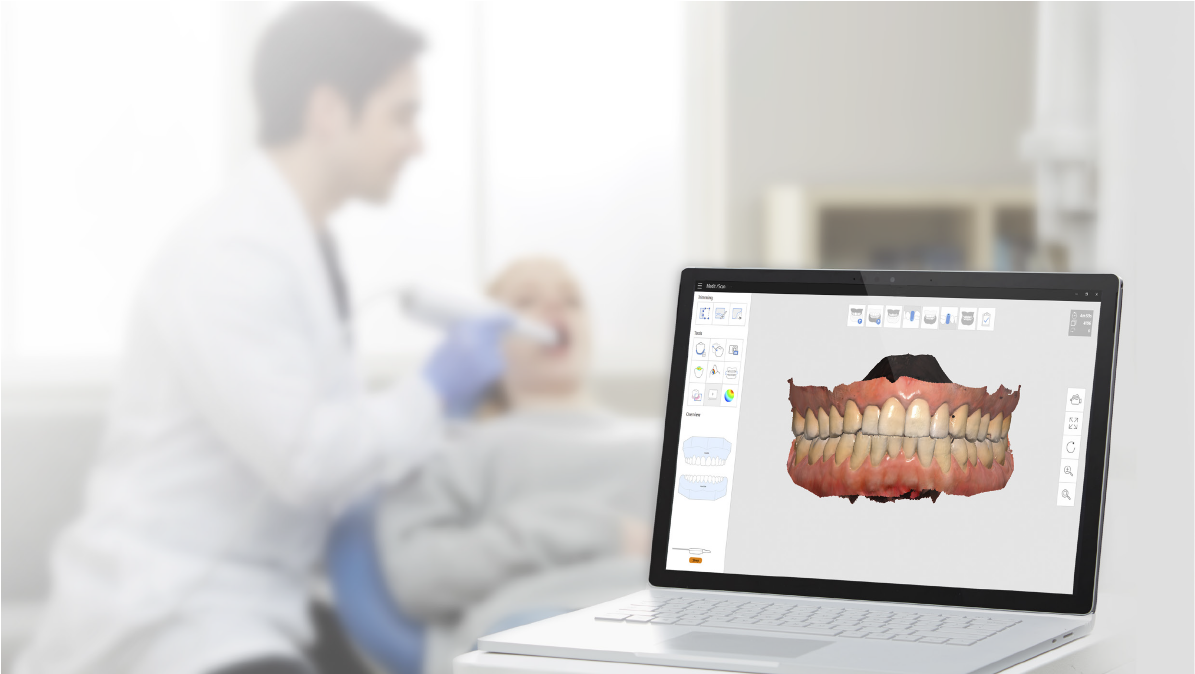
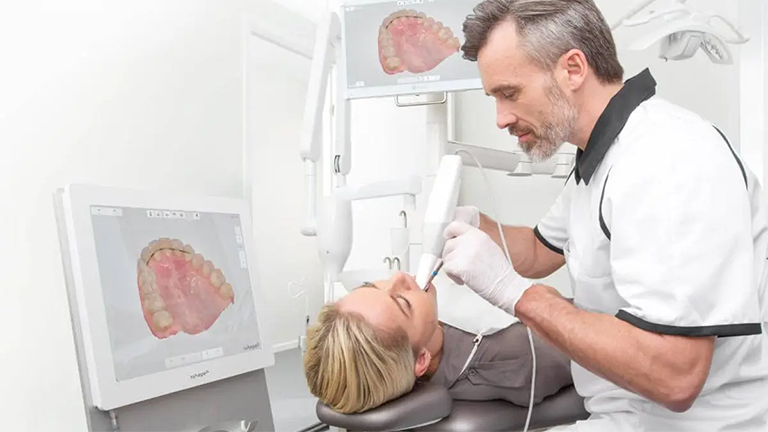
Many of our partner clinics and labs submit full-arch intraoral scans (STL files) instead of physical impressions. To ensure your scanner captures edentulous mucosa accurately, review our guide on sending digital impressions overseas.
Lab Fabrication Workflow Overview
At Topway Dental Lab, flexible partial dentures within our Removable Restoration line follow a strict multi-stage workflow:
- Model Survey and Block-Out: Our technicians survey the master cast to establish the path of insertion, mapping desired retentive undercuts on abutment teeth while blocking out deep interproximal spaces and tissue prominences with parallel wax.
- Duplication and Tooth Diatorics: The blocked-out master model is duplicated in dental stone for processing, preserving your original master cast untouched for final QC. Because acrylic denture teeth do not bond chemically to nylon, technicians drill mechanical retention tunnels (diatorics) into each tooth so molten resin locks them mechanically in place.
- Precision Wax-Up and Injection Molding: The base and clasps are waxed to uniform thickness gauges, invested in a specialized injection flask, and boiled out. A pre-heated thermoplastic cartridge is then injected into the closed flask under sustained pressure.
- Finishing, Polishing, and Final QC: After controlled cooling, sprues are sectioned and borders are contoured with slow-speed silicone wheels and polished to a high luster. Before shipping, our QC technicians seat the finished appliance onto the original master cast to verify passive fit, clasp snap retention, occlusal contacts, and gingival shade match.
Clasp Design and Retention Considerations
Clasp geometry is where technician skill is most visible. If a flexible partial feels loose at delivery or irritates the gingiva after a week of wear, the issue nearly always traces back to clasp surveying.
Tissue-Colored Nylon Clasps vs. Tooth-Colored Acetal Clasps
A standard nylon clasp is a dentogingival clasp: it crosses the cementoenamel junction (CEJ), resting partly on cervical enamel and partly on attached gingiva. Its translucency lets the natural tooth and pink mucosa show through, making it nearly invisible in the smile zone. By contrast, an acetal clasp is opaque, matched to the Vita tooth shade, and placed entirely on the clinical crown above the gingival margin—acting like a tooth-colored cast clasp where gingival contact must be avoided.
Undercut Utilization and Common Design Pitfalls
Unlike a metal clasp where only the terminal tip enters a small undercut, the body of a flexible clasp flexes over the height of contour and settles into the cervical undercut. To ensure predictable retention without tissue trauma, our technicians guard against three common pitfalls:
- Over-Extended Connectors: Covering the entire palate when tooth support allows a clean palatal strap or horseshoe design adds unnecessary bulk.
- Insufficient Clasp Engagement on Flat Abutments: Conical canines or crowns milled without a cervical bulge offer no undercut for nylon to grip. Adding a subtle guiding plane and conservative cervical contour on adjacent crowns greatly improves retention.
- Knife-Edge Clasp Borders: Feather-edged nylon margins tend to lift and irritate the mucosa; clasp borders should be finished to a smooth, rounded chamfer.
Maintenance, Repairs, and Longevity
Clear patient instructions at delivery prevent premature staining and surface roughness.
Patient Care Instructions
- Cleaning Solutions: Soak the appliance daily in a dedicated flexible denture cleanser. Avoid household bleach (sodium hypochlorite), which permanently discolors and weakens polyamide resin.
- Brushing and Ultrasonic Use: Clean gently under cool running water with a soft denture brush and liquid soap—never abrasive toothpaste, which scratches the high-gloss surface. Avoid high-heat or solvent-based ultrasonic baths; running the partial under warm tap water briefly before insertion helps clasps adapt comfortably in the mouth.
- Storage: Keep the prosthesis hydrated in water or cleanser solution whenever it is out of the mouth overnight to maintain dimensional stability.
Reline, Repair, and Service Life Considerations
Because cold-cure acrylic does not bond chemically to nylon or acetal, chairside relines and tooth additions are not durable. When a patient loses an adjacent tooth or needs a tissue reline, take a pickup impression over the seated partial and return it to the lab for thermal rebasing (jump-molding), where fresh polyamide is injected under heat and pressure to fuse with the prepared base. While the thermoplastic base itself resists dropping and fracture, overall clinical longevity depends on ridge remodeling, abutment stability, and prosthetic tooth wear, making regular dental recalls essential.
Cost Factors for Flexible Partial Dentures
In relative laboratory cost, all-flexible partials sit in the middle tier: they carry higher fabrication fees than basic acrylic transitional flippers (due to specialized cartridges, manual diatoric drilling, injection molding, and multi-stage polishing), but are generally more economical than cast Co-Cr frameworks or Co-Cr/flexible hybrid prostheses.
Within the flexible category, lab fees vary based on arch span (unilateral nesbit vs. bilateral arch), resin brand selection, hybrid metal framework integration, and custom gingival characterization. Partnering with an overseas contract manufacturer enables clinics and commercial labs to secure consistent hand-finishing at fees significantly lower than typical domestic lab fees. Please check our full dental lab price list or contact us for a current price list tailored to your case volume.
How to Choose an Outsourcing Lab for Flexible Partials
Choosing an outsourcing partner for removable prosthetics comes down to verifiable material compliance, dependable quality control, and predictable logistics.
- FDA Registration and Material Compliance: Topway Dental Lab is an FDA-registered contract manufacturer (Class I/II medical devices) holding a CE certificate, ISO 13485, and ISO 9001, as well as the Medical Device Production License of China, the Class II Medical Device Product Registration Certificate (China FDA/NMPA), and High-tech Enterprise Certification. We use only FDA-approved materials across every case. For details on auditing lab credentials, read our article on FDA and CE compliance for outsourced restorations.
- Dedicated Quality Control: With over 300 employees in our 5,000-square-meter Shenzhen facility, every flexible partial moves through surveying, setup, thermal injection, finishing, and a final quality check against your original model before shipping. We have served partners across the US, UK, Germany, France, Canada, Australia, New Zealand, Israel, and Brazil since 2010.
- Start With a Bilateral Trial Case: We recommend testing our bench quality with a straightforward Kennedy Class III bilateral case submitted via PVS impression or full-arch intraoral scan.
- Predictable Turnaround Schedules: Since 2022, we have implemented dedicated production scheduling during the Chinese New Year holiday to protect quality and delivery timelines. For shipping and scheduling details, see our guide to overseas lab turnaround times.
To discuss a trial case with our removable prosthetics team, email [email protected] or call +86 153 2504 5142.
Frequently Asked Questions
Can a flexible partial denture be relined or repaired?
Not reliably at the chair—cold-cure acrylic does not bond chemically to nylon or acetal thermoplastics. Instead, take a pickup impression with the partial seated in the mouth and return it to the laboratory for thermal rebasing (jump-molding), where fresh molten material is injected under heat and pressure to fuse with the prepared original base.
Is Valplast the only brand of flexible denture material?
No. Valplast originated the injection-molded nylon partial category, but several alternative thermoplastic systems exist today, including other nylon polyamides such as TCS (Unbreakable) and semi-rigid acetal resins from several manufacturers. Acetal systems offer stiffer major connectors and tooth-colored clasp options when greater occlusal support is needed.
How long does a flexible partial denture typically last?
The thermoplastic base itself resists dropping and fracture, but clinical lifespan depends on ridge remodeling, abutment tooth stability, prosthetic tooth wear, and daily hygiene. Because all-flexible partials are tissue-borne, gradual alveolar ridge resorption may eventually loosen the fit, requiring a laboratory rebase or replacement.
Are flexible partials suitable for patients with only one or two missing teeth?
Yes, bounded spaces missing one or two teeth are among the most common indications, provided there is adequate vertical interarch clearance for mechanical tooth retention and sufficient cervical undercut on the adjacent abutment teeth. When prescribing a unilateral one- or two-tooth partial (nesbit), ensure positive buccal and lingual clasp engagement and instruct the patient on careful insertion and removal.
What impression material works best for flexible partial dentures?
Polyvinyl siloxane (PVS) or polyether works best for physical impressions shipped overseas because both remain dimensionally stable in transit. Capture the full arch, including the mucobuccal fold and cervical undercuts. If you use alginate, pour the cast immediately in high-strength stone and ship the inspected model. Full-arch intraoral scans (STL files) are an equally good option.
Top Posts
Recent Posts

How can we help you today?
We believe in providing the best possible care to all our existing patients and welcome new patients to sample.
