


Dental Lab Outsourcing USA: FDA, Shipping & Turnaround
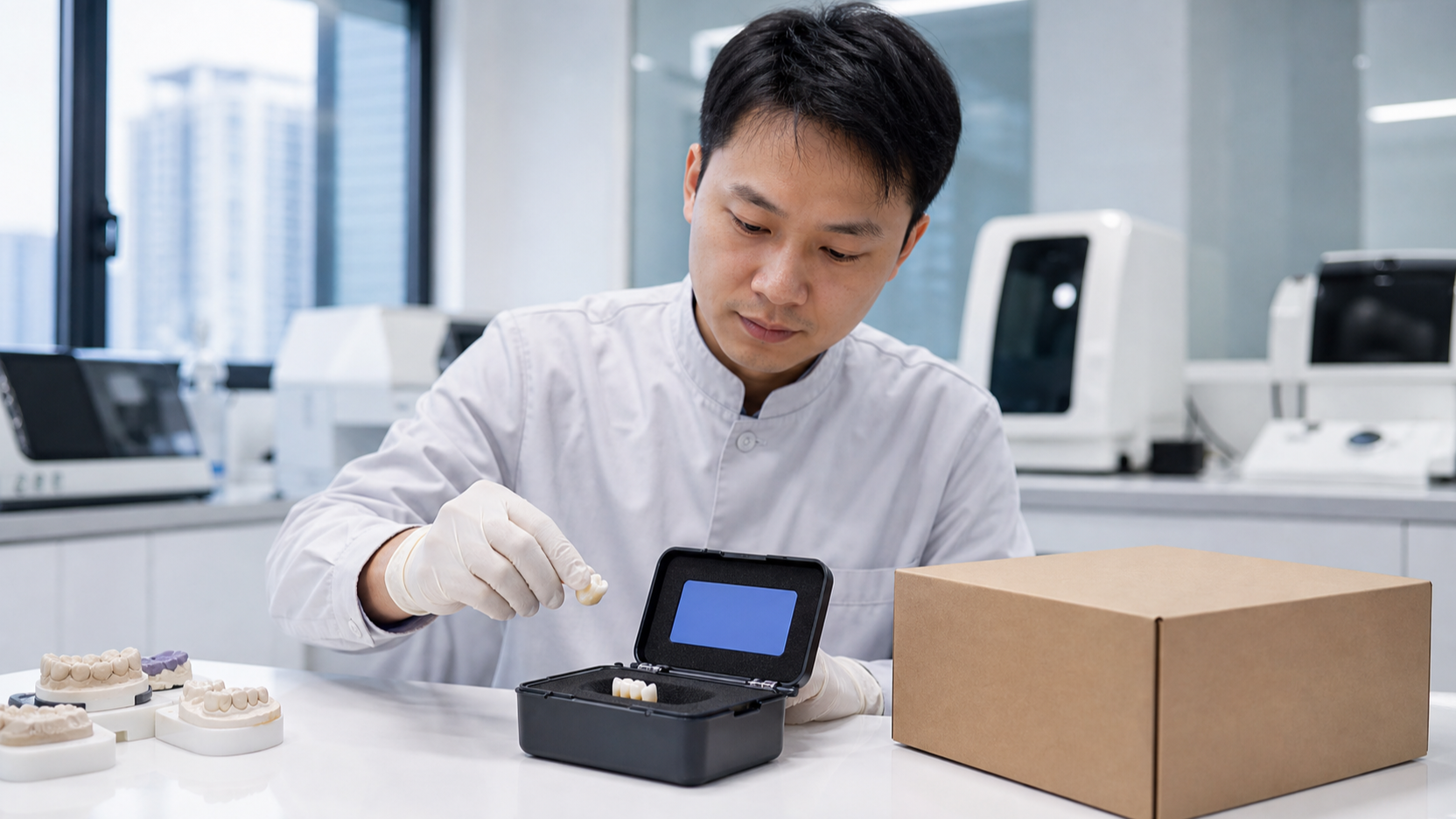
For a US dentist or dental laboratory owner, the outsourcing question is not whether a restoration can be made in China. It is whether the case can move through prescription review, production, quality control, and international shipping without adding clinical or scheduling risk.
We are Topway Dental Lab, an outsourcing dental laboratory and contract manufacturer founded in Shenzhen in 2006. We began taking outsourced work from American dental laboratories during our 2006–2010 development period. Today we operate from a 5,000-square-meter facility in Bao'an District, Shenzhen, with more than 300 employees. We are an FDA-registered contract manufacturer for Class I/II medical devices, hold a CE certificate, and are certified to ISO 13485 and ISO 9001.
This guide covers what US dentists actually ask us about: what FDA registration means, how physical and digital cases reach us, how shipping fits into the schedule, and what we need to deliver a case that matches the prescription.
Why US Dentists Outsource Lab Work to China
Cost is usually the first reason. Chinese outsourcing can offer significantly lower fees than typical domestic laboratory work, especially for repeat cases. We do not publish figures in this guide; contact us for a current price list. Compare the complete workflow, not the unit fee alone: communication, shipping, case review, remake handling, and predictable capacity all matter.
Capacity is the second. An outsourcing partner gives a laboratory access to a larger production team without expanding premises or staffing every technical discipline in-house. Our scale supports both individual practice cases and the recurring volume of laboratory partners.
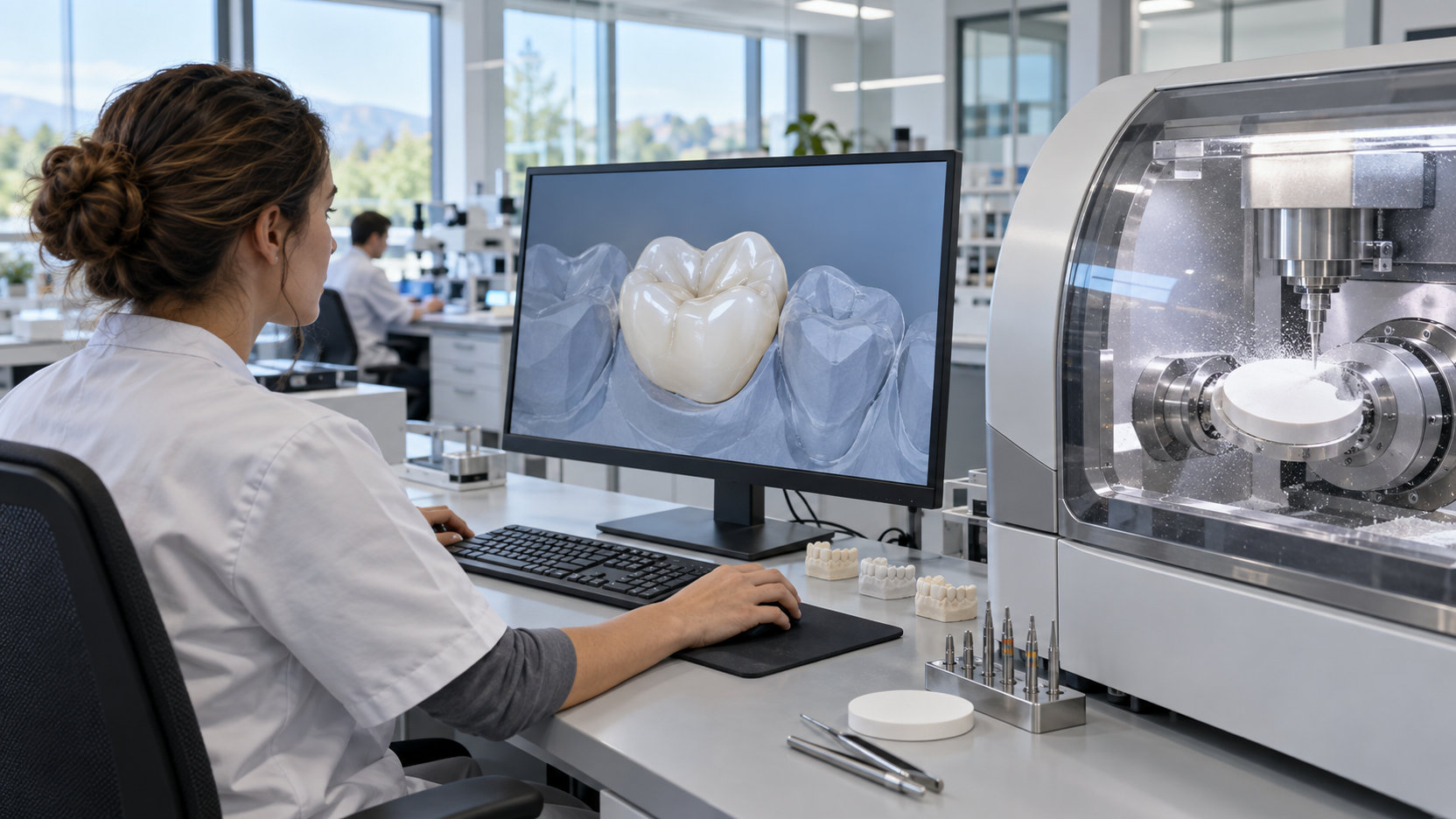
Technology only helps inside a controlled workflow. We do not treat a scan as an automatic manufacturing instruction. Our team first checks whether the files and Rx give enough information for the requested restoration, and raises questions about margins, material, shade, occlusion, or implant components before the case advances.
Our US work is not a new sales channel. From 2010 onward our markets expanded to laboratories and clinics in the United States, United Kingdom, Germany, France, Canada, Australia, New Zealand, Israel, and Brazil. For evaluation criteria beyond the US-specific issues here, read our complete guide to dental lab outsourcing.
Which work can be outsourced?
Our product lines cover Crown & Bridge, Dental Implant, Removable Restoration, Precision Attachment, and Orthodontics. A practice often starts with routine crown and bridge restorations; a laboratory partner may need several categories. Define the product, material, records, and acceptance expectations before sending volume, and test the workflow with a small trial case.
FDA Registration & Compliance for US-Bound Restorations
Topway Dental Lab is an FDA-registered contract manufacturer for Class I/II medical devices. The wording matters: our lab is FDA registered; we do not describe the laboratory as "FDA approved." We also hold a Medical Device Production License of China and a Class II Medical Device Product Registration Certificate issued by China's medical-device regulator.
We use FDA-approved materials only. Even so, write the material selection clearly on the prescription. "Zirconia" should not be left as an assumption when the restorative plan calls for a defined material, and a preference mentioned in an earlier email can easily become separated from the case record.
Registration, materials, and the clinical prescription
Three separate questions should not be collapsed into one:
- Who makes the device? Topway, as the FDA-registered contract manufacturer.
- What material is used? FDA-approved materials only, following the requirement stated for the case.
- What is clinically required? The prescribing dentist supplies the Rx and records and verifies that the delivered result is appropriate for the patient.
Registration does not substitute for a complete prescription, and an approved material does not correct an ambiguous margin. Regulatory obligations can depend on the device and circumstances, so confirm case-specific questions with the appropriate professional adviser. Our FDA & CE compliance guide goes deeper into our compliance framework.
Shipping Dental Cases Between the US and China
There are two routes into our workflow. A conventional case sends physical impressions or models by international express. A digital case sends scan files electronically, removing the outbound shipment entirely.
Sending a physical case
US clients commonly use international express services such as FedEx, DHL, and UPS. Service levels, documentation, customs treatment, and transit performance change, so we do not promise a universal shipping time. Confirm current requirements and estimates with the carrier or customs broker before dispatch.
Inside the parcel, organize each patient's items as one clearly identified case. Protect impressions and models from movement and crushing, and keep the written Rx legible and attached to the correct records. If several cases share a shipment, include a packing list and a separate case identifier for each prescription; use the same identifier in your email so our receiving team can reconcile parcel and instructions.
Our address is 4th Floor, Building 4, Fu'an First Industrial City, 99 Dayang Road, Fuhai Street, Bao'an District, Shenzhen, China.
Sending a digital case
Send STL or PLY files together with the prescription, shade, requested product and material, and any supporting records. Name files consistently so upper, lower, bite, and additional scans match without guesswork.
Electronic delivery does not skip intake review. We still confirm the files open correctly and communicate the requested design. If a margin or another critical area is unclear, resolving it before design is safer than carrying an assumption through production. See how to send digital impressions overseas for the submission workflow.
Returning the completed restoration
After final quality checks, the finished case is prepared for return shipment under the same case identifier. We coordinate dispatch details with you; the transit schedule itself depends on the selected international service. If a chair appointment depends on the parcel, build in a buffer rather than treating a carrier estimate as a guaranteed date.
Realistic Turnaround Times for US Orders
A useful turnaround quote separates production from transport. The production clock starts once we have a usable case and a clarified prescription; the shipping clock belongs to the carrier. Combining both into one optimistic number hides where a delay actually occurred.
| Stage | What happens | What can hold the case |
|---|---|---|
| Case receipt | We match the Rx, scans or physical records, shade, product, and material request. | Missing files, unmatched identifiers, or an incomplete prescription. |
| Technical review | The team checks whether the records support the requested work and raises questions. | An unclear margin, bite record, implant detail, or shade instruction. |
| Production | Design, manufacturing, technician finishing, and in-process inspection. | Case complexity or a change requested after work has started. |
| Final quality control | The finished work is checked against the case requirements before release. | A result that needs correction before dispatch. |
| International dispatch | The restoration is prepared for the agreed return route. | Carrier schedules, customs handling, or holidays. |
We give a case-specific estimate after reviewing the records rather than one figure for every product and destination. A single crown, an implant case, and a removable restoration do not follow the same production route, and transit to different US regions should be checked against the carrier's current service information.
Digital submission shortens the overall cycle because there is no outbound impression shipment to wait for. The biggest gain comes when scan, bite, Rx, shade, and design request arrive together and our technical questions get prompt answers.
Planning around Chinese New Year
Chinese New Year needs advance planning in any China-based schedule. Since 2022 we have run special production scheduling arrangements to protect quality and delivery through the holiday period. Tell us about fixed chair dates and expected case volume early so we can confirm the holiday schedule before cases are committed.
Quality Assurance: What to Expect from a Chinese Lab
Country of manufacture alone does not tell you whether a restoration will meet your prescription. The better questions are whether the manufacturer has a defined quality system, whether material and case information stay traceable through production, and whether finished work is inspected before release.
Our facility is certified to ISO 13485 and ISO 9001. Those credentials set the framework; the everyday result depends on disciplined case handling. We carry the Rx and case identifier through the whole workflow so design, material, shade, and special instructions stay connected.
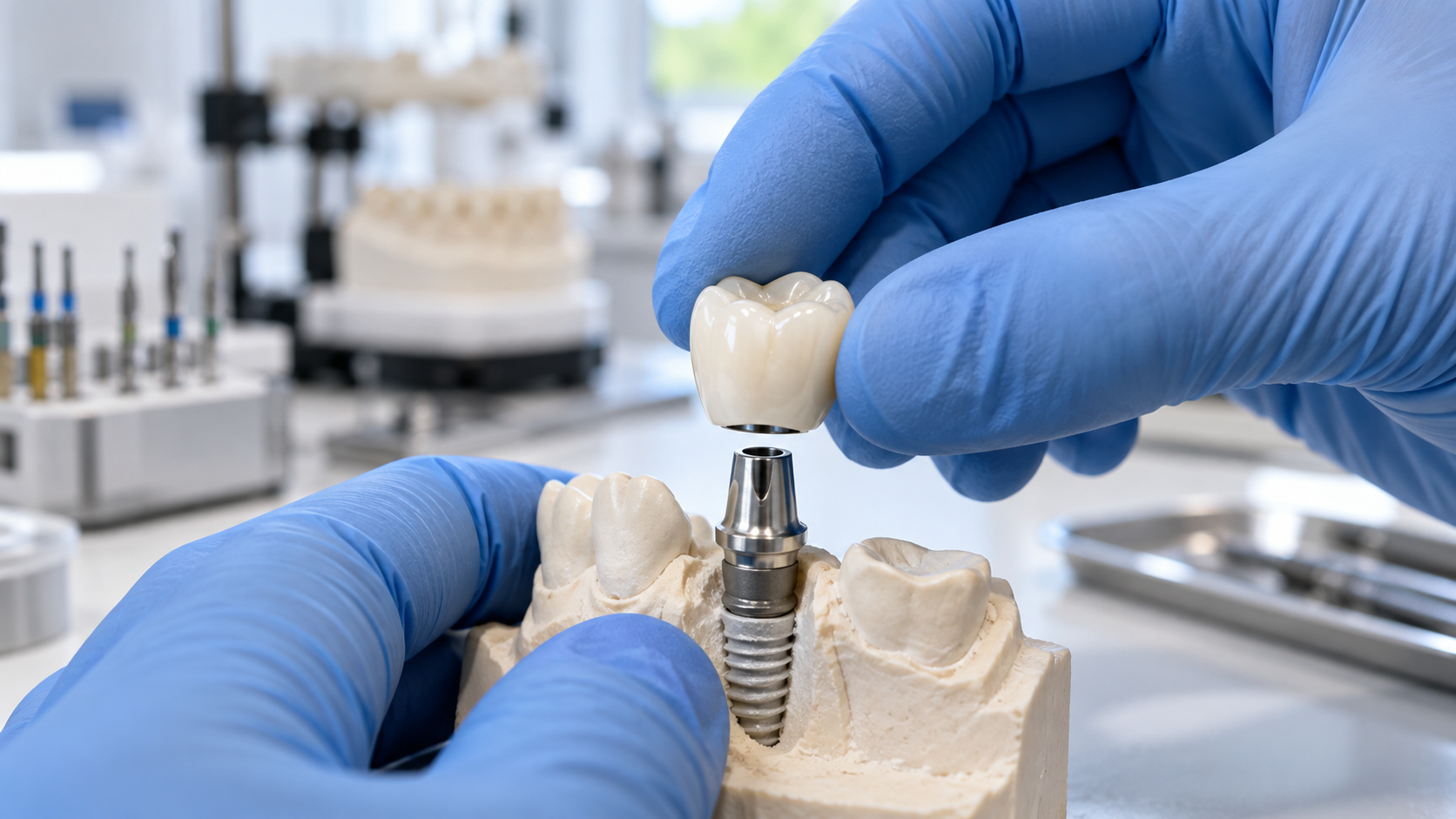
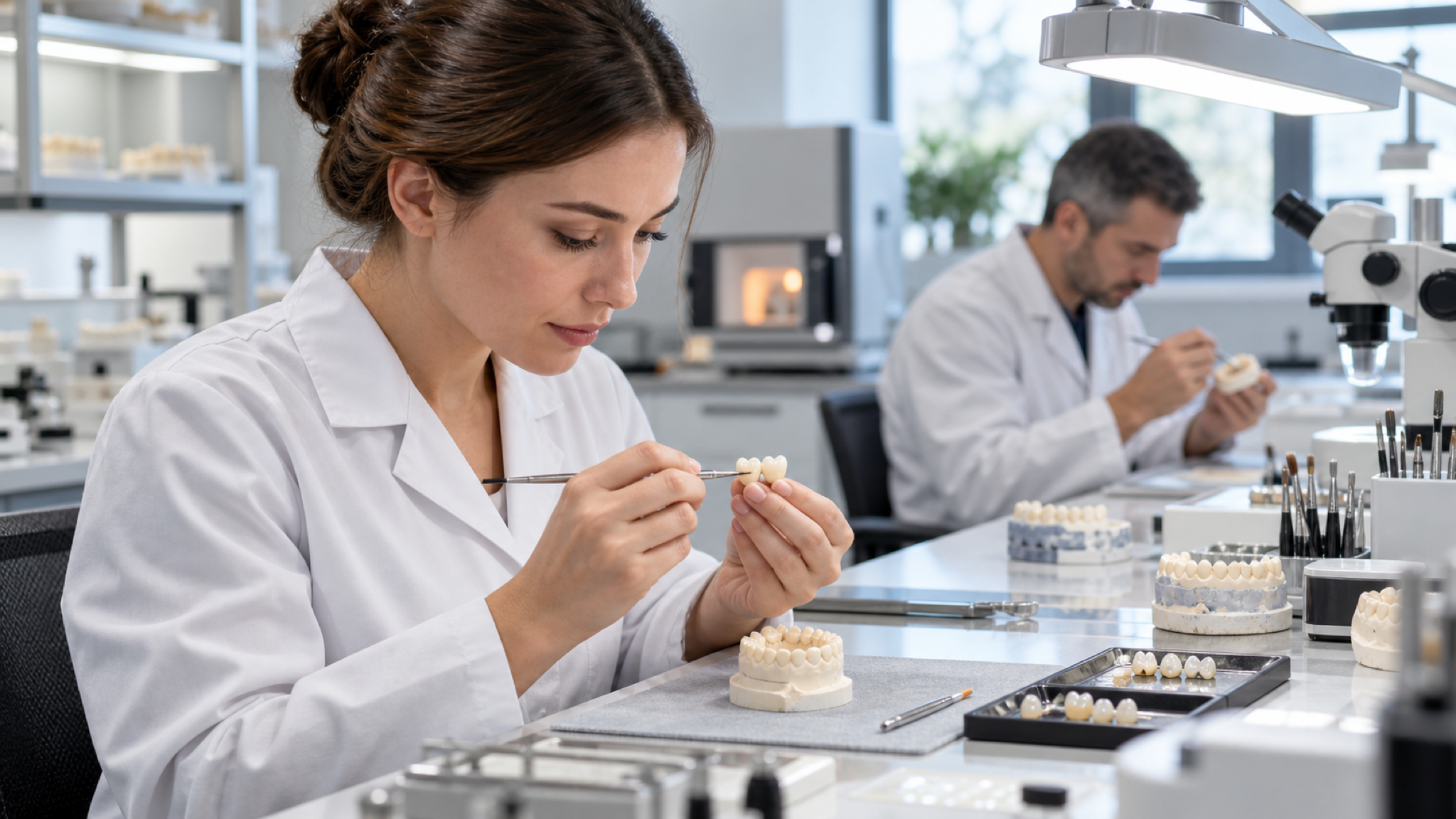
Scale is not permission to push unlike instructions through a generic process. Implant work, removable cases, orthodontics, and fixed restorations each follow their own production path and checks. If you are evaluating dental implant restorations, send the implant details required for that specific prescription rather than relying on notes from a previous case.
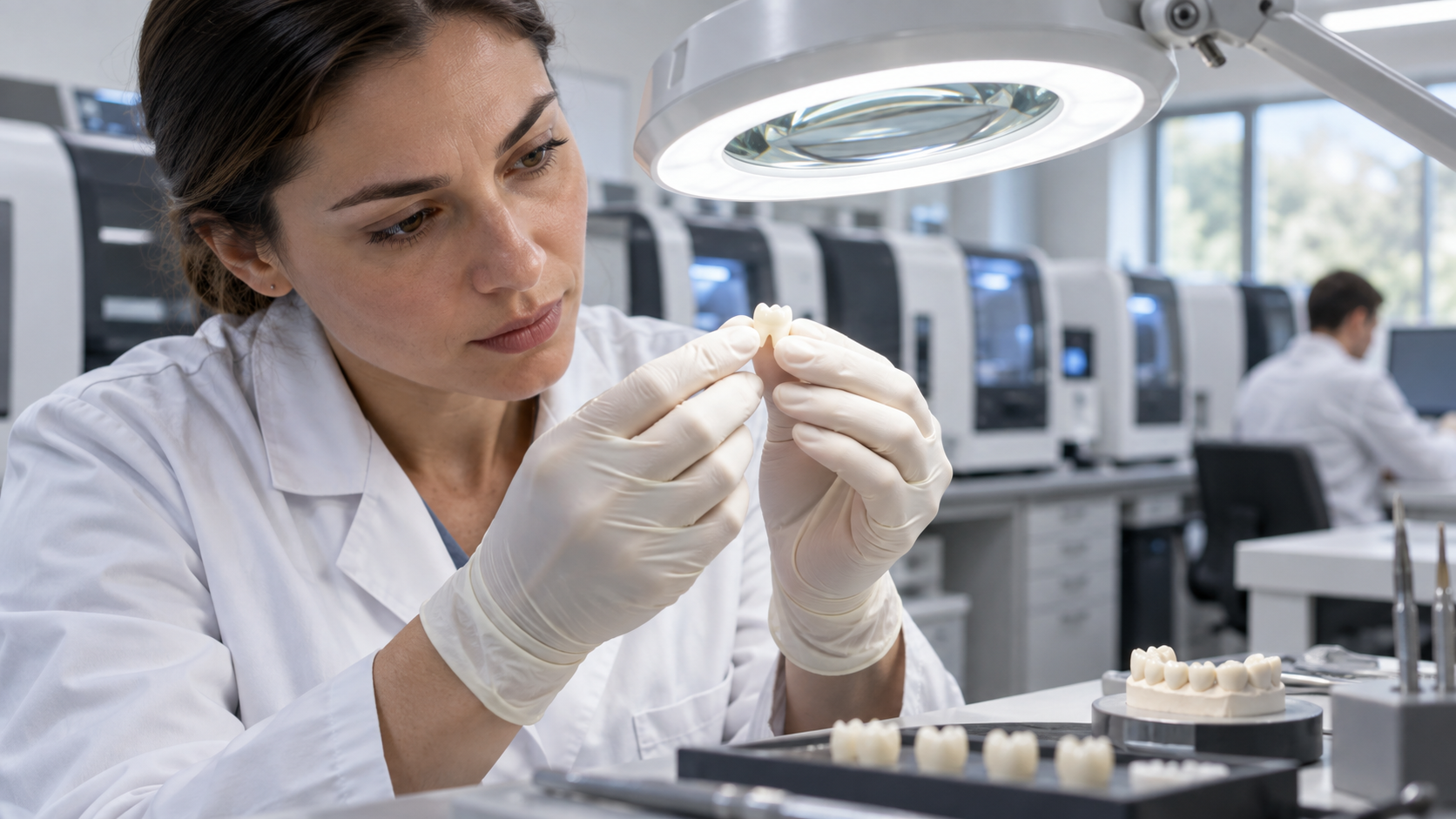
For the inspection sequence, see our 7-step quality control process. The practical point: a case is not dispatched because manufacturing is complete; it is dispatched because it passed final review.
Remakes and adjustments across the Pacific
If a restoration does not fit, start with evidence rather than "it is wrong." Quote the case identifier and describe the issue concisely. Useful records include photographs, marked images, the original scan or impression reference, bite information, and the chairside finding.
We review the original instruction and the new information together before agreeing the next step with you. An adjustment request, a changed clinical condition, and a manufacturing discrepancy are different situations, and across an international workflow precise documentation is faster than a chain of vague messages.
How to Get Started: Sending Your First Case
Start with a controlled trial, not a wholesale transfer. Choose work that represents your normal requirements, send the records you expect your team to send routinely, and evaluate both the restoration and the communication.
- Introduce your practice or laboratory. Tell us which product categories you expect to send and whether cases will arrive digitally or physically.
- Define the trial case. State the restoration, material, shade, due-date expectations, and design preferences in writing.
- Send complete records. Include the Rx and the scan files or physical impression/model records, with one case identifier across files, parcel, and messages.
- Complete technical review. We check the submission and contact you if anything is unclear. Answering before production protects the schedule.
- Confirm production and return arrangements. We align the case-specific estimate and shipping approach after review.
- Evaluate the result. Review fit, contacts, occlusion, shade, finish, packaging, communication, and total elapsed time before increasing volume.
What we need with the prescription
- Practice or laboratory name and a unique case identifier
- Requested product and restoration design
- Material selection and shade information
- Digital scan type and complete files, or the physical impression/model records
- Bite and opposing information
- Implant details when requesting implant work
- Special design instructions and the timing you need us to assess
Our lab in Shenzhen works at UTC+8, so a question sent at the end of a US workday is typically answered during your night. The efficient pattern is one consolidated message with the case identifier, annotated records, and a direct question, which our team can resolve within Shenzhen working hours instead of trading fragments across several channels.
To discuss a trial case or request the current price list, email [email protected] or call +86 153 2504 5142.
Frequently Asked Questions
Is it legal for US dentists to use a dental lab in China?
Topway is an FDA-registered contract manufacturer for Class I/II medical devices and has served US outsourcing clients since the 2006–2010 period. Requirements can depend on the device and the circumstances of a case, so verify your own obligations with the appropriate professional adviser rather than treating the lab's location as a complete compliance review.
How long does shipping take from China to the US for dental restorations?
There is no single transit time we can state for every US destination and service. FedEx, DHL, and UPS international express are the services clients most often use, but schedules and customs handling change. We coordinate return dispatch; verify the current estimate with the carrier and leave a buffer before the chair appointment.
Does Topway Dental Lab use FDA-approved materials?
Yes. We use FDA-approved materials only. Still write the requested material clearly on the Rx so the production instruction is explicit.
What happens if a restoration from an overseas lab does not fit?
Contact us with the case identifier, a specific description of the problem, and supporting records such as photographs, marked images, bite information, or scan references. We compare that evidence with the original prescription and agree the next step with you.
Can I send digital impressions instead of physical models to a Chinese lab?
Yes. Send STL or PLY scan files with the Rx, shade, requested product and material, and the other case records. Digital submission removes the outbound shipping leg, but files still pass through intake and technical review before production.
Top Posts

Recent Posts

How can we help you today?
We believe in providing the best possible care to all our existing patients and welcome new patients to sample.
